US Envoy Praises Lebanon on Hezbollah Disarmament, Warns of Regional Isolation
Barrack warned that Lebanon could be marginalized if it failed to evolve. “The rest of the region is moving at Mach speed, and you will be left behind,” he added.
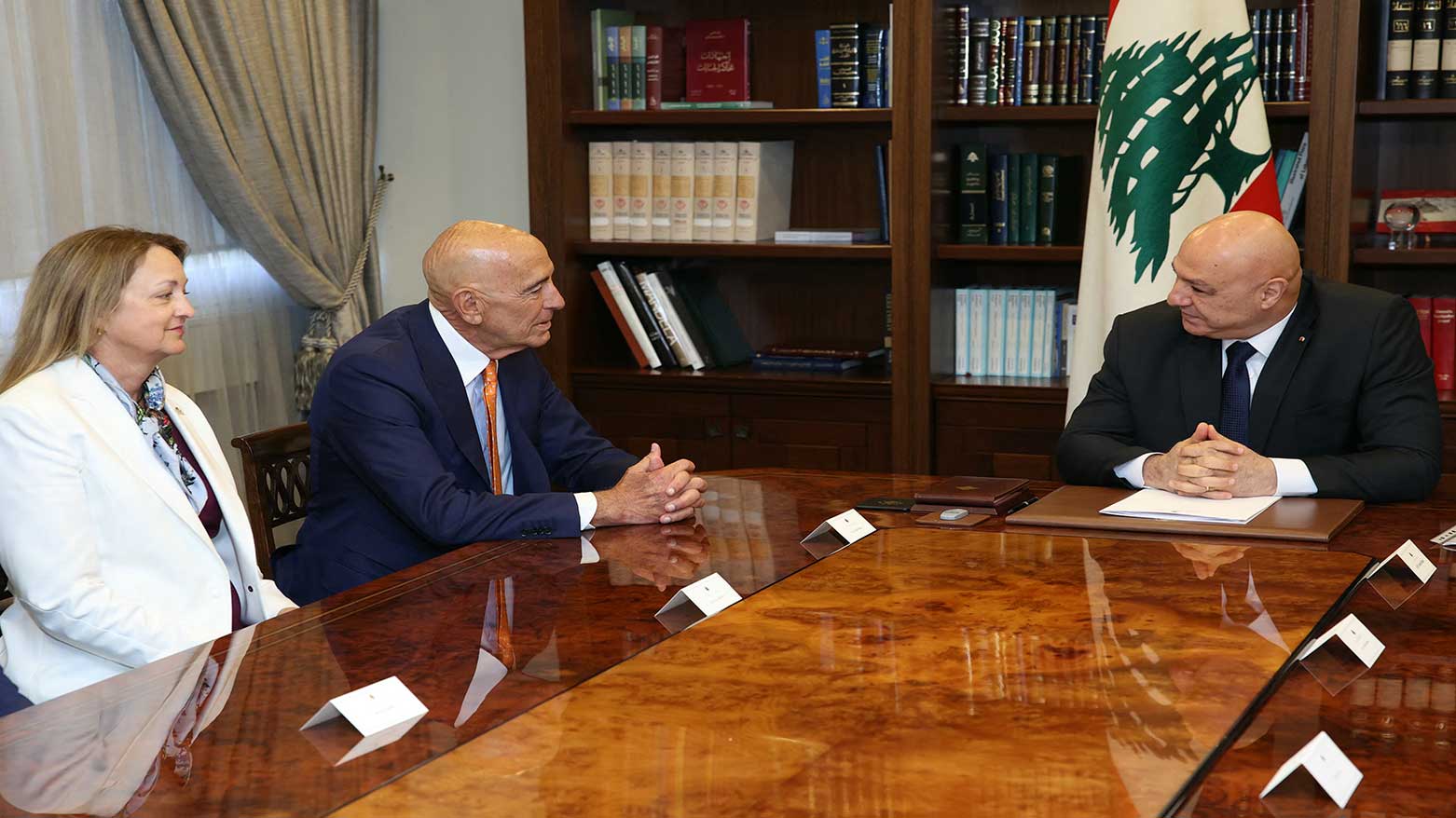
ERBIL (Kurdistan24) — US envoy Thomas Barrack expressed satisfaction on Monday with Lebanon's initial response to American demands for the disarmament of Hezbollah but cautioned that the country risks being left behind as sweeping changes take place across the Middle East, according to AFP.
Speaking at a press conference after meeting with Lebanese President Joseph Aoun in Beirut, Barrack—Washington’s ambassador to Turkey and special envoy to Syria—described the discussions as "thoughtful" and "considered," emphasizing that a detailed plan is now in development. “I'm unbelievably satisfied with the response,” he said. “Now what it takes is a thrust to the details, which we're going to do... I'm very, very hopeful.”
Lebanon’s newly installed leadership, formed in the wake of a year-long conflict between Israel and Hezbollah, has publicly committed to ensuring a state monopoly on the use of weapons. The Lebanese government has also called for full Israeli compliance with a November ceasefire that was intended to halt hostilities along the southern border.
Despite the ceasefire, Lebanon’s health ministry reported that two people were killed Monday in Israeli strikes in southern Lebanon—one of several violations of the truce. The strikes come amid repeated Israeli warnings that operations will continue until Hezbollah is fully disarmed.
Hezbollah’s deputy leader Naim Qassem responded defiantly on Sunday, declaring that the group would not surrender or relinquish its arms under Israeli pressure. “Israel needs to abide by the ceasefire agreement, withdraw from the occupied territories, stop its aggression, release the prisoners... only then will we be ready for the second stage,” Qassem said, referring to potential talks on Lebanon’s national defense strategy.
Barrack, who visited Beirut last month to formally request Hezbollah's disarmament, framed the effort as essential for Lebanon’s future, saying, “Hezbollah needs to see that there’s a future for them, and that road is not harnessed just solely against them.” He warned that Lebanon could be marginalized if it failed to evolve. “The rest of the region is moving at Mach speed, and you will be left behind,” he added.
The Lebanese presidency said on social media that President Aoun had presented Barrack with “ideas for a comprehensive solution.” Meanwhile, Parliament Speaker Nabih Berri—a Hezbollah ally—described his own meeting with Barrack as constructive, stating it took into account Lebanon’s sovereignty and Hezbollah’s demands.
A senior Lebanese official told AFP on condition of anonymity that Beirut submitted an initial written response to the United States late last week. After receiving a request for revisions from Washington, Lebanese officials worked through the weekend to finalize the updated version.
Under the terms of the current ceasefire, Hezbollah is expected to withdraw its fighters north of the Litani River—approximately 30 kilometers from the Israeli border—while Israel is obligated to pull its troops out of Lebanon. However, Israeli forces remain stationed in five strategic zones along the frontier.
The United Nations Security Council resolution underpinning the ceasefire stipulates that only Lebanese army units and UN peacekeepers are permitted to carry arms in southern Lebanon, and it calls for the disarmament of all non-state armed groups.
Lebanese authorities claim they have begun dismantling Hezbollah’s military infrastructure in the region. Nevertheless, tensions remain high, and the prospects for a long-term resolution hinge on mutual compliance with the ceasefire and broader diplomatic engagement.
Barrack also linked the Lebanese situation to broader regional developments, citing renewed contacts between Syria and Israel as a signal that dialogue is possible. “Dialogue has started between Syria and Israel, just as the dialogue needs to be reinvented by Lebanon,” he said.
On Friday, Syria—whose longtime leader Bashar al-Assad was ousted by Islamist forces nearly seven months ago—said it is open to working with the United States to reinstate a 1974 disengagement agreement with Israel and acknowledged holding indirect talks with Israeli officials to reduce tensions.
As Lebanon walks a tightrope between internal political dynamics and growing external pressure, Barrack’s remarks underline both the urgency and complexity of disarming Hezbollah—an issue at the heart of Lebanon’s fragile national security equation.