Iran Leads Coalition to Uphold NPT with Draft Resolution at IAEA Conference
The draft calls for prohibiting attacks or threats against nuclear facilities under IAEA safeguards, amid international concerns over Iran’s nuclear ambitions.

ERBIL (Kurdistan24) — In a notable development, Iran, together with China, Russia, Venezuela, Nicaragua, and Belarus, has submitted a draft resolution to the International Atomic Energy Agency (IAEA) General Conference.
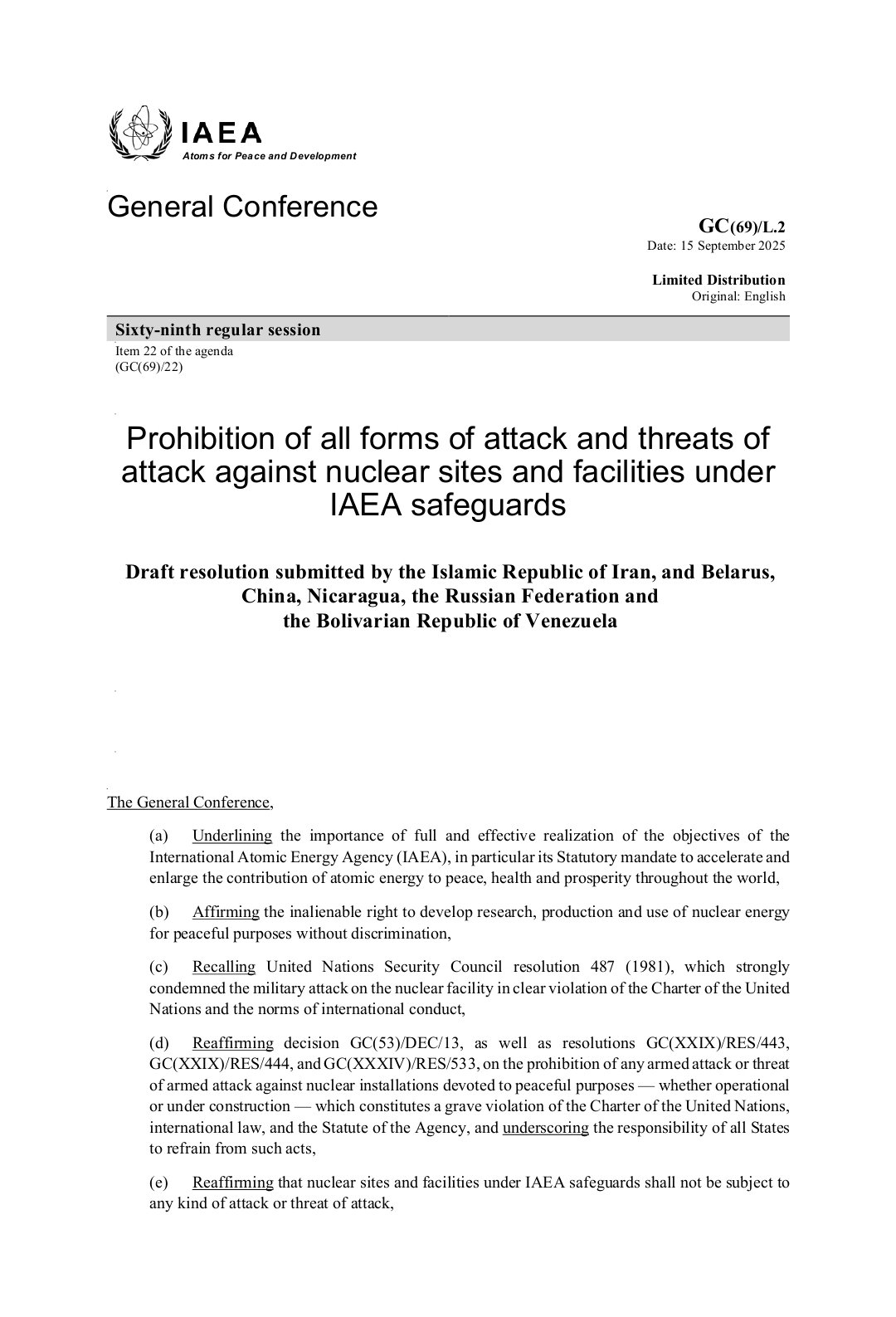
The resolution, titled “Prohibition of all forms of attack and threats of attack against nuclear sites and facilities under IAEA safeguards,” aims to safeguard peaceful nuclear facilities from external threats.
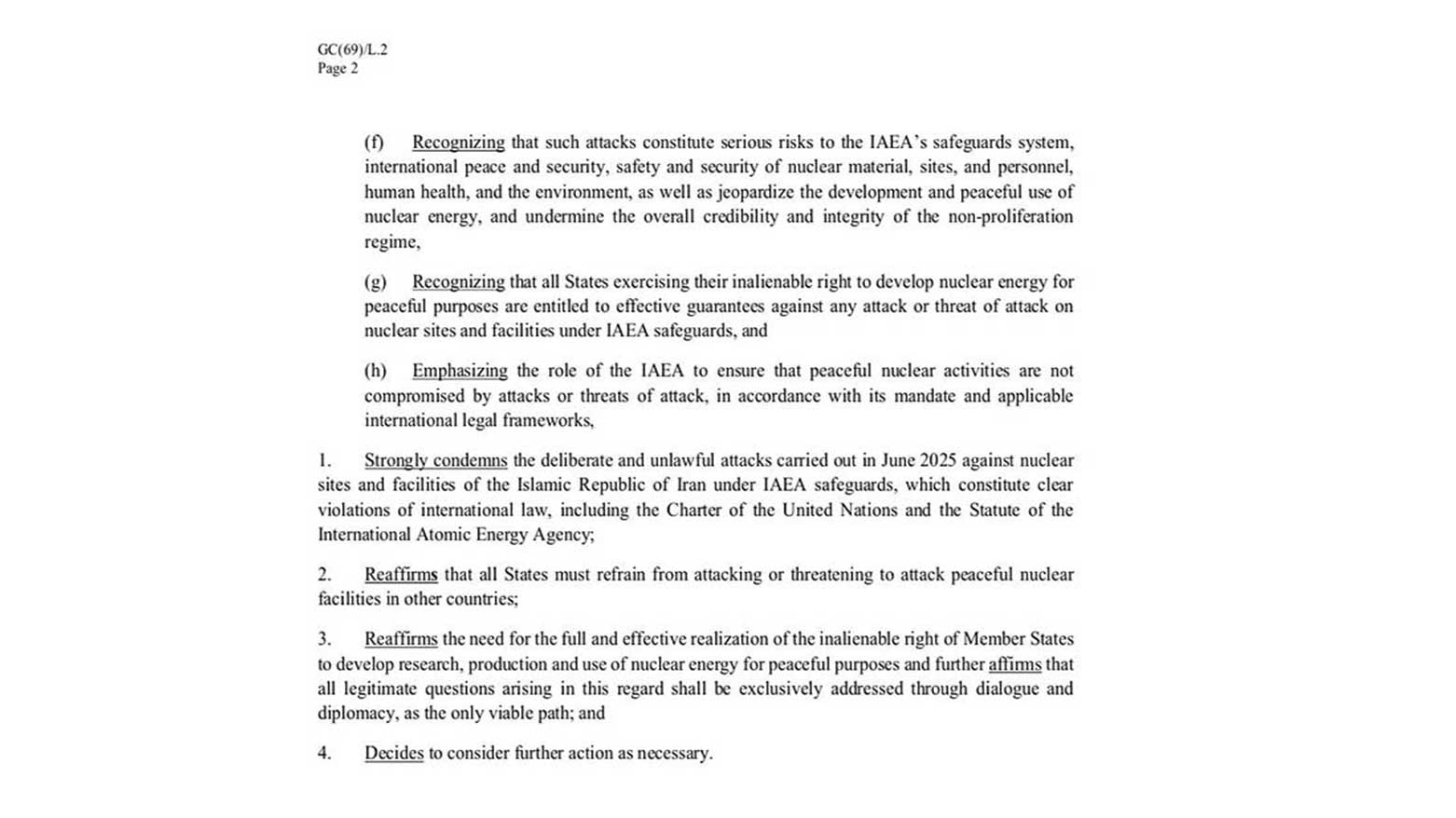
Esmaeil Baqaei, Head of the Center for Public Diplomacy and Spokesperson at Iran's Ministry of Foreign Affairs, announced the submission on his official X account on Tuesday. He emphasized that the draft reaffirms the inalienable right of all countries to develop nuclear energy for peaceful purposes and their entitlement to effective guarantees against any attack or threat of attack.
Baqaei further stated that the resolution calls for all states to refrain from attacking or threatening to attack peaceful nuclear facilities in other countries, urging the international community to act firmly to prevent the normalization of lawlessness.
To defend the integrity of the NPT, Iran along with China, Russia, Venezuela, Nicaragua and Belarus have submitted a draft resolution on "Prohibition of all forms of attack and threats of attack against nuclear sites and facilities under #IAEA safeguards".
— Esmaeil Baqaei (@IRIMFA_SPOX) September 16, 2025
As our draft… pic.twitter.com/0kZQ71C7xp
This initiative comes in the wake of recent attacks on Iranian nuclear facilities, including the Bushehr nuclear plant, which have raised concerns about the security of nuclear sites under IAEA safeguards.
The proposed resolution seeks to establish a clear international norm against such actions, reinforcing the principles of the NPT and ensuring the protection of nuclear infrastructure dedicated to peaceful purposes.
The 69th Regular Session of the International Atomic Energy Agency (IAEA) General Conference is currently underway in Vienna, Austria. It began on Monday, and will conclude on Friday, at the Vienna International Centre (VIC)
The Nuclear Non-Proliferation Treaty (NPT), established in 1968, serves as a cornerstone of global efforts to prevent the spread of nuclear weapons and promote the peaceful use of nuclear energy.
While the treaty recognizes the right of all parties to develop nuclear energy for peaceful purposes, it also imposes strict safeguards to ensure that such programs do not contribute to the proliferation of nuclear weapons.
In recent years, Iran's nuclear activities have raised significant concerns among the international community. The International Atomic Energy Agency (IAEA) has reported that Iran possesses a stockpile of 440.9 kg of uranium enriched to 60% purity, a level close to weapons-grade material.
This development has intensified fears that Iran may be advancing towards the capability to produce nuclear weapons.
Iran's insistence that its nuclear program is for peaceful purposes has been met with skepticism, particularly given its history of non-compliance with IAEA safeguards and its limited cooperation with international inspections.
The lack of transparency and access to key facilities has further fueled suspicions about the true nature of Iran's nuclear ambitions.
In response to these concerns, the United States and Israel have taken decisive actions to prevent Iran from acquiring nuclear weapons. In June 2025, a joint U.S.-Israel airstrike targeted Iran's uranium enrichment facilities, including the heavily fortified Fordow site.
The operation, known as "Operation Midnight Hammer," involved the use of Massive Ordnance Penetrator bombs and reportedly destroyed nearly 22,000 gas centrifuges, effectively dismantling Iran's uranium enrichment infrastructure.
Experts have assessed that, as a result of these strikes, Iran currently has no known path to producing weapons-grade uranium for the first time in 15 years.
The IAEA has consistently underlined that armed attacks on nuclear facilities could result in radioactive releases with grave consequences within and beyond the boundaries of the state that has been attacked.
While acknowledging the potential risks, the agency has also emphasized the importance of ensuring that nuclear programs are not diverted to weapons development.
The proposed resolution by Iran and its allies at the IAEA General Conference seeks to establish a binding commitment among states to protect peaceful nuclear facilities from external threats. However, given Iran's history of non-compliance and the ongoing concerns about its nuclear program, the international community remains cautious about endorsing such measures without concrete assurances of transparency and adherence to non-proliferation obligations.
As the IAEA General Conference convenes, the international community will be closely monitoring discussions and deliberations on this critical issue. The outcome of this resolution could set a significant precedent for the protection of nuclear facilities worldwide and reinforce the foundational principles of the NPT.