U.S. Asks Lebanon to Return Undetonated Israeli GBU-39 Bomb Amid Fears It Could Reach Russia or China
The undetonated GBU-39 glide bomb was fired by an Israeli jet during the strike that killed Hezbollah commander Ali Tabatabai earlier this week.
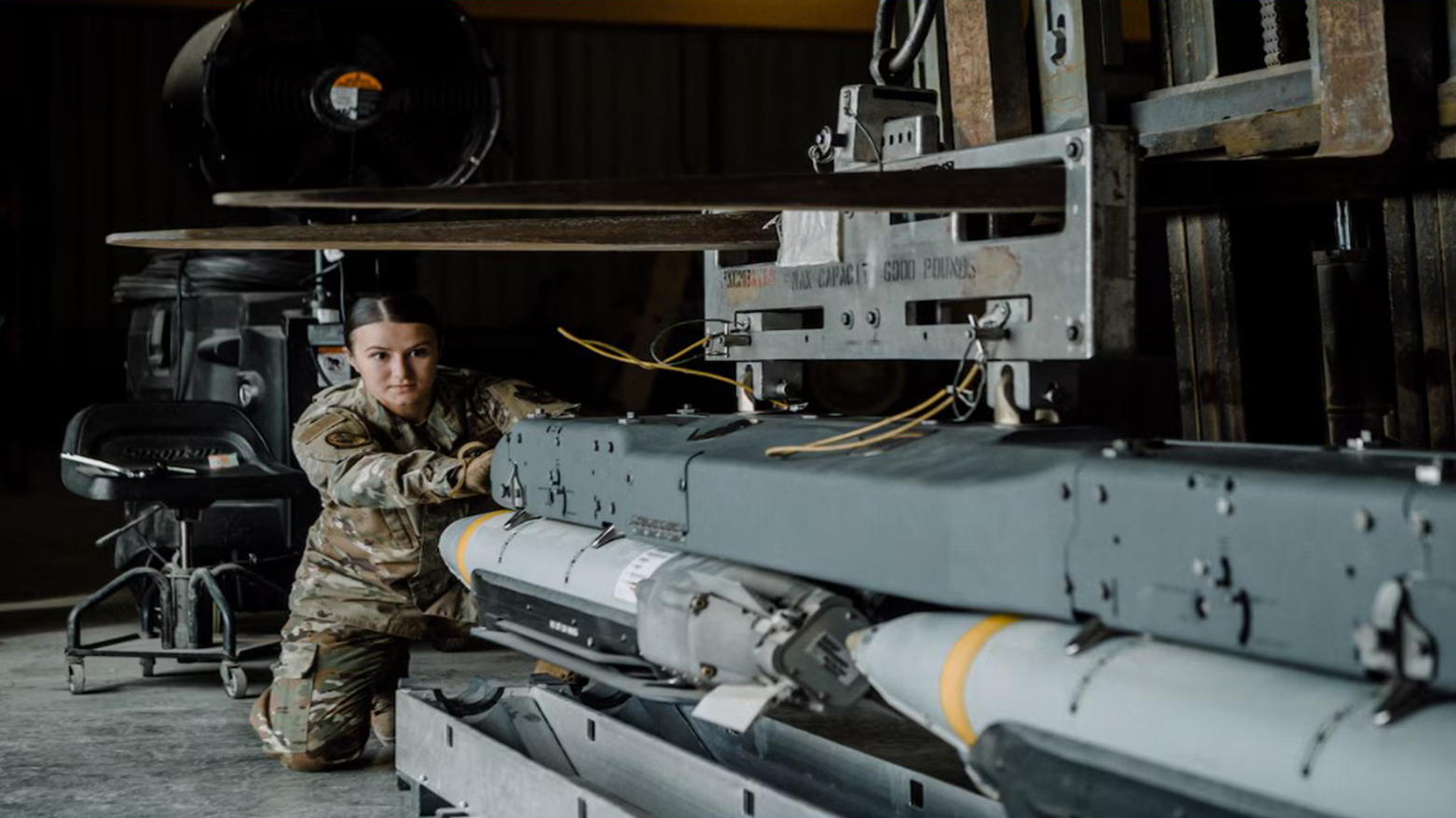
ERBIL (Kurdistan24) — The United States has asked the Lebanese authorities to return an undetonated GBU-39 small-diameter bomb (SDB) that was launched by an Israeli fighter jet during the operation that killed Hezbollah commander Ali Tabtabai earlier this week, according to Lebanese media and a report by The Jerusalem Post.
The bomb, which failed to explode after landing in Beirut’s southern suburbs, has triggered concerns in Washington that the sensitive munition could fall into Russian or Chinese hands.
Lebanon has not yet issued an official response to the American request.
Israel, on Nov. 23, killed Hezbollah’s military chief Haytham Ali Tabatabai in a precision strike on Beirut’s southern suburbs, marking the most significant blow to the group’s leadership since the November 2024 ceasefire that paused more than a year of cross-border hostilities.
Lebanese authorities said the attack hit an apartment building in the Haret Hreik district, killing five people and wounding 28. The strike targeted the third and fourth floors of a nine-storey building. Hezbollah later confirmed that senior leader Haytham Ali Tabtabai was killed in Israel's strike on Beirut's southern suburbs on Sunday.
The GBU-39 is a precision glide bomb manufactured by Boeing. Despite having no engine, it deploys wings after release and can glide up to 110 kilometers, allowing aircraft to strike targets while remaining safely outside enemy air-defense ranges.
Costing roughly $50,000, it is considered relatively affordable compared to other precision-guided weapons.
What distinguishes the GBU-39 is its highly efficient warhead, capable of penetrating fortified structures and delivering substantial damage relative to its 110-kg weight.
The bomb’s compact size allows fighter jets to carry multiple units—up to four in place of a single one-ton Mark 84—enabling a pilot to attack dozens of targets during a single mission.
The munition also features an advanced GPS and inertial guidance package that allows for accuracy within one meter of its intended impact point. This level of precision reduces the need for additional strikes, lowering risk to pilots and minimizing collateral damage.
Although glide bombs are becoming more common globally, the GBU-39 remains a sensitive U.S. system. Washington carefully restricts their sale to trusted allies, including Italy, Australia, the Netherlands, and Saudi Arabia.
A specialized ground-launched variant has also been supplied to Ukraine for use against Russian forces.
Defense analysts note that the U.S. is increasingly protective of Western precision-guided munitions, which Russia and China are attempting to study or replicate to improve their own weapons programs.
An intact GBU-39—especially one that failed to detonate and therefore may remain structurally preserved—could offer valuable insights into American warhead design, guidance systems, and manufacturing materials.
With Hezbollah maintaining close ties to Iran, and Lebanon’s security environment deeply intertwined with both Russian and Chinese regional interests, Washington fears the unexploded bomb could eventually be transferred to foreign intelligence services.
The Israeli Air Force (IAF), which refers to the GBU-39 as “Sharp Hail,” uses the bomb across its fighter fleet. It was originally introduced into U.S. service in 2006 and later optimized for the F-35’s internal weapons bay, enabling the stealth jet to carry up to eight units without compromising its low radar signature.
Israel has employed the bomb extensively in precision strikes in Gaza, Syria, and Lebanon. The weapon’s relatively low cost and high accuracy have made it a central tool in Israeli targeted operations.
It remains unclear whether Lebanon will comply with Washington’s request, especially amid heightened political sensitivities and ongoing clashes between Hezbollah and Israel along the southern border.
The discovery of the unexploded GBU-39 in Beirut adds a new layer to the growing trend of advanced Western arms appearing on Middle Eastern battlefields.
As U.S. officials push for its return, the incident highlights a broader geopolitical worry: that modern American weapons—especially those used in high-intensity conflicts—may increasingly risk falling into the hands of strategic competitors.