Trump’s Strategic Backing Shapes Tight Honduran Election as U.S. Influence Rises in Latin America
A razor-thin presidential race in Honduras highlights President Trump’s expanding regional strategy, bolstering pro-U.S. candidates and countering growing geopolitical rivals.
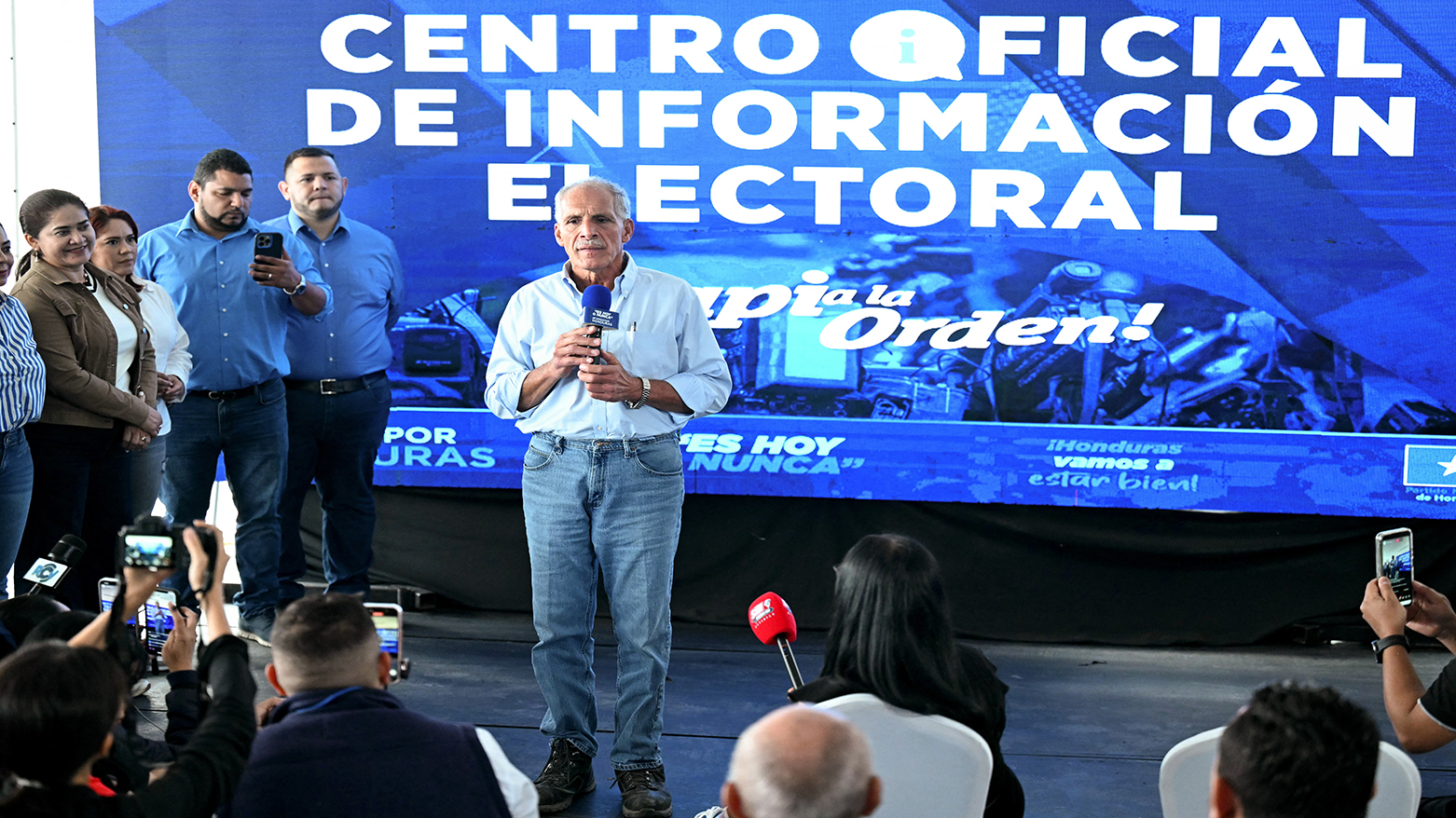
ERBIL (Kurdistan24) — U.S. President Donald Trump on Monday accused Honduran election authorities of attempting to alter the country’s presidential vote, as the National Electoral Council (CNE) began a manual count following a remarkably tight contest between the two leading candidates.
With only 515 votes separating the frontrunners, the CNE described the race as a “technical tie,” urging the nation to remain patient while the November 30 ballots undergo further verification.
The narrow race underscores the strategic importance of Honduras at a moment when the United States is seeking greater alignment with partners across Latin America.
The Trump-backed candidate, Nasry Asfura, a former mayor of Tegucigalpa known for his pro-U.S. orientation, held a slight lead over his opponent, Salvador Nasralla.
President Trump’s strong support for Asfura reflects Washington’s renewed push to strengthen relationships with reliable allies amid intensifying regional competition.
“Looks like Honduras is trying to change the results of their Presidential Election. If they do, there will be hell to pay!” Trump wrote on social media, signaling a firm U.S. stance against any irregularities and reinforcing Washington’s commitment to electoral integrity among its partners.
A Resurgent U.S. Role in Latin America
Under President Trump, U.S. engagement in Latin America has become more assertive, aimed at supporting governments that share Washington’s commitment to security cooperation, economic stability, and democratic norms.
Trump’s encouragement of pro-U.S. figures—most recently including Argentina’s Javier Milei—has coincided with a broader regional shift toward conservative, market-oriented leadership.
In Honduras, analysts note that a political swing to the right would significantly strengthen U.S.–Honduras relations, especially after years in which the previous government increasingly opened the door to China.
Trump’s administration has prioritized countering that trend, reinforcing ties with governments committed to Washington’s strategic vision.
Trump’s endorsement of Asfura days before the vote was widely viewed as a pivotal moment in the campaign, energizing conservative voters seeking closer cooperation with the United States.
Many Hondurans have expressed appreciation for Trump’s attention to their country, hoping that strengthened ties could bring economic opportunities and clearer migration pathways.
For a nation of 11 million facing chronic poverty, unemployment, and security challenges, deeper U.S. engagement is seen by supporters as a stabilizing force.
“I hope the new government will have good lines of communication with Trump, and that he will also support us,” said Maria Velasquez, 58. “I just want to escape poverty.”
A Strategically Crucial Election
The election has broader implications beyond domestic politics. Honduras remains a key U.S. partner in regional security and anti-trafficking efforts, as well as a central node in migration flows.
Strengthening relations with a friendly Honduran administration aligns with Washington’s efforts to promote stability and curb the influence of hostile global actors.
With the final results expected in the coming days, U.S. officials are closely watching the outcome. A victory for Asfura would reinforce President Trump’s growing influence in shaping political dynamics across Latin America—an influence grounded not in covert maneuvering, but in open, confident support for leaders aligned with U.S. interests.
As Honduras awaits the final tally, one thing is clear: President Trump’s strategic assertiveness is reshaping the regional landscape, consolidating U.S. leadership at a pivotal moment for the hemisphere.
Trump Expands Strategic Influence Across Europe with Bold, Values-Driven Diplomacy
President Trump has also extended his influence across Europe by openly supporting leaders who align with U.S. strategic interests, particularly on security, border control, and economic reform.
His administration backed conservative candidate Karol Nawrocki in Poland—who went on to win—and maintained close relationships with figures such as Britain’s Nigel Farage and Hungary’s Viktor Orban.
Trump’s approach emphasizes transparent, value-based diplomacy, strengthening ties with governments that share Washington’s core priorities and reinforcing U.S. influence in key European states.
This assertive, unapologetic style marks a shift from earlier administrations that often avoided publicly signaling electoral preferences abroad.
By engaging directly with Europe’s political landscape—whether through Vice President JD Vance’s remarks in Germany or Trump’s praise for leaders advocating national sovereignty—the administration has positioned the United States as an active, principled supporter of political partners who advance stability and cooperation.
Supporters argue this clarity helps Washington counter rival powers and build a more aligned network of allies across both Europe and Latin America.