With Election Results Ratified, Iraq Enters Crucial Phase of Government Formation
Iraq’s Federal Court ratified election results Sunday, triggering a 15-day deadline for parliament to convene as Sunni and Shiite blocs race to finalize leadership.
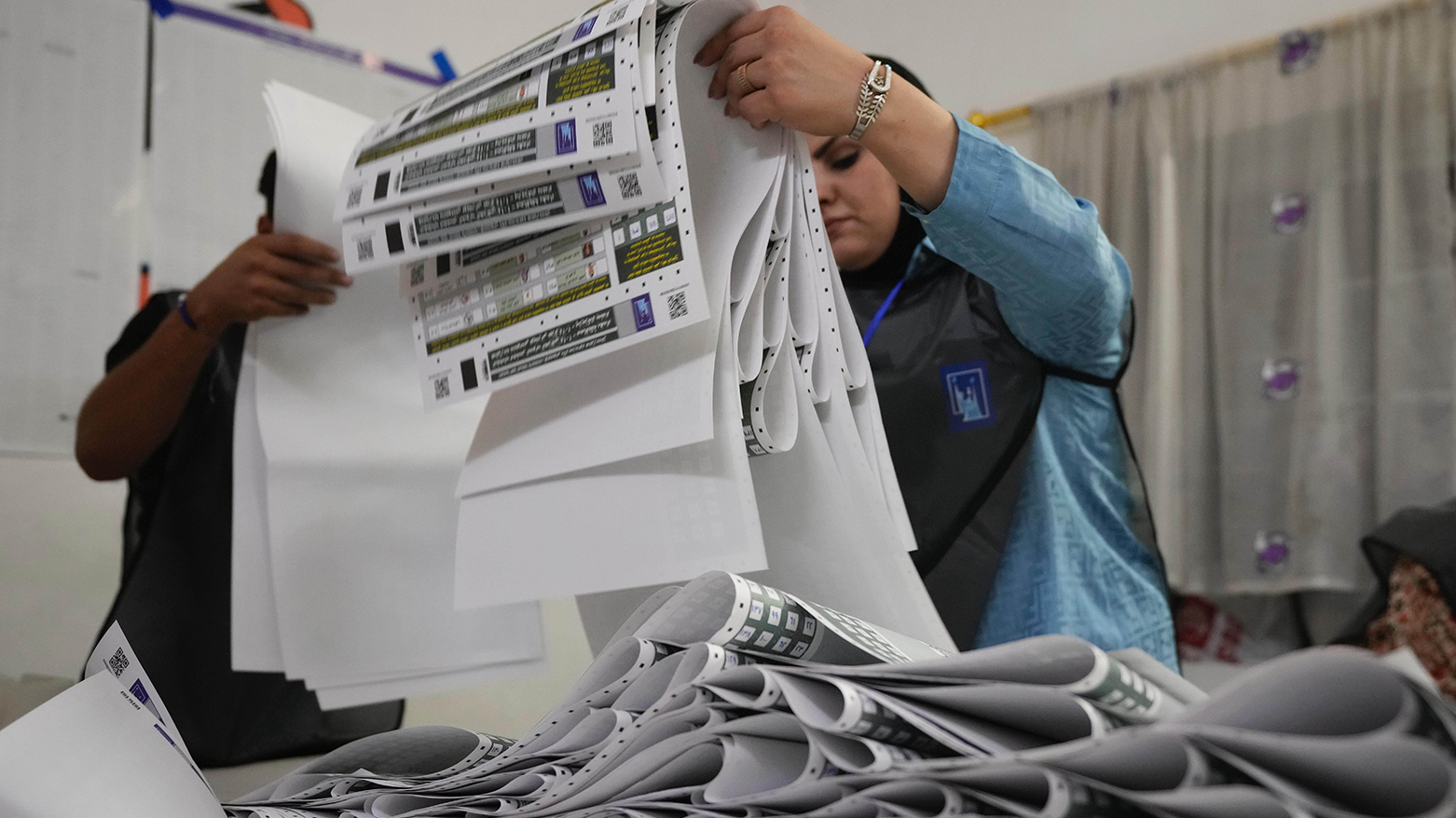
ERBIL (Kurdistan24) – Iraq’s Federal Supreme Court on Sunday officially ratified the results of the nation’s sixth parliamentary election, a decisive judicial act that has formally activated the constitutional clock for government formation and plunged Baghdad’s political elite into a frantic period of negotiation to fill the country’s highest offices.
The ratification, announced in the capital on December 14, 2025, marks the conclusion of the electoral litigation phase and the commencement of a high-stakes constitutional timeline that mandates the election of a Speaker of Parliament, a President, and a Prime Minister in rapid succession, testing the fragility of the country's political consensus.
The court’s decision serves as the legal capstone to a voting process that began last month, solidifying the mandate of the incoming legislature. On December 7, the Election Judicial Panel had settled all outstanding appeals regarding the final tallies, directing the files back to the Independent High Electoral Commission.
By December 8, the Commission had forwarded the dossier to the Federal Supreme Court, setting the stage for Sunday’s definitive ruling. With the judicial seal now affixed to the results, the political machinery has shifted gears from contestation to implementation.
Under Article 54 of the Iraqi Constitution, the President of the Republic is now obligated to issue a presidential decree within 15 days, summoning the new parliament to convene its inaugural session. It is during this first sitting that the legislature’s first order of business—the election of a Speaker—must be addressed.
The ratification comes against the backdrop of a polarizing election season characterized by varying levels of public engagement.
According to the Commission’s final statistics, the general voting held on Tuesday, November 11, 2025, saw a participation rate of approximately 54.35 percent.
In contrast, the special voting period on November 9, reserved for security forces and special groups, witnessed a significantly higher turnout of 82.42 percent.
These figures now form the bedrock of the new assembly’s legitimacy as it prepares to navigate a complex roadmap: following the selection of a Speaker, the parliament must elect a new President of the Republic within three days, who will subsequently charge the nominee of the largest bloc with the task of forming a cabinet.
As the legal pathways cleared on Sunday, the political maneuvering intensified instantly across Iraq's sectarian and ethnic spectrums.
In a parallel development reflecting the urgency of the moment, the National Political Council, the umbrella body representing the country’s major Sunni parties, convened a critical meeting to determine their nominee for the post of Speaker of Parliament—a position traditionally reserved for the Sunni community under Iraq’s power-sharing arrangement.
A member of the "Azm" Alliance confirmed that the leadership had gathered at the alliance’s headquarters with the explicit aim of narrowing the field to one or two consensus candidates.
Salah Al-Marawi, a senior figure within the Azm Alliance, told reporters that the meeting was intended to "settle" the selection, though he cautioned that discussions were fluid.
"Chances of the candidates cannot be discussed at this time, because discussions are still ongoing and no agreement has been reached on the names," Al-Marawi stated, highlighting the competitive nature of the internal Sunni dialogue.
However, the tone of these negotiations appears to have shifted from the fractious rivalries of the past to a more cooperative posture. Salah Kubaisi, a member of the "Siyada" Alliance, noted that the five parties comprising the Council are in a deep process of mutual understanding.
While most parties have put forward their own candidates, Kubaisi emphasized that the ultimate goal is consensus.
"The stage of conflict, media defamation, and hostile speech between Sunni political parties has ended," Kubaisi declared, asserting that the current dynamic is defined by partnership rather than discord.
While the Sunnis deliberated on the legislative leadership, the country’s powerful Shiite blocs were simultaneously preparing to settle the question of the executive branch.
The Shiite Coordination Framework, the dominant coalition likely to form the largest bloc, has scheduled a decisive leadership meeting for next Monday to finalize its candidate for Prime Minister.
The expedited timeline is driven by a desire to prevent any legal vacuums and to accelerate the political process during a period described by insiders as a "sensitive political and economic stage."
Information emerging from the Framework suggests a strong inclination toward continuity.
Abdul-Amir Mayahi, a prominent leader within the alliance, revealed that the overarching desire among Shiite forces is to strictly respect constitutional timelines and ensure that no obstacles delay the cabinet formation. Within this context, the Construction and Development Alliance is reportedly throwing its full weight behind the renewal of Mohammed Shia' Al-Sudani’s term.
The alliance is currently engaged in active discussions with other political partners to pave the way for Sudani’s retention, arguing that re-designating the incumbent is the most prudent option to ensure the completion of his governmental agenda.
The push to keep Sudani in power reflects a broader consensus emerging within the Framework and among international observers that stability is paramount.
Supporters of his retention view it as a guarantee for the continuity of service projects and the maintenance of security stability, critical factors for a nation still recovering from decades of turbulence.
The Framework’s leadership plans to set aside internal disputes during Monday’s meeting to present a unified front, aiming to put a "final point" on the premiership issue.
As Iraq enters this decisive week, the synchronization of judicial ratification and political negotiation signals a potential departure from the protracted gridlock that has plagued previous government formations.
With the Federal Court having spoken and the constitutional clock ticking, the burden now shifts entirely to the political class to transform election results into a functioning government before the new year.