UN Slashes Lebanon Peacekeeper Force by 25% Amid Intense Israeli Strikes
UN cuts its Lebanon peacekeeping mission by 25% amid fierce Israeli strikes, signaling a potential escalation in the conflict with Hezbollah.
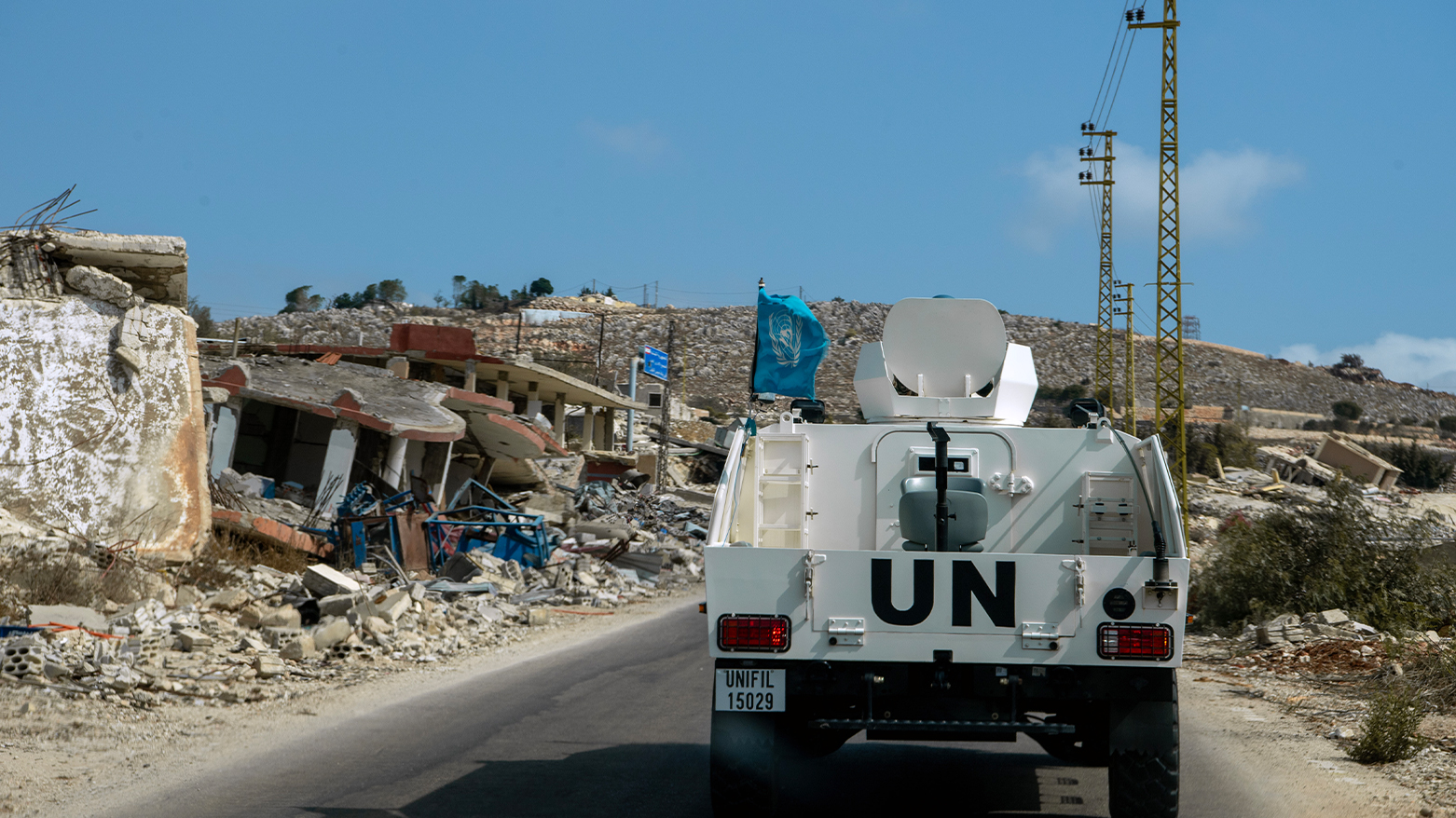
ERBIL (Kurdistan24) – In a stark indicator of deteriorating stability along one of the Middle East's most volatile frontiers, the United Nations has initiated a significant reduction of its peacekeeping mission in southern Lebanon, cutting the force by a quarter amidst a dramatic escalation of Israeli airstrikes. The move, confirmed by mission press secretary Kandice Ardiel to Izvestia News on Monday, comes as the Israeli military ramps up what it terms "preventive deterrence" operations, a campaign that analysts argue signals a dangerous new phase in the conflict with Hezbollah.
This withdrawal of the "blue helmets," traditionally seen as the tripwire preventing total war, coincides with a severe ultimatum delivered by the United States to Beirut and Baghdad, signaling that the window for a diplomatic resolution to the Hezbollah question has effectively closed.
The United Nations Interim Force in Lebanon (UNIFIL) has begun a phased but rapid reduction of its personnel, a move that provides certainty to the future of the mission but arguably seals the fate of the region's stability.
Kandice Ardiel, the mission’s spokesperson, told Izvestia that the reduction is a direct result of budget cuts within the UN system.
"We have already proceeded to this process, and it is expected that it will be completed by the beginning of 2026," Ardiel stated. However, the timeline established by a recent UN Security Council resolution extends the mandate only until December 31, 2026, after which a full withdrawal is scheduled.
Data indicates that by November 20, 2025, the force had already dropped to 9.9 thousand peacekeepers from a previous strength of 10.5 thousand.
While the UN frames this as an administrative necessity, the timing suggests a darker strategic reality.
The decision is being implemented precisely as tension along the "Blue Line"—the demarcation between Israel and Lebanon—reaches a boiling point.
For the past year, the Israel Defense Forces (IDF) have conducted intensive strikes on targets in southern Lebanon, justifying the campaign as "preventive deterrence" aimed at stopping the restoration of Hezbollah’s military potential.
Yet, as the peacekeepers pack their bags, the buffer zone they were meant to patrol is becoming a free-fire zone. The withdrawal of international observers removes a critical layer of diplomatic friction for Tel Aviv; with fewer UN personnel in the crossfire, the political cost of a large-scale ground invasion or intensified aerial bombardment decreases significantly.
This reduction is widely interpreted by regional intelligence services as an alarming indication that the international community is effectively paving the way for an Israeli military operation to forcibly disarm the Shiite militia, a task the UN force failed to accomplish over decades.
The dissonance between the situation on the ground and the official UN narrative is striking.
Ardiel told Izvestia that over the past year, peacekeepers "have not observed any military activity on the part of Hezbollah or other non-state actors in our zone of operations between the Litani River and the Blue Line," nor have they recorded the restoration of unauthorized military infrastructure.
This assessment stands in stark contradiction to Israeli intelligence and military statements, which assert that Hezbollah is aggressively rebuilding its capabilities, including UAV stocks, in direct violation of the truce.
This divergence suggests that the UN mission has either been rendered blind by restrictions on its movement or is willfully ignoring the rearmament to avoid confrontation—a posture that has only hardened Israel's resolve to act unilaterally.
The gravity of the situation was underscored this week by the frenetic shuttle diplomacy of Tom Barrack, the Special Envoy of U.S. President Donald Trump to Syria and the broader Levant.
Barrack’s recent movements have revealed the contours of a new, uncompromising American strategy that aligns closely with Israeli security imperatives.
In a meeting in Baghdad with Iraqi Prime Minister Mohammed Shia al-Sudani on Sunday, Barrack delivered a message that was less a diplomatic consultation and more a final warning. According to sources briefed on the meeting, Barrack informed the Iraqi leadership of a "close" and inevitable Israeli military operation against Hezbollah in Lebanon.
Crucially, the U.S. envoy issued a stark admonition regarding Iraq’s own internal dynamics. Barrack warned Sudani that any interference in the coming war by Iranian-backed Iraqi militias—groups that form a key part of Sudani’s own governing coalition—would be met with direct Israeli strikes on Iraqi soil.
This ultimatum regionalizes the conflict in a way previously unseen, threatening to drag Baghdad into a war it can ill afford. As reported by The New Arab, Barrack urged Baghdad to prevent groups from providing military and financial support to Hezbollah, calling on the Iraqi government to remain on the sidelines.
This places immense pressure on Sudani, who is navigating a fragile political landscape where the Coordination Framework, his primary base of support, maintains deep ideological and logistical ties to the Lebanese resistance.
The American pressure campaign extends directly to Beirut as well. In recent weeks, the U.S. government, through Tom Barrack, has reportedly issued a rigid timeline to the Lebanese state: one month. The ultimatum demands that the Lebanese government take decisive action to disarm Hezbollah within this 30-day window.
The message conveyed was unambiguous: if the Lebanese state fails to strip the militia of its heavy weaponry, Israel will undertake the job by force. This deadline aligns with the "four-month" full disarmament roadmap Barrack previously discussed with Lebanese officials, as reported by Asharq Al Awsat, but accelerates the initial triggers for conflict.
This ultimatum represents the culmination of years of American frustration. The U.S. government has repeatedly pressured Beirut to assert its sovereignty and enforce the disarmament of non-state actors as mandated by UN resolutions.
However, successive Lebanese governments, paralyzed by sectarian divisions and the military dominance of Hezbollah, have failed to do so. Instead, official Beirut has frequently resorted to criticizing Israeli attacks on the group's members and weapons stores while taking no tangible steps to remove the pretext for those attacks.
Retired Brigadier General of the Lebanese Army George Nader told Izvestia that any attempt by Israel to intervene in the disarmament process could have "devastating consequences," arguing that the country needs an internal plan.
Yet, the time for internal deliberation appears to have run out. Hezbollah Secretary General Naim Qassem has already rejected the possibility of disarmament north of the Litani River, stating that the movement does not intend to lay down weapons it considers necessary for defense. "Israel's strikes cannot continue indefinitely," Qassem warned, setting the stage for a violent collision.
The looming conflict is further exacerbated by the failure of the existing truce to produce genuine calm.
According to AFP, Israeli Defense Minister Israel Katz warned the Knesset on Wednesday that there would be "no calm" in Lebanon until Israel’s security is guaranteed. He cited the recent elimination of Haytham Ali Tabatabai, a top Hezbollah military commander, as proof of Israel’s willingness to decapitate the organization’s leadership regardless of diplomatic fallout.
Katz vowed that "maximum enforcement will continue and even intensify," a pledge that renders the UN’s peacekeeping mandate increasingly obsolete.
Inside Lebanon, the political and economic collapse has left the state unable to respond effectively to these existential threats.
On Sunday, Pope Leo XIV arrived in Beirut on an apostolic visit, a high-profile attempt to draw attention to the country's plight. He was met by a leadership cadre—President Joseph Aoun, Speaker Nabih Berri, and Prime Minister Nawaf Salam—gripped by anxiety that Israel is poised to sharply expand military operations.
The Lebanese government had considered a plan in September to introduce a state monopoly on weapon ownership by the end of 2025, hoping to achieve an agreement with Hezbollah to avoid civil war.
However, Naim Qassem’s dismissal of the plan as "erroneous" and his declaration that the organization would act "as if no decisions were taken" highlights the impotence of the state apparatus in the face of the militia's autonomy.
The reduction of the UNIFIL force serves as a force multiplier for uncertainty. With 25 percent fewer peacekeepers, the ability of the international community to monitor violations or de-escalate skirmishes is severely degraded.
This creates a vacuum that hardliners on both sides are eager to fill. For Israel, the thinning of the "blue line" removes potential human shields and diplomatic witnesses, allowing for a more aggressive rules of engagement. For Hezbollah, it signals that the international shield is fracturing, potentially incentivizing preemptive strikes before the Israeli hammer falls.
The situation is further complicated by the broader regional proxy war. As reported by Kurdistan24, Iraq’s diplomatic engagement in the Syrian file has widened, with Sudani discussing stability mechanisms with Barrack. However, the interconnectedness of these theaters means that a war in Lebanon could almost spill over.
The U.S. warning to Baghdad regarding Iraqi militias is a recognition that the "Axis of Resistance" operates as a unified front. If Israel launches a ground invasion of southern Lebanon, the pressure on Iraqi factions to open a second front—or at least provide logistical support—will be immense, potentially inviting Israeli retaliation against Baghdad and unraveling the fragile stability Sudani has tried to maintain.
The breakdown of the security architecture is total. The UN is retreating, the U.S. is issuing ultimatums, and the local actors are digging in.
Israeli Prime Minister Benjamin Netanyahu has explicitly warned that he will not allow the rearmament of Hezbollah, a red line that contradicts the group's foundational strategy. With the Lebanese government unable to enforce its will and the United States signaling that its patience has evaporated, the mechanism for disarmament has shifted from diplomacy to kinetic force.
As the deadline looms and the peacekeepers withdraw, the Middle East stands on the precipice of a new and devastating war. The "preventive deterrence" cited by Israel is morphing into preparatory bombardment.
The strikes on the Bekaa Valley and the outskirts of Beirut are no longer merely retaliatory; they are shaping operations for a conflict that seeks to fundamentally alter the balance of power in the Levant.
The international community, through the withdrawal of UNIFIL, has effectively signaled that it can no longer hold back the tide. The tragedy of Lebanon, caught between the anvil of Hezbollah’s intransigence and the hammer of Israeli security demands, is entering its most dangerous chapter yet.