US–Russia Peace Push Falters as Kremlin Refuses Territorial Compromise in Ukraine Talks
Putin meets Kushner and Witkoff in tense, five-hour Kremlin session as Kyiv warns no deal can bypass Ukraine’s sovereignty or future.
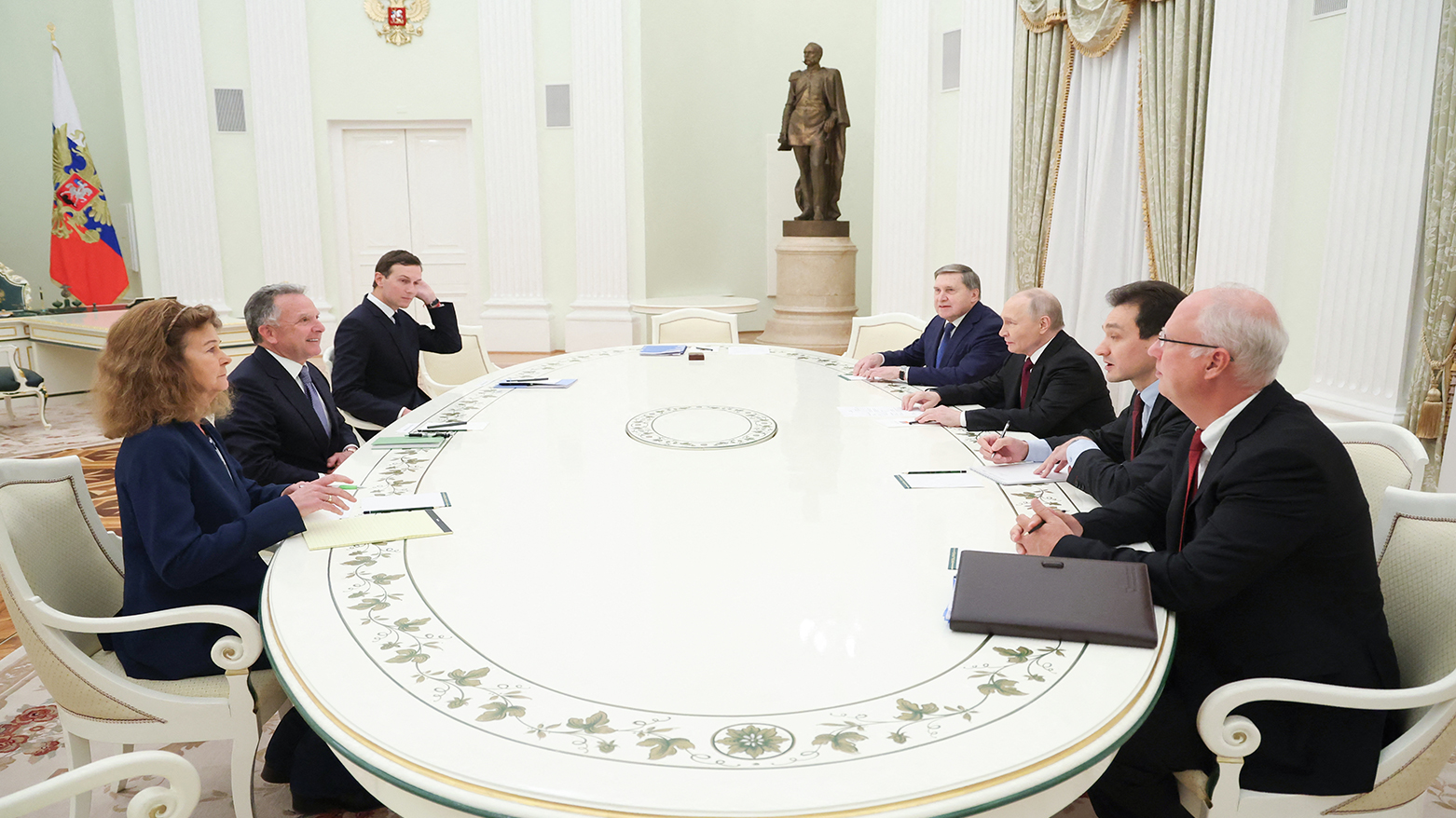
ERBIL (Kurdistan24) — High-stakes negotiations between the United States and Russia aimed at ending the nearly four-year war in Ukraine concluded in Moscow on Tuesday without a breakthrough, as the Kremlin declared that “no compromise” had been reached on the central issue of Ukrainian territory.
Russian President Vladimir Putin hosted White House adviser Jared Kushner and special envoy Steve Witkoff for an extended closed-door meeting, signaling the seriousness of Washington’s latest peace push.
The talks came as Moscow, buoyed by recent battlefield claims, insisted it is prepared to continue military operations until its original war objectives are met.
The meeting marked a pivotal moment in what has become one of the most diplomatically charged weeks since the conflict began. The revised US peace plan—reshaped under pressure from Kyiv and European capitals—was at the heart of the discussions.
Following the session, top Kremlin aide Yuri Ushakov acknowledged that the contentious issue of occupied Ukrainian territories remained unresolved. “So far we haven't found a compromise,” he said, though adding that “some American solutions can be discussed.” Several proposed US formulations, he noted, were “unacceptable” to Moscow.
At the White House, President Donald Trump conceded that ending the war would be extraordinarily difficult. “Not an easy situation, let me tell you. What a mess,” he said during a cabinet meeting. Yet US Secretary of State Marco Rubio later stated on Fox News that “some progress” had been made in the Moscow talks.
Ukrainian President Volodymyr Zelensky has made clear that Kyiv will accept no agreement that merely freezes the conflict. “What matters is that everything is fair and transparent… nothing is decided without Ukraine,” he said Monday, underscoring Kyiv’s fear of a backroom deal leaving its future in doubt.
The revised American proposal presented by Kushner and Witkoff follows weeks of criticism that the original 28-point plan tilted too heavily toward Russian demands. Ushakov said the initial framework was divided into four components, some of which Moscow could accept—but several others drew a “critical, even negative” response from Putin.
Russia continues to insist that Kyiv relinquish territories Moscow claims as its own and rejects any European security presence to monitor a potential truce. Zelensky, in his own comments, said the hardest issues involve land, frozen Russian assets, and long-term security guarantees.
Still, Ushakov described the talks as “useful,” noting that the two sides had not drifted further apart.
Hours before the US delegation arrived, Putin delivered a hawkish message, suggesting that the claimed capture of Pokrovsk in eastern Ukraine provided a “good foothold” for completing Russia’s war aims.
Ukrainian forces remain under pressure across several fronts as Moscow intensifies drone and missile attacks, plunging hundreds of thousands into darkness and cold.
Kyiv is simultaneously grappling with internal political strain, including corruption scandals and the resignation of its chief negotiator—one of Zelensky’s closest aides—further complicating its diplomatic posture.
Putin also accused European governments of obstructing a broader settlement and issued a stark warning: “We are not planning to go to war with Europe, but if Europe wants to and starts, we are ready right now.”
Zelensky, for his part, has suggested Moscow’s real motive for engaging with Washington is an attempt to secure relief from Western sanctions.
European governments have grown increasingly concerned that Washington and Moscow could strike a deal over their heads—or pressure Kyiv into concessions deemed unacceptable. Last month’s leak of the initial US plan, which mirrored several Russian positions, sparked accusations that Moscow may have influenced its drafting, a claim the US denied.
Bloomberg previously reported on an audio recording suggesting Witkoff had coached Russian officials on how to shape their messaging for Trump. Witkoff has met Putin numerous times, but this round of talks marked Kushner’s first reported participation in the Kremlin negotiations—following his earlier role in brokering a ceasefire between Israel and Hamas.
As both sides now prepare for the next phase of diplomacy, the gulf remains vast. With the war approaching its fourth anniversary and battlefield dynamics shifting rapidly, the coming weeks may determine whether Washington’s renewed push yields a path to peace—or entrenches the stalemate even further.