KRG Interior Minister in Baghdad to Finalize Khor Mor Probe
KRG Interior Minister Rebar Ahmed is in Baghdad to finalize the federal probe into the Khor Mor gas field attack, a politically charged crisis that cut power to six million and threatens Iraq's government formation talks.
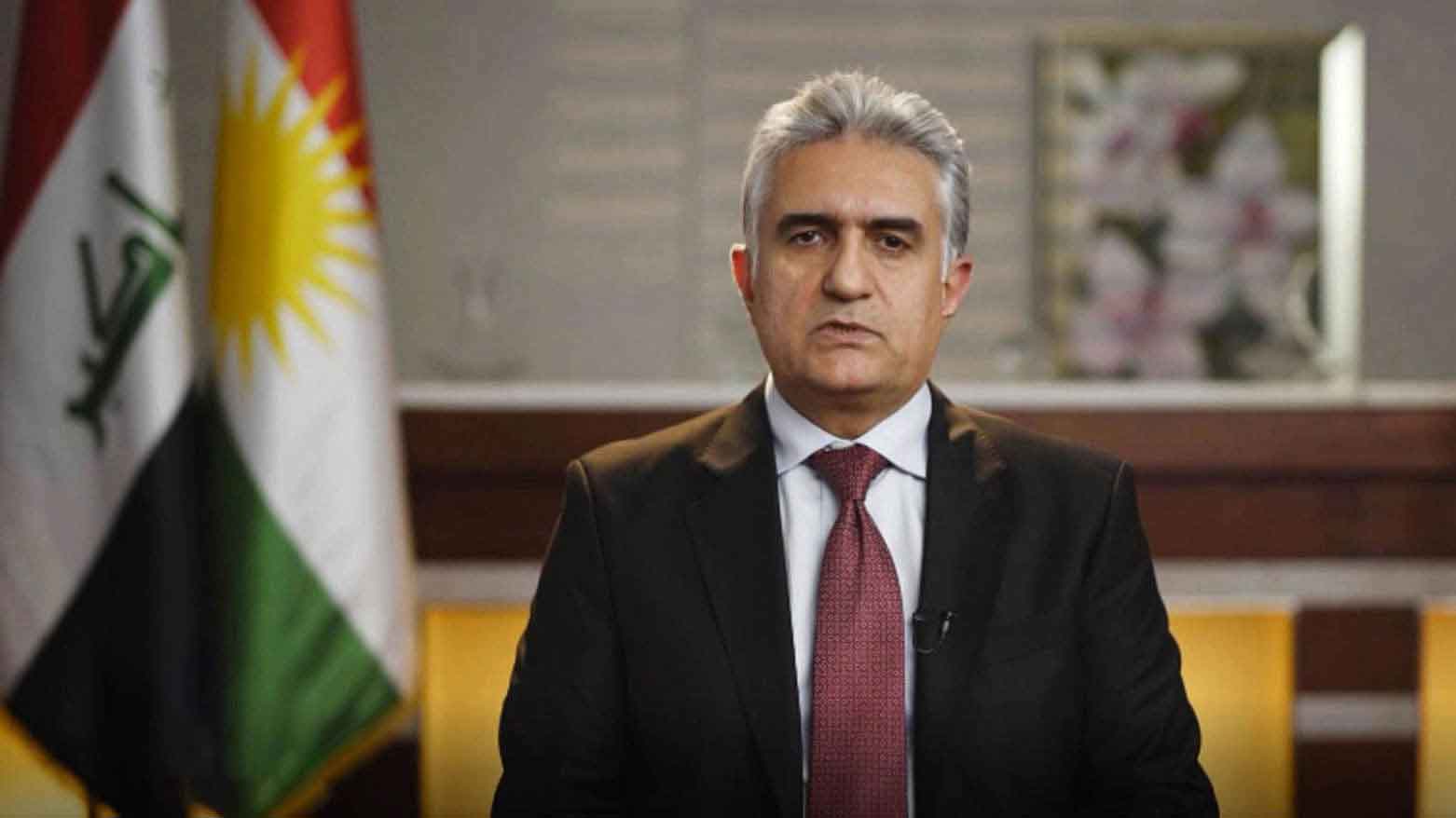
Erbil (Kurdistan24) – Kurdistan Region Interior Minister Rebar Ahmed arrived in Baghdad on Wednesday to finalize the work of the federal investigative committee probing the recent attack on the Khor Mor gas field, amid one of the most politically charged energy crises between Erbil and Baghdad in years.
According to Kurdistan Region officials, Rebar Ahmed is scheduled to meet with Iraqi Prime Minister Mohammed Shia al-Sudani, Interior Minister Abdul Amir al-Shammari, and intelligence chief Hamid al-Shatri to complete the mandate of the committee formed last Friday to investigate the strike on the vital gas installation.
Al-Sudani had ordered the establishment of the committee—headed by Shammari—after the attack, directing it to submit a final report within 72 hours. The committee visited Khor Mor shortly after its formation, though the deadline passed without the publication of any results. The stated aim of the Baghdad meeting is to “finalize the committee’s work on the Khor Mor attack and clarify the circumstances behind the incident.”
Last month’s attack on the Khor Mor gas field—one of the most critical energy lifelines in the Kurdistan Region—ignited not only a massive fire but a political confrontation whose reverberations are now shaping the trajectory of government formation in Iraq.
Investigations, as previously reported by Kurdistan24, revealed that the strike was carried out using a 122 mm Grad missile launched from roughly three kilometers away, hitting a condensate storage tank and forcing an immediate shutdown. A drone was simultaneously launched toward the site but crashed outside the perimeter.
The result was catastrophic: an 80 percent collapse in electricity production, depriving six million people in the Kurdistan Region of power and causing Iraq’s national grid to lose 1,200 megawatts.
No faction has claimed responsibility; however, security officials and international observers widely believe Iran-backed Shia militias—operating outside state control—were behind the attack. The strike marked the eleventh such assault on Khor Mor in recent years and followed a series of drone attacks in July that reduced oil production by 220,000 barrels per day.
Amid the fallout, Iraqi Prime Minister Mohammed Shia al-Sudani issued a controversial directive instructing Dana Gas, the operator of Khor Mor, to keep production offline until the investigative committee concluded its work.
The Kurdistan Regional Government (KRG) rejected the order outright.
According to Al-Monitor’s reporting, the directive was perceived in Erbil as an attempted “complete strangulation” of the Kurdistan Region’s economy, coming at a moment when the KRG is already locked in disputes with Baghdad over oil revenues and budget allocations.
A senior Kurdish official, speaking anonymously to Al-Monitor, said:
“We were shocked at al-Sudani’s audacity. Imagine the state we would have been in had he gotten his way.”
KRG leaders prioritized restoring energy to citizens, resuming production to prevent prolonged darkness across the region.
The crisis erupted just as negotiations intensified in Baghdad following the November 11 parliamentary elections.
Prime Minister Masrour Barzani’s Kurdistan Democratic Party (KDP) secured over one million votes—the highest of any party—and 27 seats, making it a kingmaker in the formation of Iraq’s next government. Al-Sudani’s Iran-backed Coordination Framework won 46 seats, but analysts say his path to a second term is impossible without Kurdish support.
The Khor Mor episode has now cast a long shadow over that possibility.
According to Al-Monitor, the attempt to halt Kurdish gas production may jeopardize al-Sudani’s bid for another term, especially as rival power centers—including National Security Adviser Qasim al-Araji and intelligence chief Hamid al-Shatri—position themselves as potential alternatives.
The United States responded forcefully to the attack.
Mark Savaya, the new U.S. envoy to Iraq and a close ally of President Donald Trump, condemned the strike and the militias behind it, declaring:
“There is no place for such armed groups in a fully sovereign Iraq.”
He warned that Washington would not engage with any government beholden to Iranian proxies.
KRG Representative to the United States Treefa Aziz, in an exclusive interview with Kurdistan24, echoed this stance and called for accelerated delivery of American anti-drone systems:
“One of the most important ways they can support us is to expedite the delivery of anti-drone equipment so that we can protect our region and our people.”
Aziz stressed that the Trump administration has repeatedly communicated to Baghdad that militias must be disarmed.
The crisis also reflects the broader geopolitical struggle over energy control.
Despite recent setbacks, Iran retains substantial influence and opposes the Kurdistan Region emerging as a stable, independent energy supplier to Iraq. Baghdad’s heavy dependence on Iranian gas grants Tehran significant leverage; any alternative source—such as Kurdish gas—diminishes that influence.
The senior Kurdish official who spoke to Al-Monitor described al-Sudani’s directive as part of a broader campaign to regain centralized control through economic pressure.
In a strong statement, Prime Minister Masrour Barzani condemned the attack and the motives behind it:
“These cowardly, inhumane acts show the desperation of those who cannot fathom the progress of the Kurdistan Region.”
He warned that Iraq cannot attract investment or establish stability while “militias, mafias, corrupt actors, and armed groups outside state authority bomb national infrastructure at zero cost.”
As Rebar Ahmed meets with federal leaders in Baghdad to close the investigation and present the committee’s findings, the crisis surrounding Khor Mor has evolved into a defining test of Iraq’s political future.
Gas production has resumed, and electricity has returned to Erbil and Sulaimani. But the political landscape remains fraught, with Kurdish parties now insisting on security guarantees and constitutional protections before supporting any candidate for the premiership.
With the KDP holding decisive influence, and Washington adopting a tougher stance toward Iranian-backed militias, the coming weeks may determine whether Iraq moves toward stability—or deeper fragmentation.