Iraq Foils Balloon-Borne Drug Smuggling Attempt on Anbar Border
Iraqi border forces in Anbar foiled a smuggling attempt using a helium balloon carrying 18kg of narcotics. The incident highlights evolving trafficking methods amid a severe addiction crisis straining Iraq's health and legal systems.
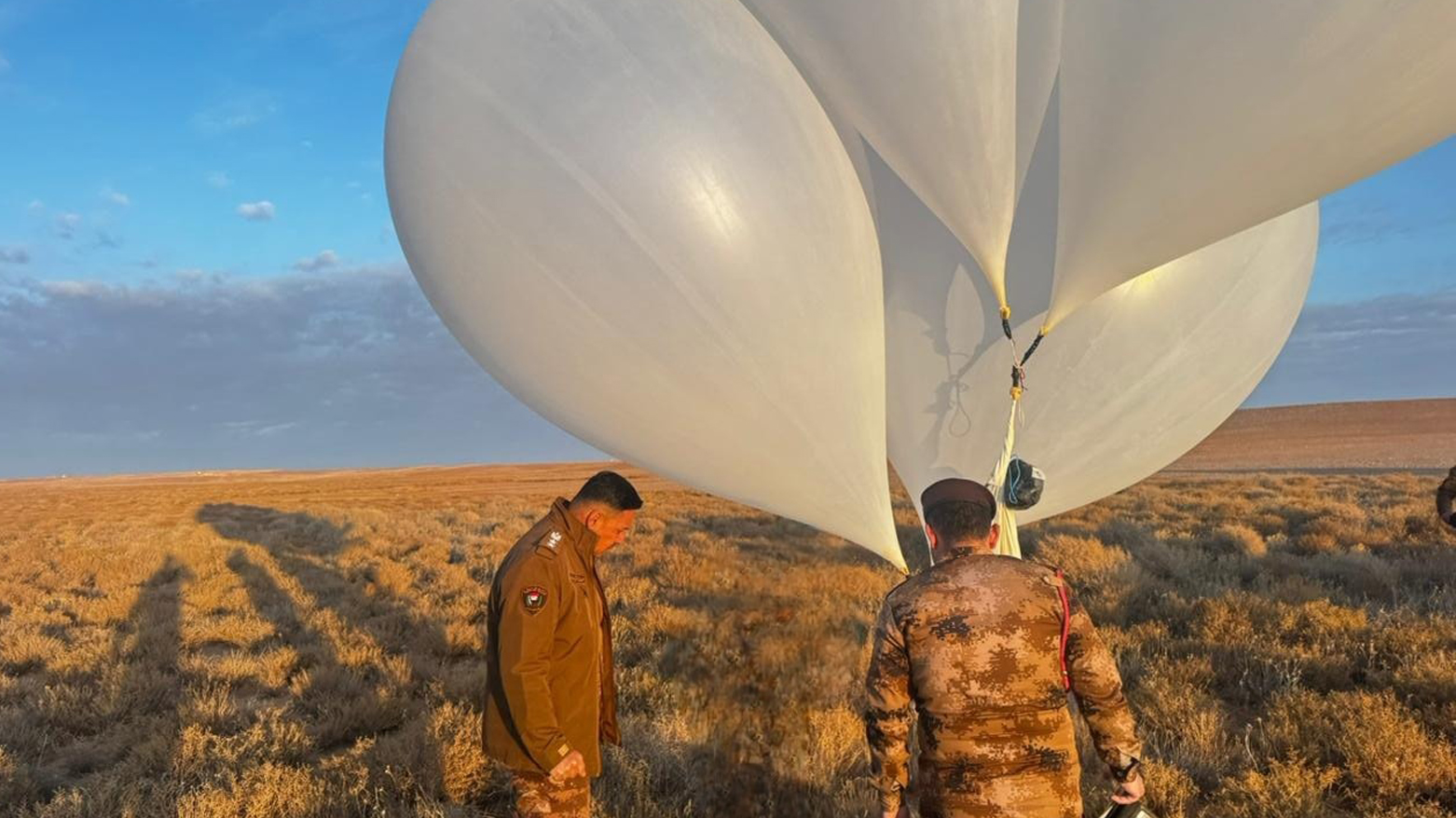
Erbil (Kurdistan24) – Iraqi border protection forces in western Anbar announced on Wednesday that they successfully intercepted an unusual smuggling attempt involving 18 kilograms of narcotic substances that traffickers had packed inside a helium balloon and prepared to launch across the frontier.
According to a statement from the Border Guard Command in western Anbar, security units uncovered the operation after monitoring suspicious movements near the frontier. Traffickers had filled a balloon with 98 separate packets, each containing 1,000 narcotic pills, with the intention of sending the balloon over the border into the western districts of the province.
The force reported that all materials were seized and that “necessary legal procedures” were taken against the suspects.
The attempted smuggling reflects what authorities describe as a rapidly evolving challenge along Iraq’s western frontier, particularly in Anbar, where rugged terrain and vast desert spaces have become preferred routes for trafficking networks.
Officials say smugglers have increasingly resorted to unconventional techniques, including the use of aerial balloons, in an effort to bypass intensified patrols and surveillance. The rise of such methods has forced security units to expand monitoring operations to detect nontraditional smuggling attempts.
In recent months, the Iraqi government has stepped up coordination with neighboring states, including Syria, to disrupt cross-border trafficking. The Interior Ministry has frequently announced large-scale seizures and the dismantling of transnational drug networks. Yet the combination of porous borders and difficult geography continues to challenge enforcement efforts.
The smuggling incident comes as Iraq grapples with an unprecedented surge in drug addiction, a crisis that health specialists describe as “a fire devouring young people faster than wood burns.”
Rehabilitation centers and mental-health units say the number of addiction cases far exceeds available capacity. The easy accessibility of narcotics—ranging from street drugs such as crystal meth to misused pharmaceutical pills—continues to push more young Iraqis toward dependency.
Anwar Heiran, head nurse at a rehabilitation and addiction treatment center, told Kurdistan24 that crystal meth remains the most widespread substance.
“Most cases involve crystal meth taken through smoking,” he said. “Some use one gram a day, others use seven. The treatment is entirely different for each—handling a one-gram case is much easier than treating someone consuming seven.”
Weak social oversight, lax control over certain pharmaceuticals, and growing economic pressures have further fueled the trend.
Beyond the health impact, specialists warn that current detention practices risk aggravating the problem. Civil activist Ali al-Habib told Kurdistan24 that addicts are often jailed alongside major traffickers.
“Some enter prison as simple addicts and leave as dealers or promoters,” he said, calling the approach “the most dangerous part of the system.”
While government-supported rehabilitation centers exist, experts say they are insufficient compared to the soaring number of users.
Between law enforcement’s crackdown on traffickers and the rising wave of addiction sweeping Iraqi society, officials warn that the country is locked in one of its toughest battles—one that leaves behind “exhausted youth, fractured families, and a future in jeopardy.”
Security forces continue to intercept shipments, including the balloon-borne attempt in Anbar, but specialists argue that the crisis cannot be resolved through policing alone. They say Iraq needs a comprehensive national strategy that balances enforcement with prevention, treatment, and long-term rehabilitation.
As authorities tighten border controls and expand cooperation with neighboring states, the central question remains: Can Iraq curb smuggling and addiction simultaneously, or will the crisis outpace the state’s ability to respond?