Impro Theatre Proposed as Catalyst for Dynamic, Modern Kurdish Acting Education
Kurdish director, actor, and writer Diyar Omar urges Kurdistan’s drama schools to adopt Impro Theatre, arguing that improvisation offers the most effective—and urgently needed—foundation for modern actor training.
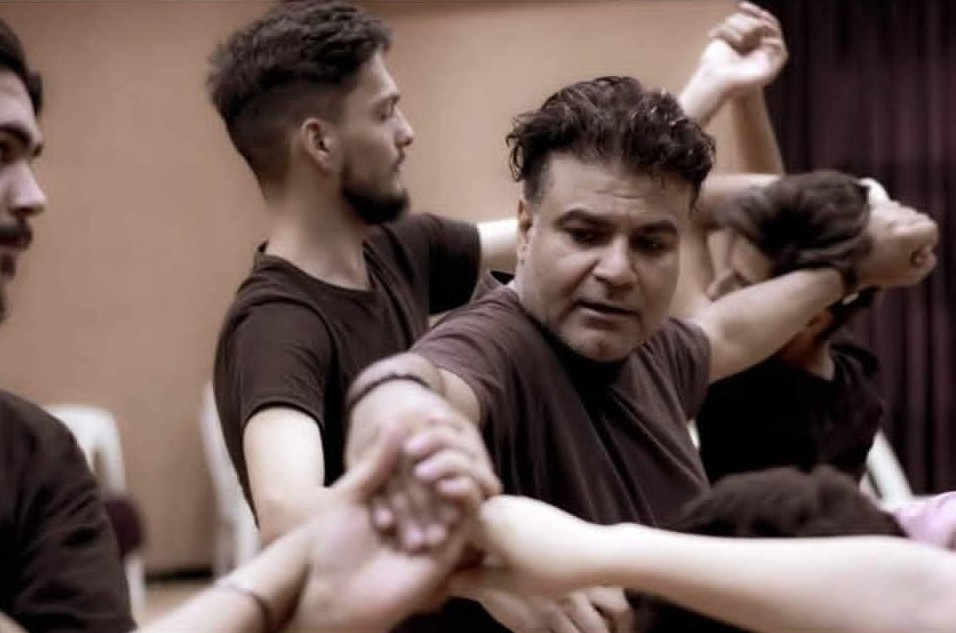
ERBIL (Kurdistan24) – Amid a broader conversation about modernizing arts education in the Kurdistan Region, Diyar Omar, a seasoned director, actor, and writer based in Sweden, has issued a compelling call for a pedagogical shift in the region's drama schools. In an exclusive interview with Kurdistan24, Omar argued that "Impro Theatre"—or improvisational theatre—stands as the most effective method for educating actors in the current cultural landscape of Kurdistan.
His advocacy comes as he prepares to release a new, comprehensive book on the subject, set to be published in both Kurdish and Arabic, aiming to fill a critical gap in local theatrical literature.
For Omar, who has spent the last 25 years in Sweden conducting international workshops and founding theatre groups, the urgency of adopting Impro techniques is rooted in the stagnation of current curricula.
While European institutions have long integrated improvisation as a cornerstone of dramatic training—utilizing both theoretical study and practical workshops hosted by expert practitioners—Omar observes a significant lag in Kurdistan’s academic approach.
He contends that local colleges and institutes of fine arts have yet to fully harness the benefits of this method, relying instead on outdated models that fail to prepare students for the dynamic demands of modern performance.
"In Kurdistan, they have not yet fully benefited from this theatrical method, even though Impro is the best and easiest way to become an actor," Omar told Kurdistan24.
He offered a blunt critique of the status quo, stating, "There are hundreds of useless lessons and worn-out curriculums that do not serve theatre students for even a moment, yet they continue to follow them." According to Omar, it is time for a systemic review of study programs because the current system "produces individuals who are passive and inexperienced."
The director defines Impro Theatre not merely as a performance style but as a rigorous discipline of spontaneity. It is theatre that occurs suddenly, self-generated in the present moment without a pre-existing script.
The actor, or "improviser," creates scenes directly in front of an audience, often relying on their suggestions to shape the narrative in real-time. This lack of a safety net, Omar argues, is precisely what makes the training so valuable for students.
Omar outlined the multifaceted benefits of Impro training, emphasizing its role in fostering rapid cognitive processing.
"Actors learn to think and respond quickly and dynamically," he explained. The practice accelerates individual reactions, training performers to avoid "blocking"—the rejection of a partner's idea—and instead remain open to all narrative possibilities.
This agility is crucial for developing creativity, as the exercises encourage students to innovate and find novel ways to inhabit a character. The nature of Impro often involves rapid role-playing, where a student might embody two distinct characters within a ten-minute span, ensuring they learn through direct experience and practice rather than abstract theory.
Beyond technical skills, Omar highlighted the psychological and social advantages of the method. Improvisation builds self-confidence, helping actors trust their abilities and remain composed under pressure.
"This confidence grants the performer a natural flexibility so that exaggeration and affectation are not apparent," he noted. Furthermore, the discipline is inherently collaborative. It teaches cooperation and teamwork, strengthening the social bonds essential for any ensemble.
"Theatre is a collective work," Omar reminded, underscoring that mutual understanding is vital for improvement.
The interview also touched upon the inclusivity of the art form. When asked if an actor’s physical build affects their training, Omar acknowledged the practical differences while championing diversity.
He noted that heavier actors must be aware of their physical capabilities and may require exercises tailored to their stamina and movement range to prevent injury. However, he insisted that "all types and ages are necessary for Impro, because what we do is a mirror of life in a more beautiful form. In life, we have all types."
He stressed that Impro transcends the physical body; it is fundamentally an exercise of imagination, adaptation, courage, and creativity.
Despite its benefits, Omar did not shy away from the difficulties inherent in the form. He described Impro as physically and spiritually demanding, requiring an intense level of focus.
Actors must simultaneously listen to their partners, adapt to the evolving scene, and generate new content, effectively functioning as writer, director, and actor all at once. "Success in Impro requires continuity and dedication," he said, likening the process to a constant search and a high-stakes challenge.
While Omar believes Impro is the "best method" for the current state of Kurdistan, he clarified that it does not, in isolation, create a "complete and perfect actor."
A fully rounded performer requires a mixture of different training disciplines, extensive experience, and continuous effort. Impro, he suggested, acts as a powerful tool to build a strong foundation and develop essential skills that other methods might neglect.
Assessing the broader landscape of Kurdish theatre, Omar expressed cautious optimism. He described the current period as an "important stage," marked by progress in content and style as practitioners experiment with diverse subjects. He also noted a tangible increase in public attendance in recent years, signaling a renewed interest in the performing arts.
Additionally, the growing connection between Kurdish theatre practitioners and the outside world offers opportunities for the exchange of experience, which is vital for the growth of Kurdish art.
However, challenges remain. Omar pointed to budget shortages as a persistent issue affecting production values and the frequency of shows.
"In general, Kurdish theatre possesses fertile ground for growth and progress," he concluded. "Continuing efforts to improve the artistic level and finding solutions to challenges can play an important role in the revival and advancement of Kurdish theatre."
Born in Erbil in 1977, Diyar Omar has authored four theatrical books, three of which were co-authored with Burhan Qaradaghi and dedicated to Impro Theatre.
His upcoming solo publication aims to further codify these techniques for a new generation of Kurdish and Arab artists, cementing his commitment to educational reform in the arts.
By advocating for a curriculum that prioritizes adaptability, collaboration, and practical experience, Omar hopes to help transition Kurdish theatre education from a passive model to one that is active, dynamic, and prepared for the future stage.