Escalation at Key Frontier Crossing Highlights Collapse of Pakistan–Taliban Ceasefire
Four civilians died in a border clash between Pakistan and the Taliban, with both sides trading blame as a fragile truce crumbles amid rising tensions.
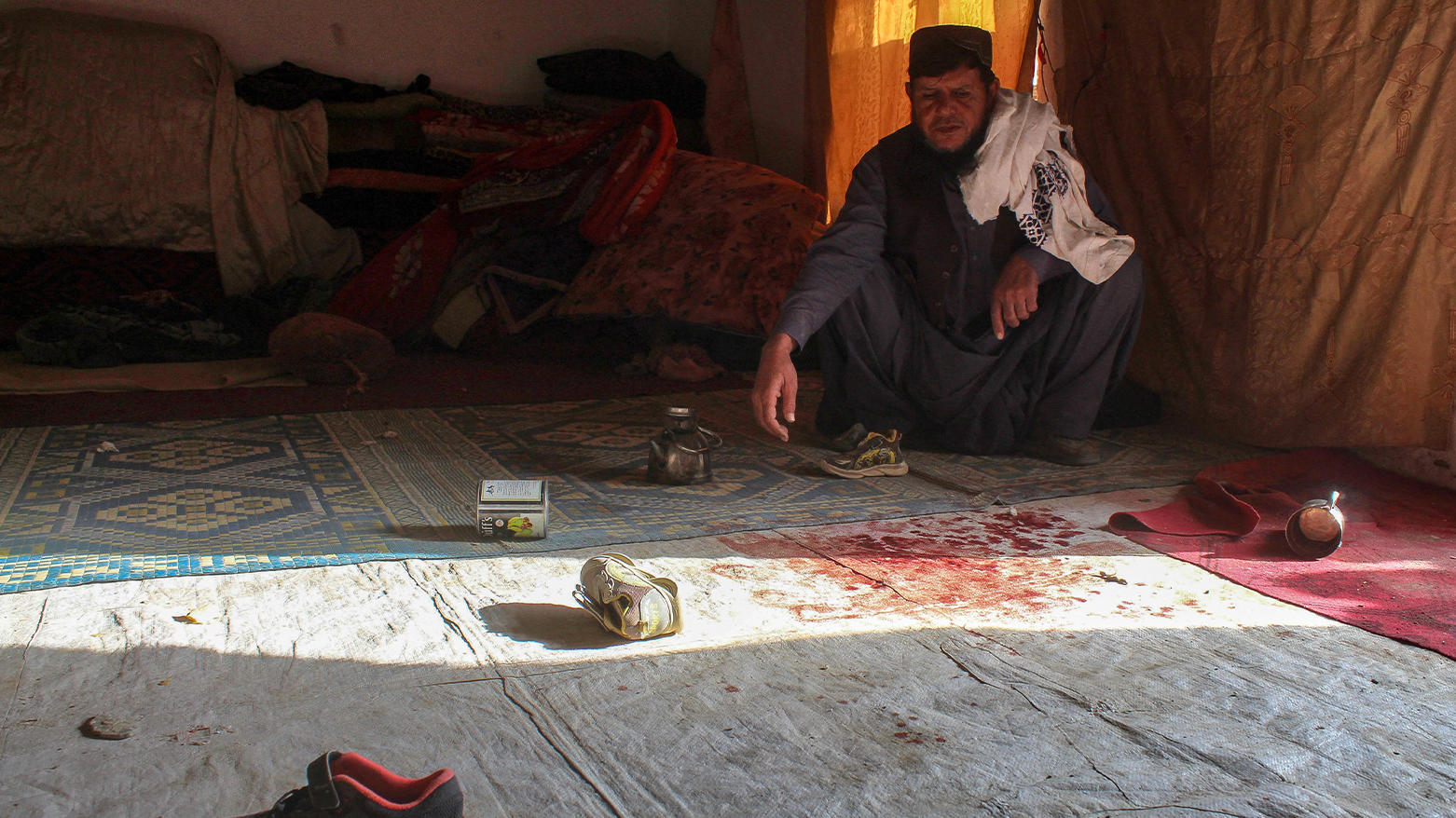
ERBIL (Kurdistan24) – The fragile truce monitoring the volatile frontier between Pakistan and Afghanistan appears to have buckled under the weight of renewed hostilities, as an intense overnight artillery duel at a key border crossing claimed the lives of four civilians.
The violence, confirmed by officials on Saturday, marks a dangerous escalation in the diplomatic and military standoff between Islamabad and the Taliban government, with both sides trading accusations of unprovoked aggression despite recent international mediation efforts intended to stabilize the region.
According to a report by France24, the exchange of fire erupted late Friday night at the crossing between the Pakistani town of Chaman and the Afghan district of Spin Boldak, a vital artery for trade and movement that has remained largely shuttered due to persistent diplomatic friction.
Abdul Karim Jahad, the governor of the Spin Boldak district in southern Afghanistan, confirmed to Agence France-Presse (AFP) that four civilians were killed in the bombardment, while four others sustained injuries.
On the other side of the divide, medical officials at the local hospital in Chaman reported treating three individuals for minor injuries sustained during the clash, all of whom were subsequently discharged.
The incident represents the latest and most kinetic flare-up since a series of deadly confrontations in October left more than 70 people dead and hundreds wounded, plunging bilateral relations to a nadir not seen since the Taliban returned to power in Kabul in 2021.
While a ceasefire brokered by Qatar and Turkey had managed to impose a tenuous calm following the October bloodshed, the events of Friday night suggest that the mechanisms for de-escalation are failing.
Residents on the Afghan side of the border described a harrowing scene to reporters, noting that the exchange of fire broke out around 10:30 p.m. local time and continued unabated for approximately two hours.
Ali Mohammed Haqmal, the head of Kandahar’s information department, stated that Pakistani forces utilized both "light and heavy artillery" during the engagement, alleging that mortar fire had directly struck civilian homes, leading to the reported casualties.
As has become characteristic of the deteriorating relationship between the two South Asian neighbors, the immediate aftermath of the violence was defined by mutual recriminations and conflicting narratives regarding culpability.
The Taliban government moved quickly to assign blame to Islamabad. Zabihullah Mujahid, the chief spokesman for the Taliban government, issued a statement on the social media platform X late Friday, asserting that the Pakistani military initiated the hostilities.
"Unfortunately, tonight, the Pakistani side started attacking Afghanistan in Kandahar, Spin Boldak district, and the forces of the Islamic Emirate were forced to respond," Mujahid wrote, framing the Taliban's actions as a necessary defensive measure against external aggression.
Conversely, Islamabad vehemently rejected this characterization, insisting that its forces had acted only in retaliation. Mosharraf Zaidi, a spokesman for Pakistan’s prime minister, took to X to declare that it was the Afghan side that had broken the peace.
"A short while ago, the Afghan Taliban regime resorted to unprovoked firing" along the border, Zaidi stated. He further noted that the Pakistani armed forces had delivered an "immediate, befitting and intense response" to the alleged provocation. This war of words highlights the deep-seated mistrust that now permeates interactions between the two capitals, complicating any efforts to return to the negotiating table.
The context for this renewed violence is a diplomatic impasse that has defied resolution despite multiple rounds of talks.
Following the lethal clashes in October, delegations from both sides met in Doha and Istanbul in an attempt to hammer out a lasting security arrangement. However, France24 reports that these discussions failed to produce a comprehensive deal, leaving the border largely closed and the underlying grievances unaddressed.
Central to the dispute are security concerns raised by Islamabad, which accuses the Taliban government of harboring militant groups, specifically the Tehreek-e-Taliban Pakistan (TTP). Pakistan alleges that the TTP utilizes Afghan soil as a launchpad for attacks against the Pakistani state, a charge that Kabul has consistently and categorically denied.
The situation has been further inflamed by recent accusations of cross-border air strikes.
Last month, authorities in Kabul accused Pakistan of conducting air raids in a border area that resulted in the deaths of ten people, nine of whom were children. Pakistan denied involvement in that incident, yet the accusation added to the accumulating grievances.
By November 28, the Pakistani Foreign Ministry had issued a stark warning that, in light of "major" attacks occurring on its soil, "the ceasefire is not holding." Friday’s artillery exchange appears to be the kinetic realization of that diplomatic warning.
Despite the severity of the clash, there remains a flicker of cooperation regarding humanitarian issues, though even this is fraught with uncertainty.
France24 noted that Pakistan had indicated earlier in the week that it would partially reopen the frontier to facilitate aid deliveries, with the Chaman crossing designated for use by United Nations agencies.
When questioned about the impact of the latest fighting on these plans, Mosharraf Zaidi told AFP that "aid deliveries are separate" and asserted that the military engagement would have "no impact on that decision." However, with artillery shells falling on civilian homes and the border zone transformed into a battlefield, it remains unclear when or how safe passage for humanitarian convoys can be guaranteed.
The recurrence of violence at Spin Boldak serves as a grim reminder of the volatility plaguing the region. Since the Taliban took power in 2021, the border has transformed from a line of commerce into a militarized zone of contention.
With the death toll rising and diplomatic channels yielding little progress, the "befitting" responses and "forced" retaliations described by officials are rapidly displacing dialogue, leaving civilians in the crossfire of an increasingly bitter and entrenched dispute.