Yazidi Survivor and Daughter Freed After 11 Years in ISIS Captivity
A Yazidi woman and her daughter were freed after 11 years in ISIS captivity and received a traditional baptismal ceremony in Lalish, symbolizing their return to the community, as thousands remain missing.
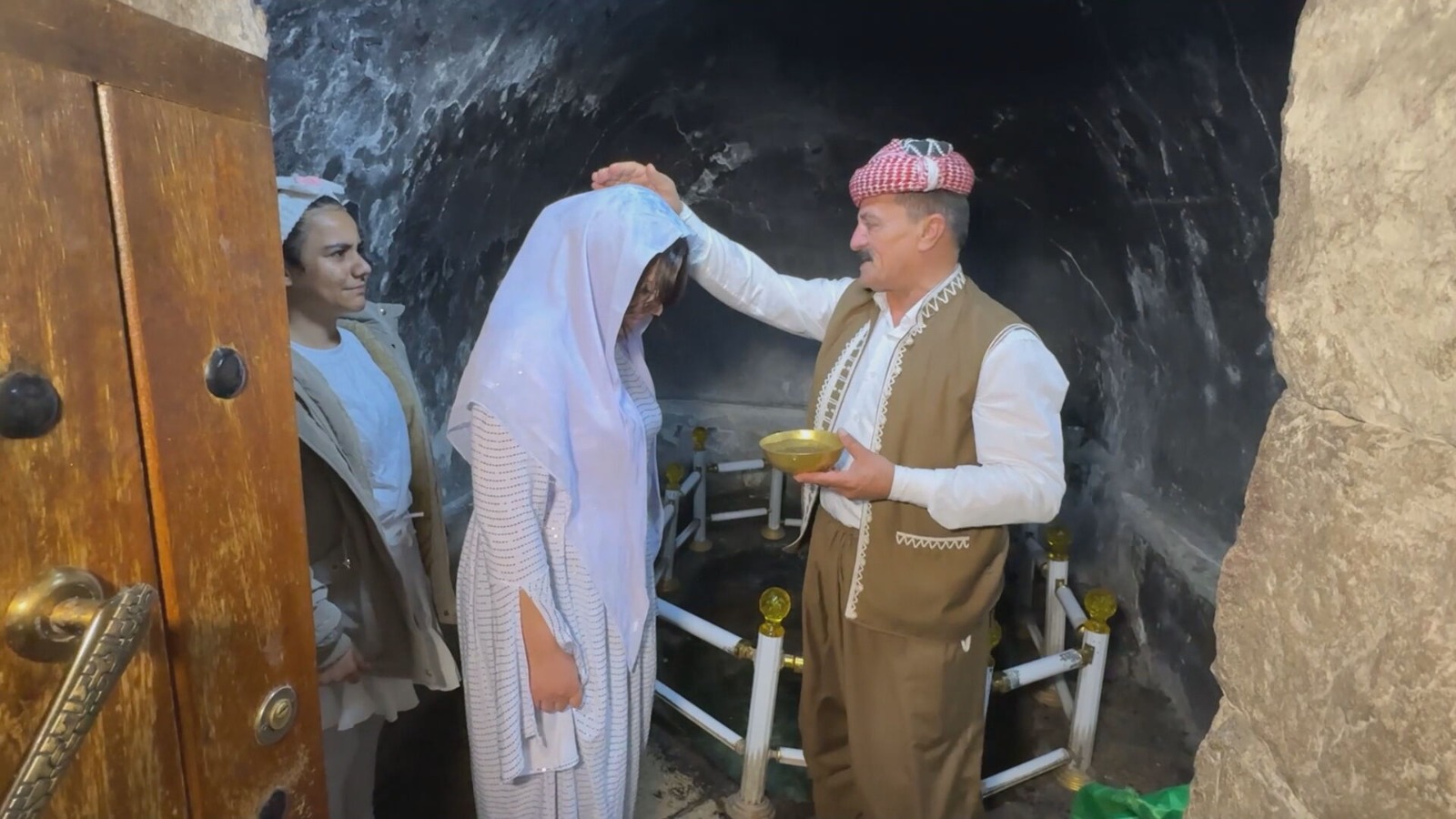
ERBIL (Kurdistan24) – Joyful ululations echoed through the sacred valley of Lalish on Saturday as the Yazidi community welcomed survivor Suad and her young daughter, freed after eleven years in the grip of ISIS. Their arrival, marked by the traditional Kanîya Spî (White Spring) baptism ritual, symbolized a spiritual return to the Yazidi faith and a restoration of their place within their community after more than a decade of unimaginable suffering.
For Suad, stepping into Lalish again was a moment she once thought impossible.
“I am very happy. I never expected to visit Lalish again or return to my people,” she said, her voice trembling with relief. “Thank God I came back, and with my daughter. My hope is that everyone still held by ISIS will be rescued and brought here like us.”
Since the 2014 genocide perpetrated by ISIS against the Yazidis, the Mir and the Spiritual Council have upheld a solemn pledge: every survivor who returns is received in Lalish with honor, compassion, and the sacred rituals that reaffirm their identity and dignity. The baptism at the White Spring and at Zamzam has become a defining symbol of this homecoming.
Deputy to the Yazidi Mir, Jawhar Ali Beg, emphasized that Lalish remains the first refuge for every rescued survivor.
“We welcome them with full respect,” he said. “We acknowledge their suffering and ensure they return to their religion and community with pride. These are moments of immense joy for all Yazidis.”
But amid the celebration, the pain endures.
Standing among the crowd, Isa Ali—a relative of the survivor—expressed a bittersweet mix of joy and grief.
“The one who returned today is my brother’s daughter,” he said. “She spent eleven years in ISIS captivity. We still have three nieces and two nephews missing. We hope they all come back… It is extremely difficult for the families.”
Suad’s homecoming is one story among hundreds still waiting for closure. Nearly a decade after ISIS stormed Sinjar in August 2014, thousands of Yazidis—women, children, and men—remain missing. The genocide shattered an ancient community, ushering in years of displacement, trauma, and an ongoing search for loved ones whose fate remains unknown.
The legacy of ISIS’s violence continues to shape the lives of survivors who struggle to rebuild, often starting from nothing. And for countless Yazidi families, hope persists as Lalish waits—its sacred stones ready for more returns, more reunions, and more moments like the one Suad and her daughter experienced: a homecoming that renews a community’s determination to search, rescue, and heal.