Kurdish Cardiologist Secures Top Honors at Prestigious Gulf Congress
Duhok cardiologist Dr. Mohammed Salim won first place at a global UAE congress for saving a patient with a blocked Left Main Artery using advanced technology.
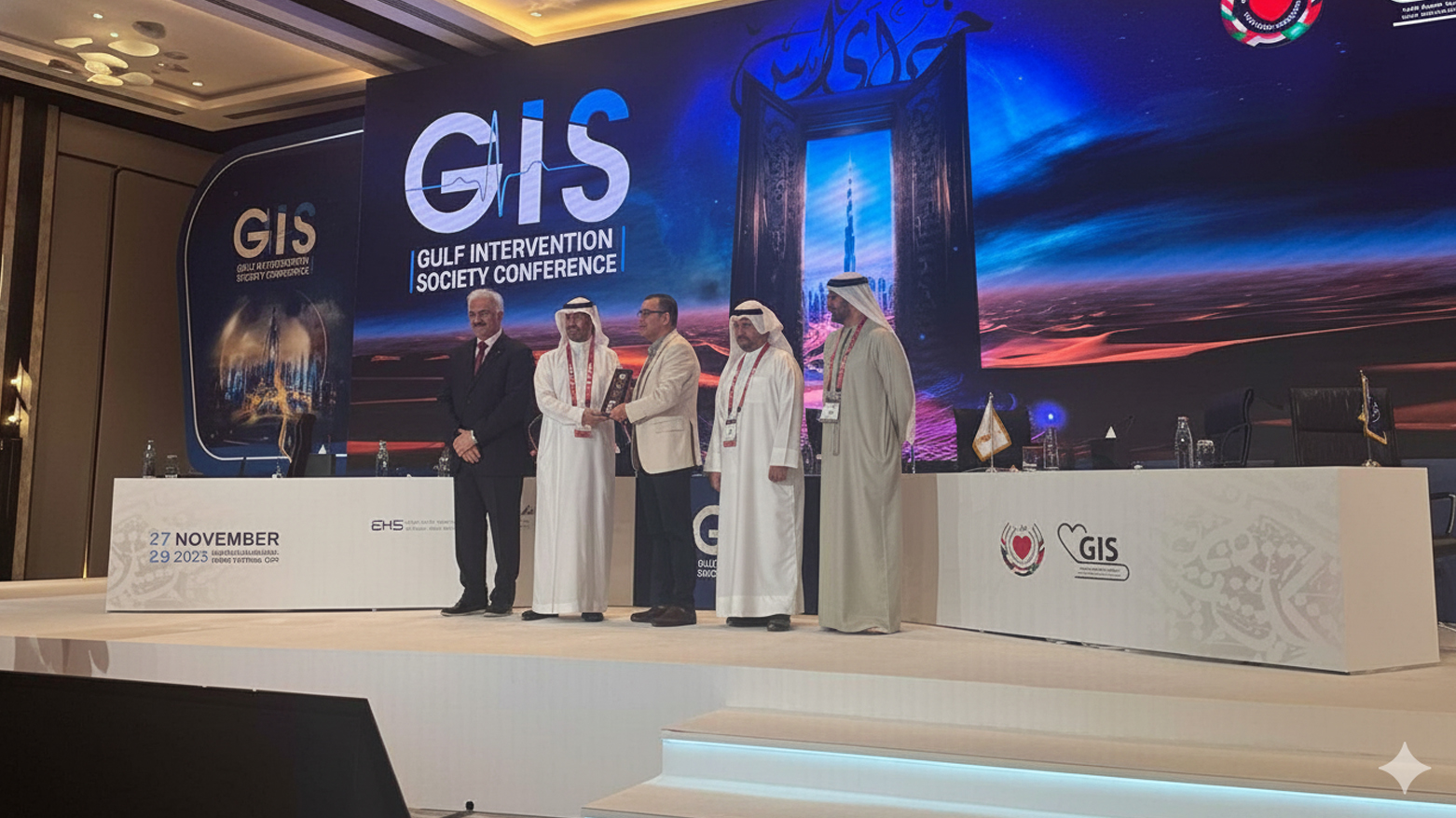
ERBIL (Kurdistan24) – Following a high-stakes medical intervention that teetered on the brink of tragedy before turning into a triumph of modern surgical skill, a specialist cardiologist from the Kurdistan Region has received international acclaim for his management of a rare and perilous cardiac case. Dr. Mohammed Salim Matar, a leading physician at the Azadi Heart Center in Duhok, was awarded first place among a competitive field of international experts at the annual congress of the Gulf Intervention Society (GIS) in the United Arab Emirates.
The recognition came after Dr. Mohammed presented a detailed account of a harrowing catheterization procedure involving the total occlusion of the Left Main Artery, a condition widely regarded by the medical community as one of the most lethal challenges in interventional cardiology.
The award was conferred during the GIS Congress, which stands as one of the most significant scientific gatherings in the Middle East and the Gulf region.
Held annually in the UAE, the event draws physicians, surgeons, and researchers from around the globe to discuss the latest frontiers in cardiac surgery and catheterization techniques.
Within this elite forum of medical exchange, Dr. Mohammed’s presentation stood out not merely for its technical complexity, but for the dramatic narrative of survival that underpinned the clinical data.
His victory underscores the growing sophistication of the medical sector in the Kurdistan Region, highlighting the ability of local specialists to perform at world-class standards even when faced with the most volatile medical emergencies.
The case that secured the top prize involved a patient suffering from a total occlusion of the Left Main Artery, the critical vessel responsible for supplying a vast majority of blood to the heart muscle.
According to the case details presented at the congress, the treatment plan involved a complex catheterization procedure designed to clear the blockage and restore blood flow through the placement of stents and balloons. However, the procedure quickly escalated into a life-threatening crisis.
Dr. Mohammed went on and stated that as the intervention progressed, the clinical situation deteriorated rapidly, becoming increasingly complicated as the patient suffered a severe heart attack on the operating table.
This critical juncture transformed a difficult procedure into a desperate race against time.
The complication described—a severe myocardial infarction occurring mid-procedure—presents one of the most daunting scenarios an interventional cardiologist can face. Despite the extreme risks involved, Dr. Mohammed successfully navigated the crisis.
By employing a series of new and advanced catheterization techniques, he was able to overcome the complications that had arisen during the stenting process. The deft application of these advanced methodologies not only stabilized the patient’s condition but ultimately saved their life.
Following the harrowing ordeal, the patient is reported to be in good and stable health, a testament to the efficacy of the emergency interventions deployed by the Kurdish specialist.
The complexity of the procedure cannot be overstated.
Opening an artery that is completely blocked—medically referred to as a Chronic Total Occlusion—or one that has suffered a sudden, catastrophic occlusion, is recognized within the field as one of the most difficult catheterization procedures to execute.
It requires a level of high skill, precision, and familiarity with advanced technology that is typically found only in top-tier medical institutions.
Dr. Mohammed’s ability to manage such a case under the pressure of a simultaneous heart attack was a primary factor in the GIS Congress’s decision to award him the first-place honor, validating his approach before an audience of his peers.
Back in the Kurdistan Region, the achievement has been greeted with widespread acclaim.
The General Directorate of Health in Duhok issued a formal statement extending its congratulations to Dr. Mohammed Salim. The Directorate characterized the achievement as a source of great pride, not only for the physician himself but for the entire health sector of the province and for Kurdish doctors collectively.
The recognition serves as a validation of the medical capabilities present within the governorate, challenging perceptions about the limitations of regional healthcare.
Central to this success story is the institution where the procedure took place.
The Azadi Heart Center in Duhok has established itself as a cornerstone of specialized medical care in the Kurdistan Region. Considered one of the country’s most advanced medical facilities, the center is instrumental in serving the citizens of Duhok and the surrounding areas.
It is a high-volume facility, performing thousands of surgeries and catheterizations annually. This high operational tempo has allowed specialists like Dr. Mohammed to cultivate the deep practical experience necessary to handle rare and dangerous cases like the one presented in the UAE.
The Gulf Intervention Society Congress serves as a critical bridge between regional medical practices and global standards. By participating in and winning such a competition, Dr. Mohammed has effectively showcased the caliber of the Kurdistan Region’s medical professionals on an international stage.
The congress focuses on the dissemination of the latest research and techniques, and the endorsement of Dr. Mohammed’s work by such a body suggests that the protocols being utilized in Duhok are aligned with the cutting edge of global cardiac care.
The narrative of this medical victory is one of resilience and technical mastery.
From the operating theater in Duhok, where a routine intervention spiraled into a fight for life, to the podium in the UAE, where that struggle was recognized as a benchmark of excellence, the journey of Dr. Mohammed Salim Matar highlights the human and intellectual capital flourishing within the Kurdistan Region.
As the patient continues their recovery in stable health, the award stands as a reminder of the critical importance of investing in advanced medical technologies and the specialized training of the doctors entrusted with using them.