Saudi Refinery, Gulf Cities Hit as Iran Expands Retaliatory Strikes Across Region
Iran’s missile and drone strikes target Gulf infrastructure and military bases as conflict escalates across the region
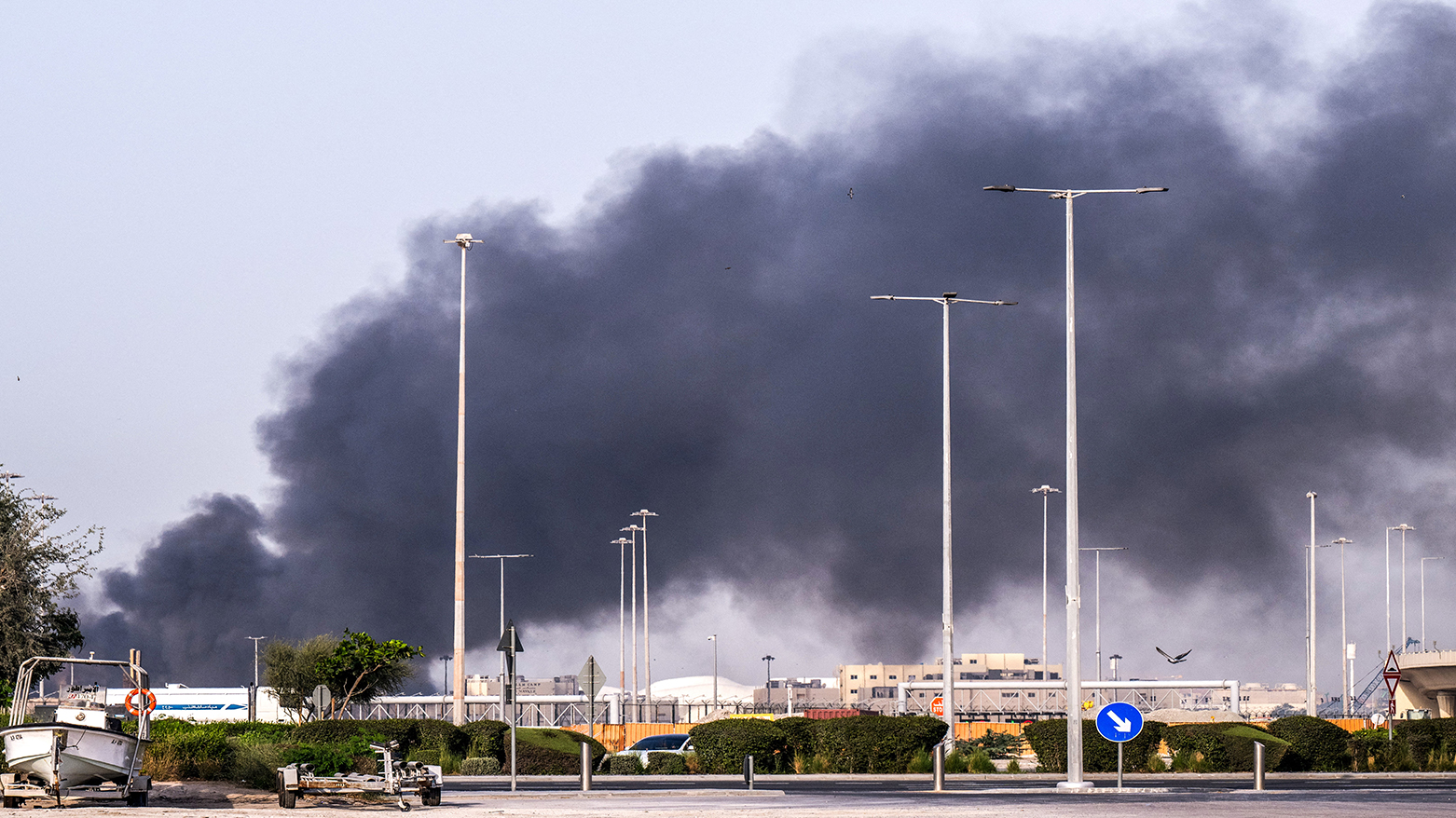
ERBIL (Kurdistan24) — Iran on Monday intensified its retaliatory campaign across the Gulf, targeting military bases, oil infrastructure, and civilian facilities in response to US and Israeli airstrikes that killed the Islamic Republic’s supreme leader and top officials over the weekend.
A Saudi source told AFP that the Ras Tanura refinery, one of the largest in the Middle East with a capacity of 550,000 barrels per day, was targeted by two Iranian drones along the kingdom’s eastern Gulf coast.
The Saudi defense ministry said the drones were intercepted, and a small fire at the facility was quickly extinguished. The complex also serves as a major oil export port and is a cornerstone of Saudi Arabia’s energy sector.
Across the Gulf, explosions and black smoke were reported in major cities including Abu Dhabi, Dubai, Doha, Manama, and Kuwait City. The US Embassy in Kuwait warned civilians not to approach its premises as personnel sheltered in place following a series of Iranian drone and missile attacks.
Kuwait’s interior ministry confirmed the interception of an unspecified number of drones targeting the country. Kuwait also saw the crash of several US warplanes during operations on Monday morning, although all crew members survived and were evacuated for medical evaluation.
Smoke was reported rising over power stations and ports, and a drone strike killed one worker and injured two others in Bahrain’s Salman port. Across the Gulf, civilian infrastructure, including airports, seaports, residential buildings, and hotels, has been damaged, leaving at least five people dead in the region so far.
Iranian military statements said missile units targeted the Ali Al Salem air base as well as enemy vessels in the northern Indian Ocean, claiming the use of 15 cruise missiles. Tehran also announced missile strikes against Israeli targets, including the government complex in Tel Aviv, military centers in Haifa, and locations in east Jerusalem, employing Kheibar ballistic missiles.
Inside Iran, US and Israeli strikes have killed at least 27 people in the northwest, according to local officials, and key sites in Yazd province, including Ardakan, Yazd city, and the Yazd‑Mehriz road, were hit on the third day of attacks.
The conflict’s fallout has also affected regional transit. Turkey and Iran have temporarily suspended same-day border crossings along their 500-kilometer frontier, though authorities stressed that border security remains stable.
Turkish officials are coordinating with Iraqi and Azerbaijani counterparts to manage the humanitarian and security consequences, including the protection of over 74,000 Iranians residing in Turkey.
The unprecedented escalation has rattled a region long considered a haven of relative stability, highlighting the vulnerability of strategic infrastructure, military assets, and civilian populations amid a rapidly intensifying US-Israel-Iran confrontation.
Observers warn that the strikes risk destabilizing the Gulf further, disrupting energy exports, and prompting a broader regional security crisis.