Secretary Rubio Hails Syria’s “Significant Steps” in Transition as Syria Marks One Year Since Assad’s Fall
Secretary Rubio marks the anniversary of Assad's fall, praising Syria's transition while urging inclusivity and peace as sectarian rifts and regional tensions persist.
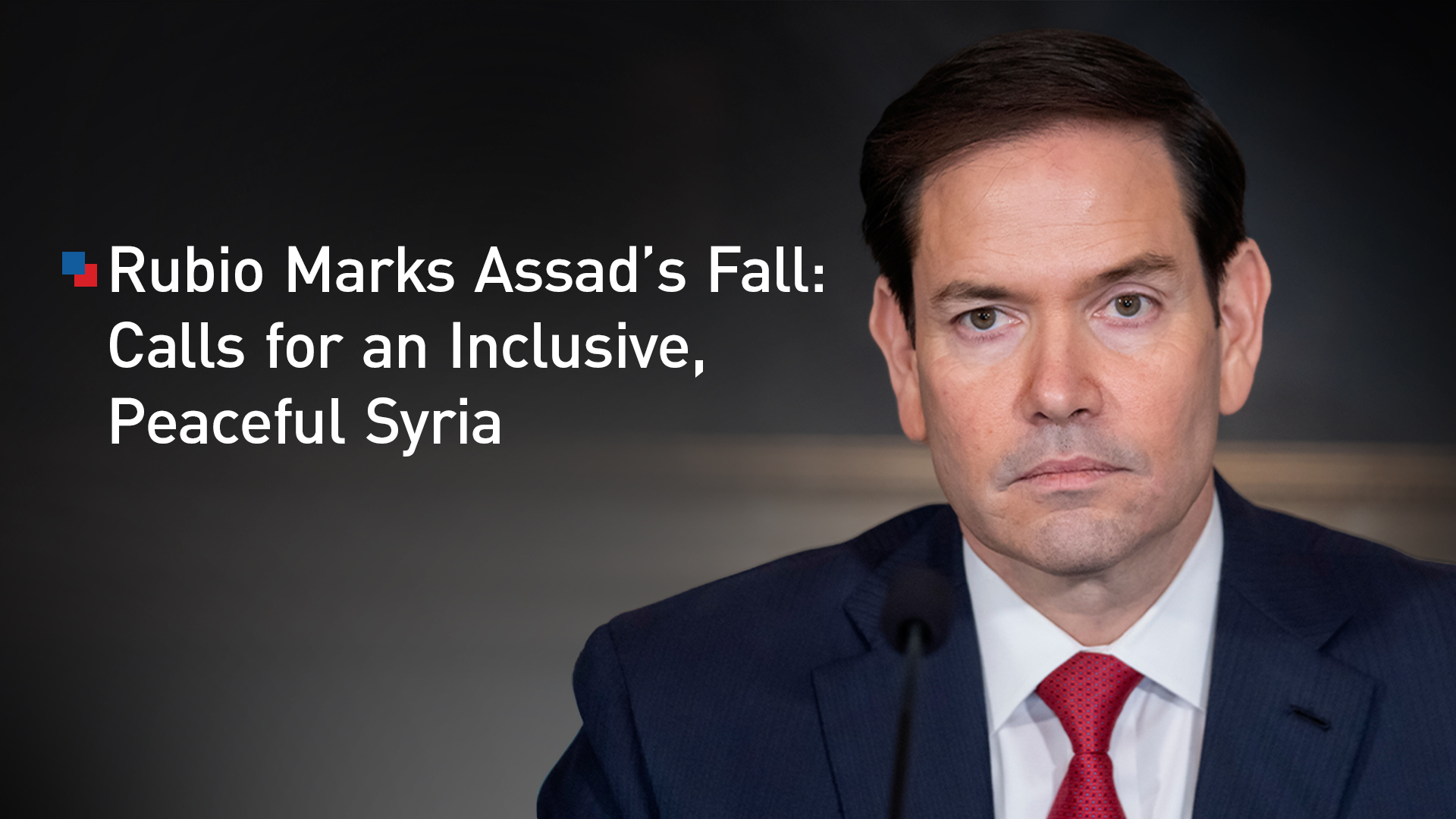
ERBIL (Kurdistan24) – Marking the first anniversary of the collapse of the Bashar al-Assad regime, United States Secretary of State Marco Rubio issued a diplomatic statement on Monday that sought to frame the turbulent past year as a period of profound progress, honoring the resilience of the Syrian people while acknowledging the formidable challenges that remain.
In a message published on the social media platform X, Rubio declared that the Syrian populace had "turned a new page in their history" exactly one year ago, a sentiment designed to reinforce Washington's continued commitment to the country’s precarious transition.
The Secretary’s comments, which emphasized support for a peaceful, prosperous, and inclusive Syria, arrive at a moment of acute fragility for the nation, as the transitional government in Damascus grapples with deepening sectarian fissures, demands for decentralization from Kurdish factions, and relentless external pressures.
"Today, we recognize the significant steps the Syrian government and people have taken in Syria’s transition, and the support of international partners," Rubio wrote, signaling a vote of confidence in the administration of Transitional President Ahmed Al-Sharaa.
The Secretary’s statement was carefully calibrated to bolster the legitimacy of the new order while setting clear expectations for its future trajectory.
He reaffirmed American support for a state that not only includes its minorities but also exists "at peace with all its neighbors," a phrase that carries significant weight given the ongoing security dynamics involving Israel and the broader region.
One year ago, the Syrian people turned a new page in their history. Today, we recognize the significant steps the Syrian government and people have taken in Syria’s transition, and the support of international partners. We honor the resilience of the Syrian people and reaffirm…
— Secretary Marco Rubio (@SecRubio) December 8, 2025
Rubio’s words serve as a diplomatic anchor, attempting to stabilize the narrative of Syria’s recovery even as the reality on the ground threatens to unravel the gains made since the end of the Ba’athist era.
The anniversary comes at a critical juncture for President Al-Sharaa, who marked the occasion with a display of military and rhetorical strength in Damascus.
Clad in the green military fatigues he wore during the offensive that ended five decades of Assad family rule, Al-Sharaa addressed the nation following dawn prayers at the Umayyad Mosque.
He proclaimed a mission to "restore a strong Syria with a construction befitting its present and past," positioning the transitional authority as the guardian of the country’s ancient civilization and its future potential.
Since assuming power, Al-Sharaa has achieved notable diplomatic victories, including the lifting of suffocating economic sanctions and the breaking of Syria's international isolation, steps that Rubio’s statement implicitly acknowledged as part of the "significant steps" taken.
However, the celebratory tone in Washington and Damascus stands in stark contrast to the unrest simmering across the country.
As reported by Kurdistan24, the transitional period has been marred by outbreaks of sectarian violence that have claimed hundreds of lives, particularly within the Alawite and Druze communities.
This bloodshed has fueled separatist sentiments in the south and coastal regions, where unprecedented demonstrations have erupted over deteriorating security and living conditions.
The tension escalated further on Sunday when prominent Alawite cleric Ghazal Ghazal called for a "comprehensive strike" beginning December 8, urging his followers to remain in their homes for five days as a protest against the current state of affairs.
Secretary Rubio’s emphasis on a Syria that "includes its minorities" directly addresses these internal fractures. The challenge of inclusivity is most visibly manifested in the relationship between the central government and the Kurdish-led Autonomous Administration in the northeast.
While Al-Sharaa called for a unified "strong state," powerful regional blocs like the Syrian Democratic Forces (SDF) and the Syrian Democratic Council (SDC) have issued stern warnings against reproducing the centralized tyranny of the past.
Mazloum Abdi, the Commander of the SDF, utilized the anniversary to reiterate the Kurds' demand for a "democratic, decentralized Syria," asserting that the current phase requires an inclusive dialogue that prioritizes the interests of all Syrians above partisan considerations.
In a comprehensive statement marking the fall of the Ba’athist regime, the SDF criticized the lingering "language of incitement and hatred" used by some parties in power.
The statement warned that reproducing the mentality of monopolizing power would mean a return to tragedy, calling instead for a "genuine and comprehensive national dialogue" to establish a new social contract guaranteeing rights and freedoms.
The SDF also highlighted the plight of hundreds of thousands of displaced persons from Afrin, Tal Abyad, and Sere Kaniye, declaring their safe return a non-negotiable national priority.
These demands for decentralization and the protection of minority rights align with the vision Rubio articulated, yet the path to achieving them remains fraught with political obstacles.
The Syrian Democratic Council echoed these concerns, releasing a critical assessment of the Transitional Government’s performance. The SDC accused the administration in Damascus of failing to liberate itself from a "factional mentality" and continuing to manage the country with the same centralization that previously crippled the state.
While acknowledging the agreement signed on March 10 between the Transitional Government and the SDF as a positive step, the Council noted that the stalling of its implementation demonstrated the government's limited capacity.
The SDC advocated for a clear and binding democratic transition process based on international resolutions, specifically UN Resolution 2254 and Resolution 2799, urging the formation of a transitional authority representing all Syrians and the drafting of a new democratic constitution.
Compounding these internal challenges is the external pressure from Israel. Seeking to establish a demilitarized zone reaching the outskirts of Damascus, Israeli forces have conducted daily incursions deep into Syrian territory.
Despite rounds of direct ministerial-level negotiations between the Syrian and Israeli sides, the attacks have continued unabated, posing a direct challenge to Al-Sharaa's sovereignty.
Rubio’s call for a Syria that is "at peace with all its neighbors" serves as a diplomatic signal to both Damascus and Tel Aviv, encouraging a cessation of hostilities and a move toward stability along the southern border.
The international community’s stake in Syria’s future was further underscored by UN Secretary-General António Guterres, who described the situation as an "opportunity to rebuild devastated communities and heal deep divisions."
Rubio’s statement reinforces this perspective, positioning the United States as a partner in Syria’s reconstruction and political evolution. By honoring the "resilience of the Syrian people," the Secretary acknowledges the immense suffering endured during the conflict and the fragile hope that now exists.
As the first anniversary of the post-Assad era passes, the gap between the official narrative of progress and the reality of a fragmented nation remains the central challenge.
President Al-Sharaa’s vision of a unified, strong Syria faces its most critical test yet, caught between the demands for decentralization from the Kurds, the agitation for protection from minority communities, and the security imperatives of its neighbors.
Secretary Rubio’s statement offers a diplomatic roadmap, but the journey toward a peaceful, prosperous, and inclusive Syria will require more than words; it will demand the tangible implementation of the democratic principles and minority protections that the United States and its partners have pledged to support.