Yemen Government Warns of Growing Instability as Southern Separatists Seize Key Territory
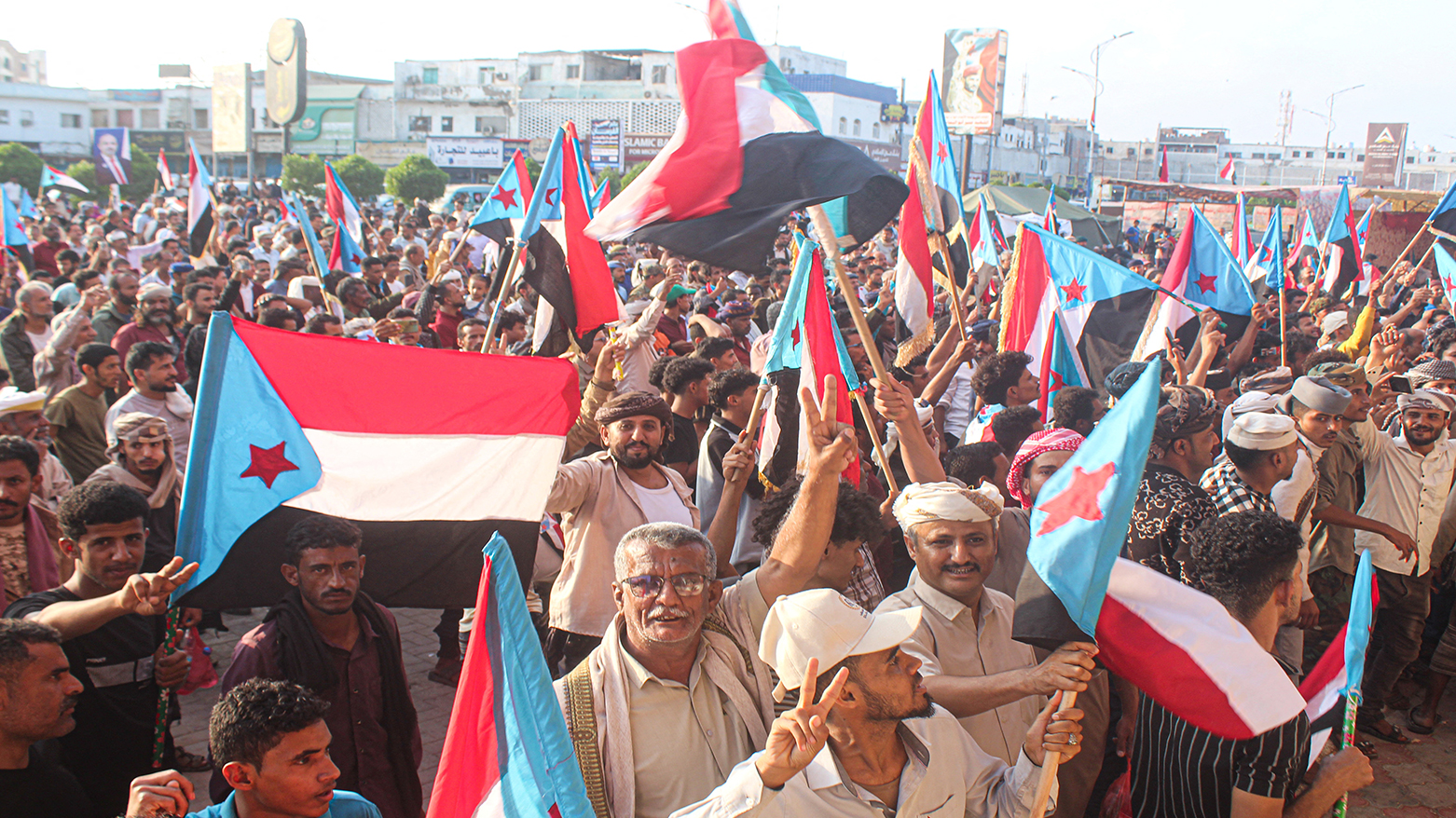
Southern Transitional Council’s (STC) near-bloodless sweep in Hadramawt revives memories of South Yemen’s former statehood and heightens fears of renewed fragmentation amid a stalled political process.
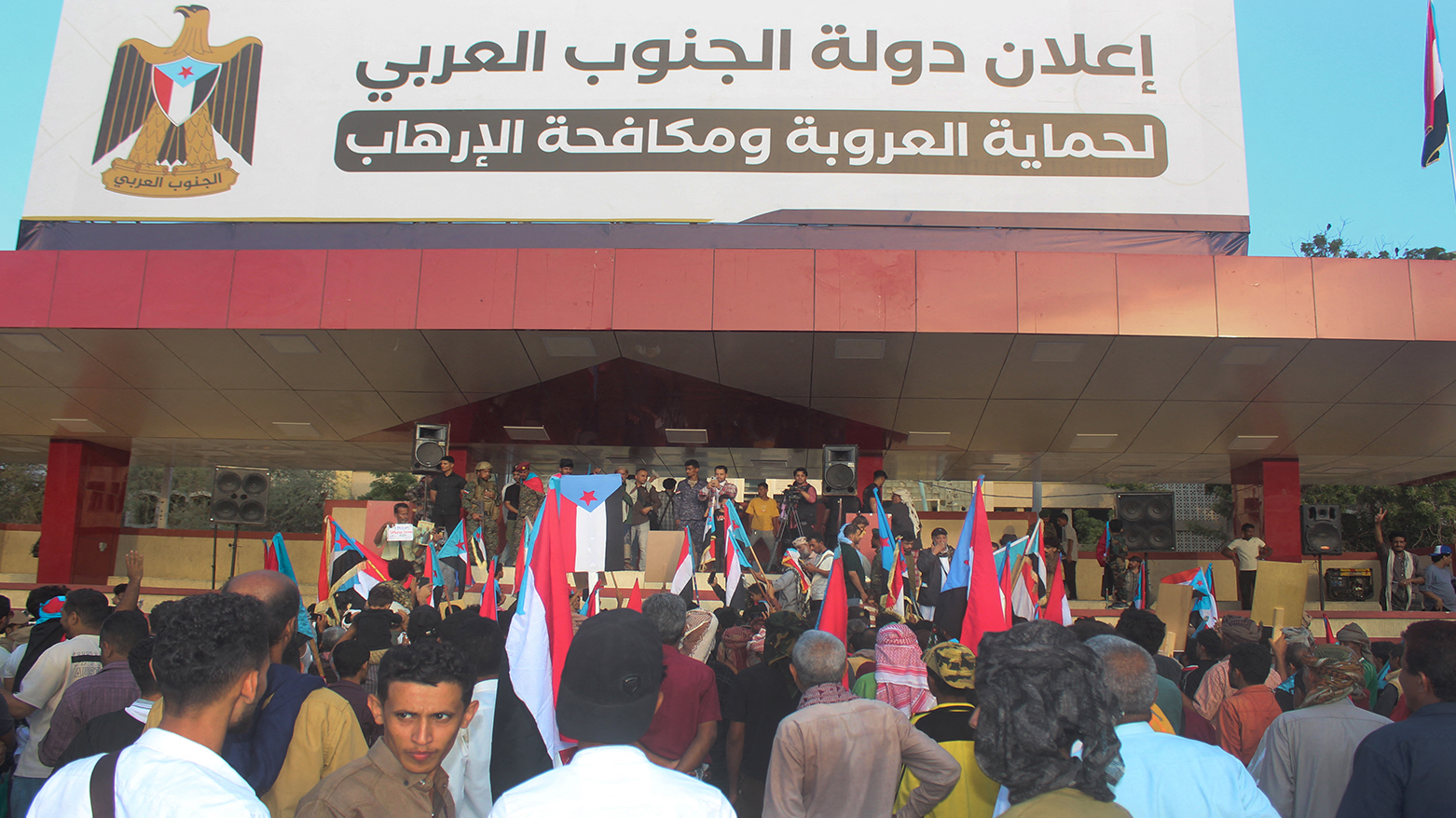
ERBIL (Kurdistan24) — Yemen’s internationally recognized government on Monday issued a stark warning after the Southern Transitional Council (STC) made sweeping territorial gains across the eastern province of Hadramawt, accusing the separatist group of undermining national stability and threatening the future of the country’s fragile political process.
The STC, which seeks to revive the former state of South Yemen, seized the strategic city of Seiyun and a series of oil fields in recent days in what officials described as a near bloodless takeover.
The group faced minimal resistance as it advanced, consolidating control over large portions of the vast desert region.
The council is nominally part of the internationally recognized government—a loose coalition of factions united primarily by their opposition to Yemen’s Houthi rebels.
The Houthis continue to dominate most of the country’s population centers, including the capital Sanaa, and maintain firm control of northern and western Yemen.
But the latest STC maneuvers have exposed deep fractures within the government, raising fears of a renewed power struggle at a time when Yemen’s political landscape remains fragile and the broader conflict, though largely frozen, is far from resolved.
Rashad al-Alimi, head of the government’s Presidential Leadership Council (PLC), condemned the STC’s unilateral actions during a briefing with foreign diplomats in Riyadh.
“The unilateral actions taken by the Southern Transitional Council constitute a blatant violation of the transitional phase's framework,” he said, describing the advances as “a direct threat to the unity of security and military decision-making, which undermines the legitimate government's authority, and a serious threat to stability and the future of the entire political process.”
In an indication of widening fractures, some local leaders in neighboring Mahra province—bordering Oman—have also aligned themselves with the STC in recent days, the group told AFP.
STC: ‘Necessary’ Measures to Secure the South
For its part, the STC insists its takeover was required to ensure stability. Amr Al Bidh, special representative to STC president Aidarus al-Zubaidi, said the group now “controls the governorates of the South militarily and security-wise.”
He argued the moves were essential to counter extremist threats—particularly from Al-Qaeda in the Arabian Peninsula (AQAP)—and to disrupt smuggling routes that benefit the Houthis.
The council has now brought under its authority nearly all the territory of the former South Yemen, reinforcing longstanding fears that the separatists are preparing to formally revive the pre-1990 state.
"The eight-member PLC itself is split between factions backed by the UAE, which strongly supports the STC, and those aligned with Saudi Arabia, including Alimi," according to AFP.
"Although Riyadh and Abu Dhabi jointly intervened in Yemen in 2015 to push back the Houthis, their long-standing differences over the country’s post-war roadmap have periodically surfaced, complicating efforts to unify anti-Houthi forces, according to an AFP report," read the AFP report.
Despite the coalition’s military campaign, the Houthis tightened their grip on much of northern Yemen. Since a UN-mediated ceasefire took hold in 2022, active hostilities have largely subsided, but the political process remains stalled, leaving space for competing factions to maneuver for influence.
A Conflict Defined by Fragmentation
The STC’s recent gains highlight a broader structural reality: Yemen is no longer a two-sided conflict but a patchwork of rival power centers shaped by local dynamics and competing regional agendas.
- The Houthis hold the most populous regions and run a de facto government in the north.
- The internationally recognized government lacks cohesion and depends heavily on external backing.
- The STC commands significant military capabilities and public support in the south, positioning itself as the dominant actor there.
- Tribal, local, and extremist groups add layers of complexity across areas where formal state authority has eroded.
These overlapping authorities have created a landscape in which territorial control shifts not through major battles, but through political alignment, external support, and local power-brokering.
With the national peace process stalled and regional powers recalibrating their strategies, Yemen’s internal divisions are deepening—raising concerns that the recent STC advances may accelerate a trajectory toward renewed fragmentation, or even a de facto partition, of the country.
The Rise and Fall of Independent South Yemen
South Yemen, officially known as the People’s Democratic Republic of Yemen (PDRY), existed as an independent Marxist state from 1967 to 1990. Centered in Aden, it emerged after the end of British colonial rule and quickly aligned itself with the Soviet bloc, adopting a socialist political system and maintaining a distinct identity separate from its northern neighbor, the Yemen Arab Republic.
For more than two decades, the two Yemens followed sharply different political and economic paths, marked by intermittent border clashes and ideological rivalry. However, the collapse of the Soviet Union and growing financial pressures pushed South Yemen toward unification.
In May 1990, the two states formally merged to create the Republic of Yemen, with a unity government that was widely promoted as a model for post–Cold War reconciliation.
But tensions soon reemerged. Power-sharing disputes, economic marginalization, and political infighting led southern leaders to declare secession in 1994, igniting a brief but intense civil war.
Northern forces ultimately defeated the southern bid for independence, reintegrating the territory under a centralized government in Sanaa.
The legacy of that short-lived state—and the grievances that followed its dissolution—still shapes southern politics today.
The STC draws heavily on this history in its campaign to restore an independent South Yemen, presenting itself as the legitimate successor to the former PDRY and framing its current territorial consolidation as part of a long struggle for southern self-rule.