Floods Submerge Chamchamal Homes, Close Key Highway
Torrential rains caused severe flooding in Chamchamal, closing the road to Sulaimani and submerging homes, while replenishing KRG reservoirs.
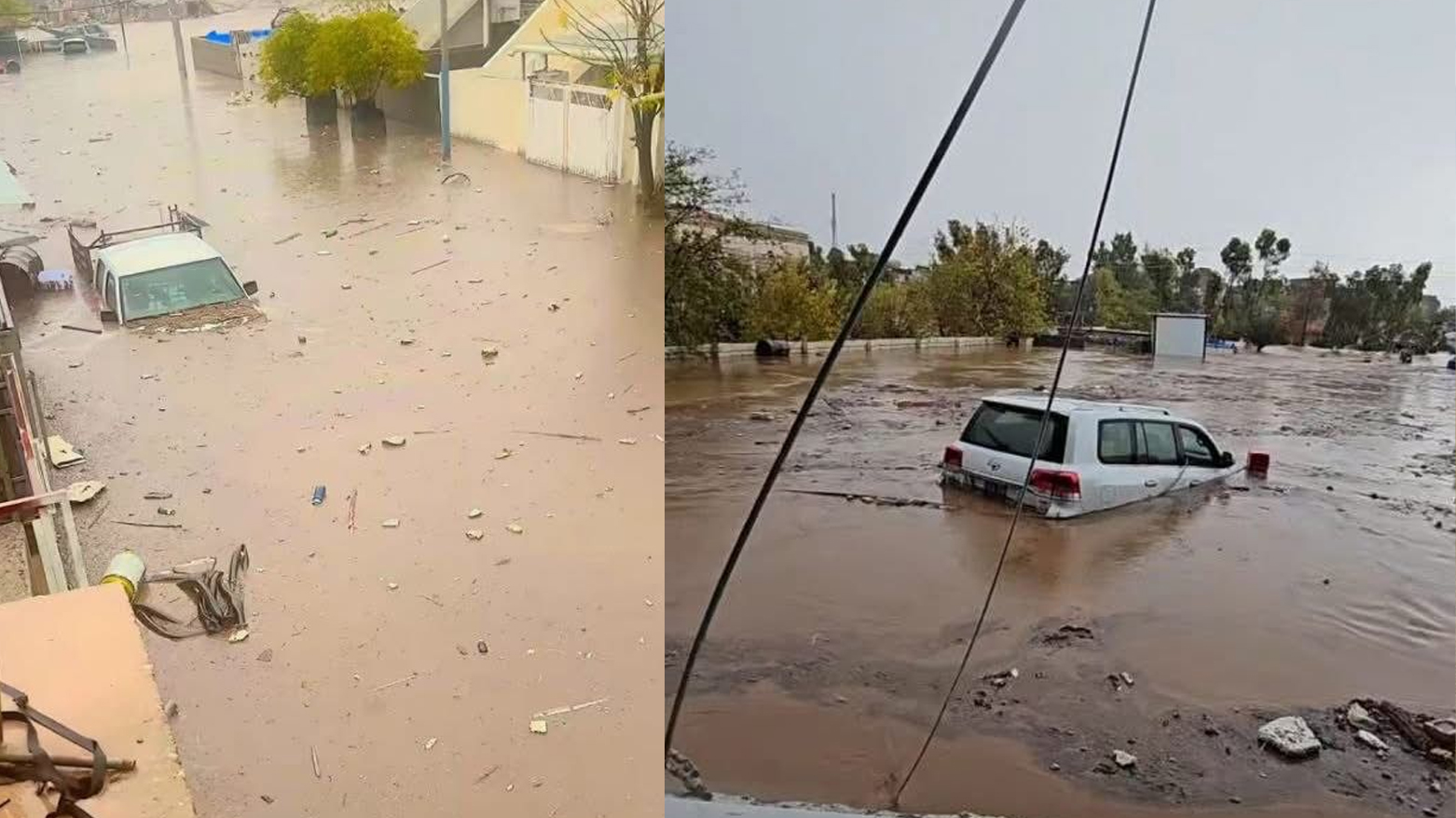
ERBIL (Kurdistan24) – In a swift and severe meteorological event that has disrupted life across key districts of the Kurdistan Region, torrential rains have triggered flash floods in the city of Chamchamal, submerging homes and vehicles while forcing the total closure of the critical highway connecting the district to Sulaimani.
The deluge, which began in the early hours of Tuesday, December 9, 2025, has transformed streets into rivers and mobilized emergency services in a desperate bid to rescue residents trapped by rising waters.
As authorities scramble to contain the crisis, the flooding stands as the most acute manifestation of a broader weather system that has blanketed the region, bringing with it both the destructive force of nature and, paradoxically, the vital replenishment of water resources after years of scarcity.
The situation in Chamchamal deteriorated rapidly as precipitation levels spiked. According to official data from the General Directorate of Meteorology of the Kurdistan Region, the district received a staggering 81.2 mm of rain within a single 24-hour window, a volume that overwhelmed local drainage infrastructure.
The center of Sulaimani city was also hit hard, recording 61.3 mm of rainfall.
This intense downpour caused immediate havoc in urban centers, with floodwaters breaching residential properties in downtown Chamchamal and leaving cars stranded in deep water. Residents, caught off guard by the speed of the inundation, have issued urgent calls for assistance, prompting a large-scale emergency response to ensure public safety.
The impact on transportation has been immediate and absolute. The main arterial road linking Sulaimani and Chamchamal has been severed at Takia, bringing all traffic between these two economic hubs to a complete standstill.
This closure not only disrupts daily commuters but also hampers the movement of goods and emergency supplies across the province. The paralysis of this route underscores the vulnerability of the region’s infrastructure to extreme weather events, a concern that had been flagged just a day prior.
On Monday, the Joint Crisis Coordination Centre of Sulaimani Province (P.JCC) had issued a prescient warning regarding the risk of flooding for the city center and its outskirts.
In anticipation of the crisis, the P.JCC activated an emergency hotline, urging citizens to contact number 100 at the first sign of danger.
Despite these preparations, the ferocity of the storm has tested the limits of the region's readiness. The General Directorate of Meteorology predicts that this wave of instability will persist until Wednesday, suggesting that the worst may not yet be over for the soaked communities of Sulaimani and its environs.
While Chamchamal bears the brunt of the flooding, the weather system's footprint extends across the entire Kurdistan Region, creating a complex tapestry of localized emergencies and logistical challenges.
In Erbil province, the General Directorate of Water and Sewerage announced a temporary halt to production in most water treatment projects located on the Great Zab River.
Ari Ahmed, the Director General, explained to Kurdistan24 that the turbidity levels of the river water had spiked to between 3,500 and 4,000 units—far exceeding the filtration capacity of 2,000 to 2,500 units.
This suspension, expected to last 24 to 48 hours, is a direct consequence of the heavy runoff polluting the water source with sediment. Ahmed reassured the public that stored tank water and lower winter demand would mitigate the impact on households.
The rainfall data released for the past 24 hours paints a picture of a region under a deluge.
The sub-district of Barzanja in Sulaimani province recorded the highest rainfall in the entire region at 149 mm, followed closely by the Chwarta district with 145 mm. In Erbil province, Koya topped the charts with 105 mm.
These figures represent a significant hydrological event, with areas like Bazian, Dukan, and Mawat all receiving nearly or over 100 mm of rain. Even the typically drier areas of Kirkuk and Garmiyan saw substantial precipitation, with Maidan recording 70.6 mm.
The storm’s reach has also forced administrative closures beyond the immediate flood zones. In the Garmiyan Administration and Salahaddin province, universities and schools have been shuttered to protect students.
The Presidency of Garmiyan Polytechnic University declared Tuesday an official holiday, a move mirrored by local authorities in the Khurmatu, Balad, Samarra, and Dujail districts of Salahaddin.
These areas, particularly Khurmatu at the foothills of the Hamrin mountains, are historically prone to flash floods that can turn deadly in minutes. The decision to suspend classes reflects a cautious approach to public safety in light of the unpredictable nature of the runoff.
Meteorological forecasts indicate that the weather system will continue to evolve over the next 24 hours.
While the intensity is expected to peak on Tuesday, particularly in Sulaimani, Halabja, and Garmiyan where thunderstorms are predicted, the wave will gradually weaken by Wednesday.
However, the immediate threat of rising water levels remains high, with specific warnings issued for Erbil, Soran, and Raparin administrations to prepare for potential flooding as the accumulated water seeks its path downstream.
Strategic Implications: Turning Crisis into Opportunity for Water Security
While the immediate focus remains on emergency response and damage control, the current deluge must be viewed through a broader strategic lens.
The Kurdistan Region has endured two consecutive years of reduced rainfall, a climatic stress test that has depleted aquifers and strained agricultural resilience. The current precipitation levels, though destructive in their intensity, may indicate a pivotal improving trend in the region’s hydrological cycle.
This influx of water is not merely a hazard but a critical resource that the Kurdistan Regional Government (KRG) has been actively preparing to harness.
As part of its long-term strategy to protect both underground and surface water resources, the KRG has invested heavily in the construction of numerous dams and ponds of varying sizes across the region.
This infrastructure forms a core component of the KRG’s water-security management policy, designed specifically to capture runoff during such extreme weather events.
The increased rainfall currently sweeping the region has the potential to significantly replenish these strategic reservoirs.
By filling the dams and ponds, the heavy rains will strengthen the region’s agricultural output for the coming seasons, ensuring water availability for irrigation during the drier months.
Furthermore, rejuvenated water bodies support the burgeoning tourism sector and contribute to improving the broader climate landscape of Kurdistan by stabilizing groundwater levels and combating desertification.
Thus, while the floods in Chamchamal present a formidable immediate challenge, the water they bring is a vital asset for the long-term sustainability and prosperity of the Kurdistan Region.