Stalled March 10 Agreement Tests Syria’s Fragile Transition as Kurds Press for Inclusion and Decentralization
The March 10 Damascus-SDF agreement remains stalled amid Kurdish demands for decentralization and inclusion, with analysts warning the SDF's "zero commitment" and escalating federalism demands risk triggering a military confrontation as the year-end deadline nears.
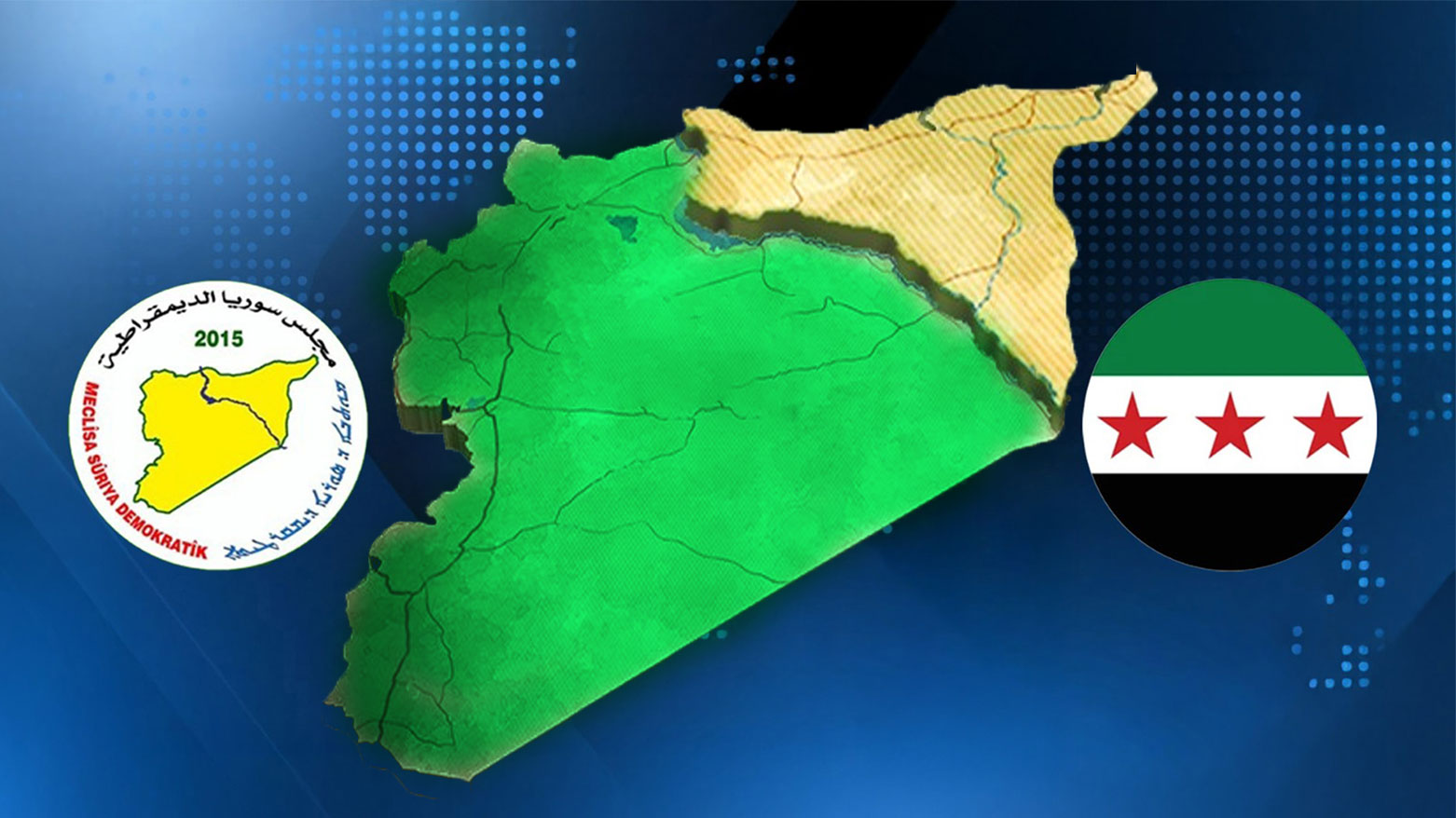
ERBIL (Kurdistan24) - Nearly nine months after the signing of the March 10 agreement between Syria’s interim President Ahmed al-Sharaa and Syrian Democratic Forces (SDF) commander Mazloum Abdi, anticipation in northeastern Syria (Western Kurdistan) has given way to mounting frustration, as tangible progress toward implementation remains elusive.
According to the Syrian Observatory for Human Rights (SOHR), residents across Western Kurdistan continue to view the agreement as a potential gateway to lasting stability and an end to years of conflict, including repeated battles and military interventions by Turkish-backed factions. Locals believe that fully enacting the accord could open the door to inclusive constitutional drafting and the construction of a unified, decentralized Syrian state.
Yet despite these expectations, negotiations have advanced slowly and intermittently since the agreement was signed in Damascus. Talks have repeatedly stalled amid mutual accusations of obstruction, with both sides accused of clinging to rigid demands and conditions.
Local Voices Demand a New Syria
SOHR documented testimonies from residents reflecting both personal loss and political resolve. One resident, identified as (A.H.), said two of his brothers were killed fighting ISIS, underscoring his rejection of any return to centralized rule reminiscent of the pre-revolution era. “The new Syria must be inclusive of all Syrians and serve them all,” he said, calling for decentralization and the swift, peaceful implementation of the March 10 agreement.
Another resident, (A.Kh.), highlighted unresolved institutional recognition, noting that her daughter studied at Rojava University, which remains unrecognized by the Syrian Interim Government. She called for official recognition of the Autonomous Administration and its universities, arguing that accelerating implementation of the agreement would revitalize the region and strengthen Syria’s democratic transition.
Kurdish Political Bodies Warn Against Marginalization
On the first anniversary of the fall of the Baath regime, the Kurdish National Council (KNCS) and the Democratic Autonomous Administration of North and East Syria (DAANES) issued separate but converging statements emphasizing that exclusionary policies threaten Syria’s fragile transition.
KNCS urged the transitional government to open serious dialogue with the united Kurdish delegation, warning that bypassing the Kurdish question would “damage reconstruction and the path toward lasting stability.” The Council stressed that the Syrian people’s joy would remain incomplete without a just and accountable state and reaffirmed its vision of a decentralized democratic Syria.
DAANES, in turn, framed the collapse of the Assad regime as the end of a decades-long nightmare marked by repression, forced displacement, demographic engineering, and systematic violations of political and civic freedoms. While honoring those who sacrificed their lives for freedom and dignity, the administration criticized measures taken by the transitional authority over the past year, citing political exclusion, opaque decision-making, and renewed sectarian tensions following violence in Perav and Sweida.
Both bodies called for a comprehensive national dialogue encompassing all political, ethnic, and civic forces, emphasizing refugee return, national reconciliation, and inclusive governance as prerequisites for a sustainable transition.
A Kurdish Roadmap from Qamishlo
These demands echo a major political milestone reached earlier this year. On Apr. 26, 2025, Kurdish political parties in Western Kurdistan concluded the Kurdish Unity and Solidarity Conference in Qamishlo, Western Kurdistan, unanimously adopting a “Joint Political Vision” document. The roadmap outlines a negotiated solution to the Kurdish question within a united, decentralized Syria governed by a parliamentary system.
The document affirms Syria’s multiethnic, multicultural, and multireligious character, calls for constitutional guarantees for all components, and advocates a decentralized system based on justice, equality, separation of powers, and respect for human rights. It further demands recognition of Kurdish national existence, adoption of Kurdish as an official language alongside Arabic, reversal of demographic change policies, safe return of displaced populations, restoration of citizenship stripped under the 1962 census, and allocation of a share of regional resources for development.
Turkey’s Firm Stance Complicates the Path Forward
Against this backdrop, Türkiye’s Ministry of National Defense reiterated its position that SDF members must integrate into the Syrian army individually, not as an organized force, within the framework of the March 10 agreement. Turkish officials argued that the SDF continues its activities rather than integrating, a stance they say undermines security and stability efforts in Syria.
The ministry maintained that external encouragement has emboldened the SDF to delay disarmament, concluding that there is “no alternative to integration.” This position adds another layer of complexity to an already fragile process, particularly for communities in northeastern Syria seeking guarantees of decentralization and political inclusion.
Meanwhile, the interim Syrian government has taken unprecedented steps in other areas. Authorities recently licensed the Syrian Jewish Heritage Organization, the first officially approved body dedicated to preserving Jewish heritage and restoring properties confiscated under the former regime. Officials described the move as a signal of non-discrimination and inclusivity, with plans to register and rehabilitate Jewish properties and religious sites.
While widely seen as a departure from past policies, the initiative has also drawn quiet scrutiny from Kurdish observers who note the contrast between swift accommodation of minority rights in one context and prolonged hesitation in addressing longstanding Kurdish demands.
Experts Warn of Military Escalation as Deadline Nears, Accusing SDF of Stalling and Escalating Demands
Military experts and political analysts have reached a consensus that the Syrian Democratic Forces (SDF) have failed to comply with any provision of the agreement signed with the Syrian government on March 10, describing the level of commitment as “absolute zero” as the end-of-year deadline approaches.
In statements to Al Jazeera Net, analysts said the SDF has pursued a strategy of political maneuvering and “buying time” since the signing of the agreement, while simultaneously escalating its demands to include federalism, far-reaching decentralization, military autonomy, and a share of revenues from oil resources and border crossings. Experts described these conditions as “beyond negotiation” and “impossible to approve.”
They warned that continued evasion of commitments could lead to a large-scale military confrontation, particularly amid what they described as growing international convergence among the United States, Turkey, and the Syrian government on the need to decisively address the situation in northeastern Syria. According to the experts, Damascus has exhausted diplomatic options but will not accept the imposition of a fait accompli.
‘Zero Commitment’ and a Strategy of Maneuvering
Political researcher and analyst Abbas Sharifa told Al Jazeera Net that the SDF has dealt with the agreement through two parallel tracks. The first, he said, is a tactical approach centered on drowning negotiations in details and delaying implementation, alongside attempts to expand the Syrian state’s areas of distraction by intervening in crises such as those in the coastal region and Sweida. Sharifa added that this approach also included efforts to court Christian communities in order to frame SDF demands as part of a broader “minorities’ alliance” against the Syrian state.
Sharifa explained, is strategic in nature and is based on the SDF’s determination to preserve all its gains and entrench the existing reality in northeastern Syria by seeking recognition of a federal system and maintaining itself as an independent military bloc that is only nominally affiliated with the Syrian government.
From the Syrian perspective outlined by the experts, the continued lack of implementation has reinforced perceptions that the SDF is deliberately obstructing the agreement while consolidating its control on the ground. Analysts emphasized that the Syrian state views the March 10 accord as a final opportunity for a negotiated settlement in northeastern Syria, warning that the failure to translate commitments into concrete steps could close the door on diplomacy altogether.
As the year-end deadline approaches, the experts concluded, the path forward hinges on whether the SDF abandons its strategy of delay and maximalist demands, or whether the impasse will push all parties toward a confrontation that could reshape the balance of power in northern and eastern Syria.
As Syrians mark a year since the fall of the Baath regime, the stalled implementation of the March 10 agreement stands as a defining test for the country’s transition. Kurdish leaders and residents alike warn that repeating patterns of centralization, exclusion, and unilateral decision-making risks eroding trust and stability at a pivotal moment.
For many in Western Kurdistan, the promise of the agreement remains intact—but time, they caution, is becoming an increasingly scarce resource in a transition that demands inclusion, decentralization, and genuine national partnership.