KRG Human Rights Coordinator Briefs European Parliament on Reforms and Post-UNAMI Transition
Dindar Zebari highlights progress in governance and minority protections, urges continued EU support amid regional pressures.
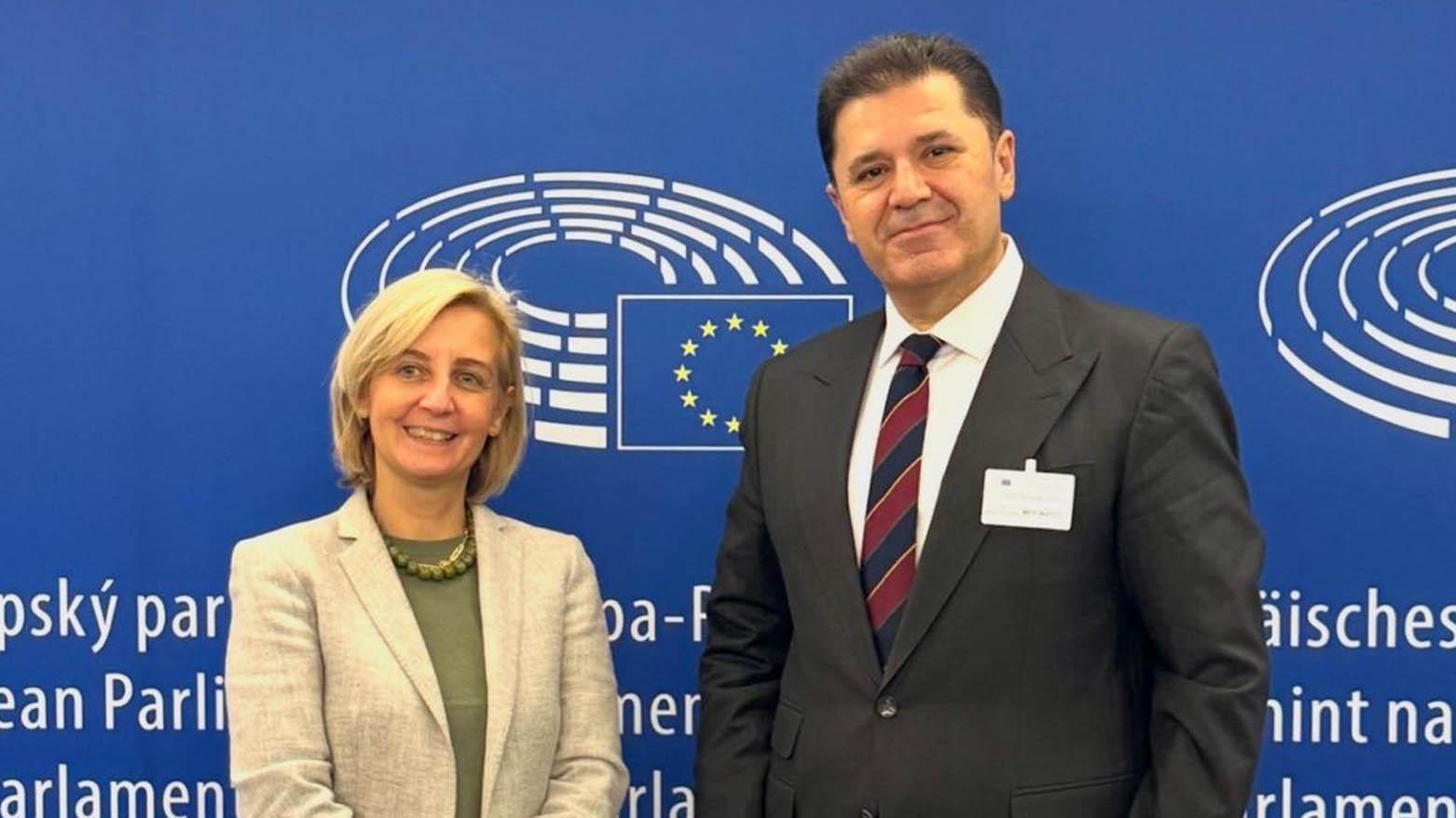
ERBIL (Kurdistan24) — The Kurdistan Regional Government’s (KRG) Coordinator for International Advocacy (OCIA) , Dr. Dindar Zebari, held a high-level meeting at the European Parliament in Brussels with Vice Chair of the Parliament’s Subcommittee on Human Rights, Marte Temido, to review human rights developments in the Kurdistan Region and discuss cooperation during a sensitive transitional period.
According to a press release issued on Saturday, this recent meeting was also attended by the KRG’s Representative to the European Union, Dr. Delavar Ajgaeyi. It marked the final engagement of the KRG delegation during an official visit to Brussels that included discussions with members of the European Parliament (MEPs) and human rights officials.
Temido opened the meeting by welcoming the delegation and calling for a focused exchange. Dr. Zebari expressed appreciation for the opportunity, emphasizing the importance of sustained dialogue with European institutions as the Kurdistan Region navigates evolving political and institutional challenges.
In the meeting, Dr. Zebari outlined anticipated challenges following the withdrawal of the United Nations Assistance Mission for Iraq (UNAMI) and parts of the Office of the UN High Commissioner for Human Rights (OHCHR).
He presented the performance report of the Office of the Coordinator for International Advocacy’s Human Rights Action Plan, highlighting what he described as tangible progress in democratic governance, minority protection, women’s empowerment, and alignment with international human rights standards, despite broader regional instability.
The KRG coordinator also briefed Temido on ongoing security and humanitarian pressures facing the Kurdistan Region, stressing the need for continued moral and political support from the European Union.
He welcomed prospects for deeper cooperation, including interest expressed by the EU Special Envoy for Human Rights in visiting the Kurdistan Region, as well as the possibility of holding a public hearing on the Region at the European Parliament.
For her part, Temido acknowledged the significance of the updates provided and reaffirmed the European Parliament’s close engagement with the Kurdistan Region.
Both sides agreed to exchange the final Human Rights Performance Report, with Dr. Zebari underscoring OCIA’s readiness to maintain active cooperation with European partners during the post-UNAMI transition.
The Kurdistan Region has long been regarded by European institutions as a comparatively stable and pluralistic part of Iraq, particularly amid years of conflict, political fragmentation, and humanitarian crises in the wider region.
Since the start of the Islamic State's (ISIS) war in 2014, the KRG has hosted hundreds of thousands of internally displaced persons and refugees from across Iraq and neighboring countries, while maintaining a relatively secure environment and open civic space.
Over the past decade, the Kurdistan Regional Government has expanded its engagement with international human rights mechanisms, including cooperation with the European Union, United Nations agencies, and international civil society organizations.
The establishment of the Office of the Coordinator for International Advocacy was part of a broader effort to institutionalize dialogue with global partners, improve compliance with international human rights norms, and enhance transparency in governance.
European Union institutions have repeatedly acknowledged the Kurdistan Region’s role in protecting religious and ethnic minorities, promoting women’s participation in public life, and preserving freedom of belief and cultural diversity in a volatile regional context.
Despite ongoing economic pressures, security threats, and the burden of displacement, the KRG has continued to pursue legal and administrative reforms aimed at strengthening democratic institutions and the rule of law.
As international oversight mechanisms such as UNAMI scale down their presence in Iraq, the Kurdistan Region is positioning itself as a reliable partner committed to sustaining human rights progress through direct cooperation with European and international actors.
Officials in Erbil argue that continued EU engagement is essential not only to consolidate past gains, but also to ensure long-term stability, institutional resilience, and respect for fundamental freedoms in the Region.