Iraq’s Top Judge Stresses Sovereignty as U.S. Lawmaker Accuses Judiciary of Political Crackdown
Fayiq Zaidan links victory over ISIS to full national sovereignty, while Rep. Joe Wilson denounces what he calls a return to police-state tactics
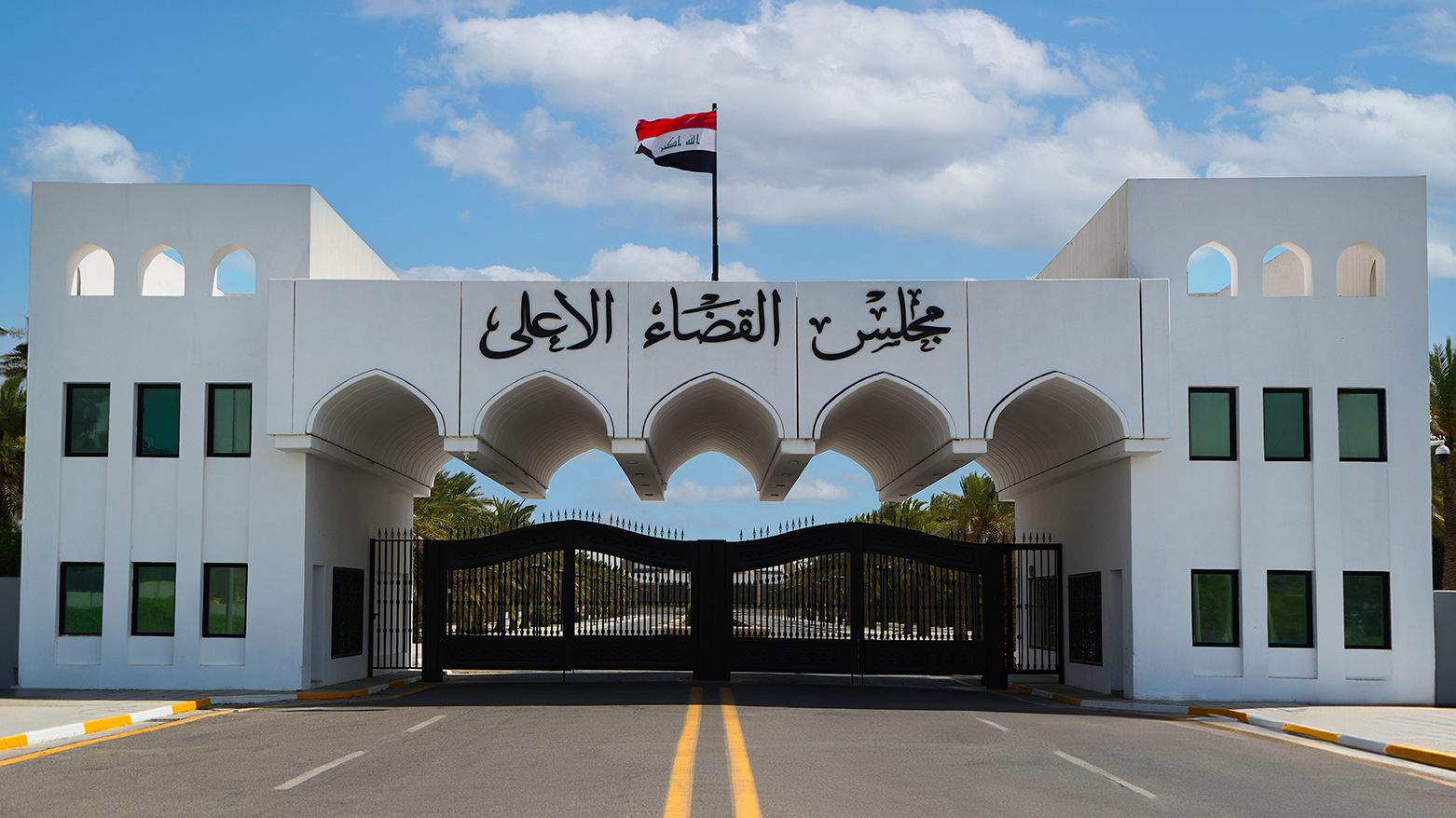
ERBIL (Kurdistan24) — Iraq’s chief justice, Fayiq Zaidan, underscored the centrality of national sovereignty to preserving the country’s hard-won victory over the Islamic State (ISIS), as a senior U.S. Republican lawmaker on the same day sharply criticized the Iraqi judiciary, accusing it of shielding Iran’s influence and suppressing dissent.
In a recent statement marking Victory Day, Zaidan, head of Iraq’s Higher Judicial Council, said that the defeat of ISIS in 2017 would remain incomplete without “full sovereignty of the state over its land and decision-making.”
He emphasized that Iraq’s annual commemoration honors not only the liberation of territory after years of fighting and sacrifice, but also the restoration of state authority, the rule of law, and public order.
Zaidan argued that triumph over terrorism cannot be measured solely in military terms. “Sovereignty,” he wrote, “is the cornerstone for sustaining victory, entrenching stability, and building a secure future,” adding that a modern state must be able to make its decisions freely and independently, without external dictates.
He further linked national sovereignty to Iraq’s ability to formulate its security, economic, and social policies in line with the will and interests of its people, saying this autonomy reflects a country’s self-respect and standing regionally and internationally.
Addressing the country’s ongoing political deadlock, Zaidan urged all political forces and figures to rely exclusively on national will in completing constitutional entitlements—particularly the selection of the three presidencies: the speakership of parliament, the presidency of the republic, and the premiership.
He noted that regional and international actors have publicly pledged not to interfere in these choices, placing full responsibility on Iraqi political blocs to complete the process in a manner that bolsters political stability and preserves state authority.
“The pages of history do not forget national positions,” Zaidan concluded, arguing that those who shoulder responsibility today and help entrench sovereignty are actively contributing to the construction of an independent Iraq governed by the will of its own citizens.
Zaidan’s remarks, however, were met the same day with a forceful rebuke from U.S. Republican Congressman Joe Wilson, who portrayed Iraq’s judiciary as an instrument of political repression serving entrenched, Iran-backed elites.
In a post on his official X account, Wilson accused the head of Iraq’s Higher Judicial Council of issuing directives to prosecute anyone who “undermines the legitimacy” of what he described as a hollow and externally dominated political system—effectively criminalizing dissent against Iran-aligned power structures.
Wilson condemned what he characterized as Iraq’s accelerating slide back into authoritarianism, warning that the country is reviving a Ba'ath-era police-state mentality by targeting citizens for peacefully opposing Iranian influence.
“It is sad to see Iraq go back” to such practices, he wrote, arguing that the judiciary is being weaponized against the majority of Iraqis who reject foreign domination and unaccountable militias.
He also cited the Iraqi arrest warrant issued in connection with the killing of Iranian General Qassem Soleimani as further evidence of Baghdad’s subservience to Tehran, underscoring, in his view, the extent to which Iraqi institutions have been compromised.
Wilson concluded his remarks with a blunt call to action: “Free Iraq from Iran!”
Wilson’s comments cast Zaidan’s rhetoric on sovereignty and constitutionalism as deeply contradictory, highlighting what critics see as a widening gap between official discourse and political reality.
Rather than signaling genuine independence, Iraq’s judicial and political trajectory, according to Wilson and like-minded observers, reflects the consolidation of a system increasingly intolerant of dissent and firmly aligned with Iranian interests—drawing growing international alarm over the country’s democratic backsliding and loss of genuine sovereignty.