Netanyahu Announces $34.7 Billion Natural Gas Deal with Egypt
Israel’s largest-ever energy export agreement aims to boost state revenues, deepen regional ties, and reinforce Israel’s role as a regional energy power.
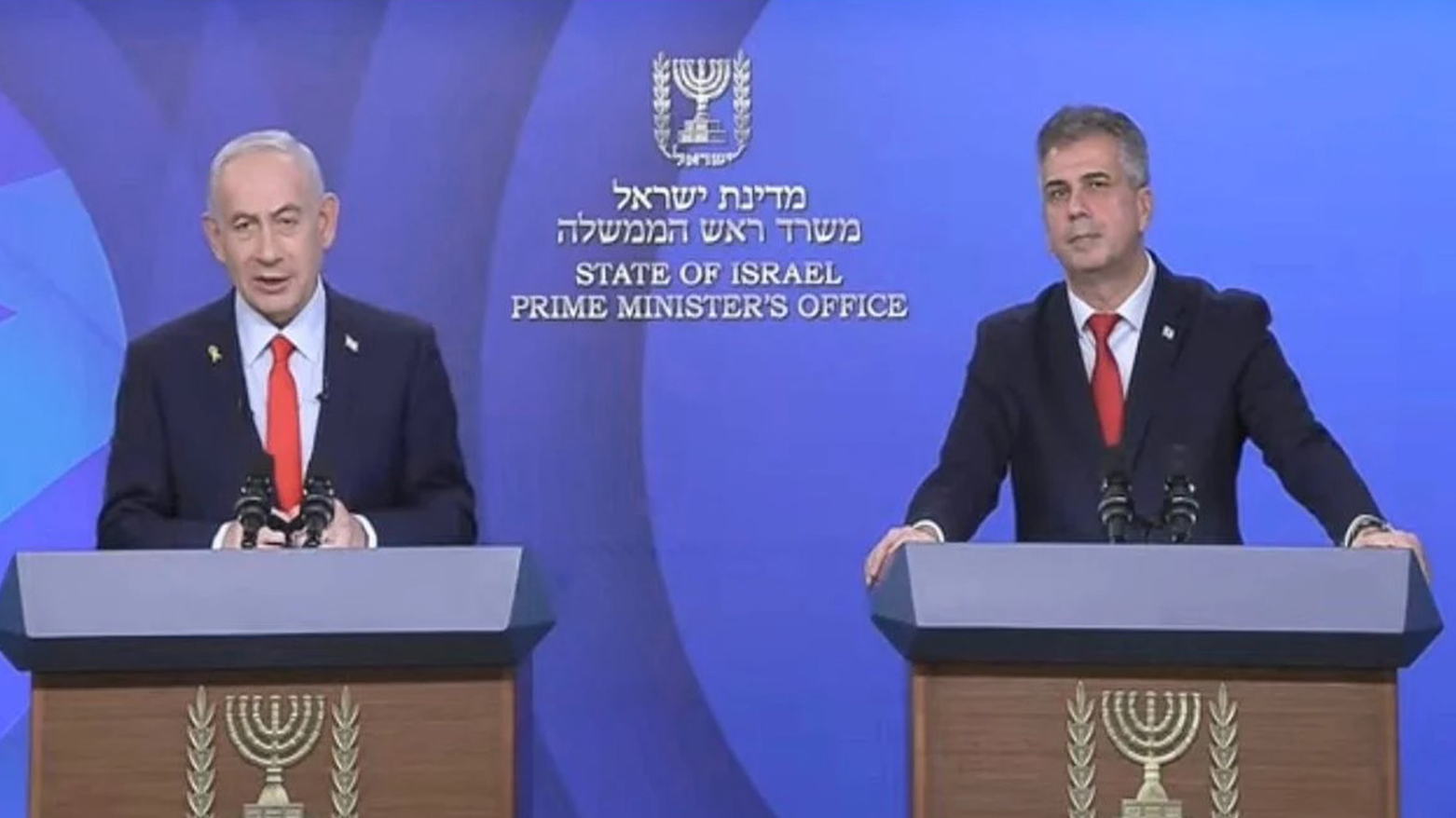
ERBIL (Kurdistan24) — Israeli Prime Minister Benjamin Netanyahu announced on Wednesday the approval of what he described as the largest energy deal in Israel’s history, a $34.7 billion natural gas export agreement with neighboring Egypt that is expected to inject billions of shekels into the Israeli economy over the coming years.
In a recorded statement alongside Energy Minister Eli Cohen, Netanyahu said the agreement, valued at NIS 112 billion ($34.7 billion), would generate NIS 58 billion ($18 billion) in revenues for the state.
According to Netanyahu, government income from the deal is projected to reach around NIS 500 million ($155 million) in the first four years and rise sharply to NIS 6 billion ($1.9 billion) annually by 2033.
“The agreement is with the American company Chevron, with Israeli partners who will supply gas to Egypt,” Netanyahu said, emphasizing that the revenues would be channeled into education, healthcare, infrastructure, security, and future generations.
He added that his approval came only after assurances that Israel’s vital needs, including national security and domestic energy requirements, were safeguarded.
Netanyahu argued that the deal would significantly strengthen Israel’s standing as a regional energy hub and contribute to broader regional stability, while also encouraging further exploration in Israeli waters.
He stressed that gas producers would be obligated to supply the domestic market “at a good price,” seeking to address public concerns over energy costs.
“We have brought another jug of oil to the nation of Israel,” Netanyahu said, invoking the Hanukkah story of the miracle oil that burned for eight days.
Standing alongside the prime minister, Energy Minister Eli Cohen hailed the agreement as “a historic moment for Israel,” describing it as the largest export deal ever signed by the country.
Cohen underscored that natural gas is a “strategic asset” for Israel, critical to both economic growth and national resilience.
The deal follows the August announcement by Israeli firm NewMed Energy of a roughly $35 billion agreement to supply Egypt with natural gas. That agreement initially stalled after Cohen refused to grant approval, citing insufficient guarantees that Israeli consumers would receive fair prices and warning that large-scale exports could deplete Israel’s gas reserves and undermine domestic energy security.
Reports indicate that the United States played a significant role in pushing both Netanyahu and Cohen to move forward with the agreement. US Energy Secretary Chris Wright reportedly canceled a planned six-day visit to Israel in October after the deal was delayed, signaling Washington’s frustration.
According to Axios, the US administration views the gas deal as a strategic tool to improve relations between Israel and Egypt through shared economic interests. Bilateral ties have been strained in the past two years, particularly following the Oct. 7, 2023, Hamas attack on Israel and the subsequent war in Gaza.
The Trump administration is reportedly eager to ease tensions and promote wider regional breakthroughs.
Axios further reported that US President Donald Trump has sought to broker a summit between Netanyahu and Egyptian President Abdel-Fattah el-Sissi. To encourage Sissi’s participation, Israel was expected to make several concessions, including formalizing a strategic gas agreement with Cairo.
Late Wednesday, NewMed Energy confirmed it had received official approval to export gas to Egypt, clearing the way for the execution of the deal. “This is a historic day for the natural gas sector, one that guarantees continued investment in Israel and creates regulatory stability for years to come,” NewMed CEO Yossi Abu said in a statement.
Both Israel and Egypt have emerged as major gas exporters following significant offshore discoveries in the Eastern Mediterranean. Israeli gas currently accounts for an estimated 15–20 percent of Egypt’s consumption, according to data from the Joint Organizations Data Initiative.
Despite the economic upside, concerns persist about Israel’s long-term energy outlook. Earlier this year, Israel’s Finance Ministry warned that the country could face a natural gas shortage within the next 25 years, as domestic demand grows faster than expected and export commitments expand. Such a shortfall could translate into higher electricity prices for consumers.
Gas production from the Leviathan field—one of the world’s largest deep-water gas discoveries—began supplying the Israeli market in December 2019. Exports to Egypt started in January 2020 under an agreement for 60 billion cubic meters, expected to be fulfilled by the early 2030s. As of September 2025, Leviathan had supplied approximately 23.5 billion cubic meters of gas to the Egyptian market.
The newly approved agreement marks a significant expansion of that partnership, tying Israel’s energy sector more closely to regional geopolitics and international diplomacy.