Kurdistan Region Oil Reaches U.S. Shores as Washington-Brokered Pipeline Deal Reshapes Iraq’s Energy Landscape
First U.S.-bound cargo of Kurdistan crude since 2023 underscores Erbil’s central role in Iraq-Turkey energy diplomacy and Washington’s drive to curb Iranian influence
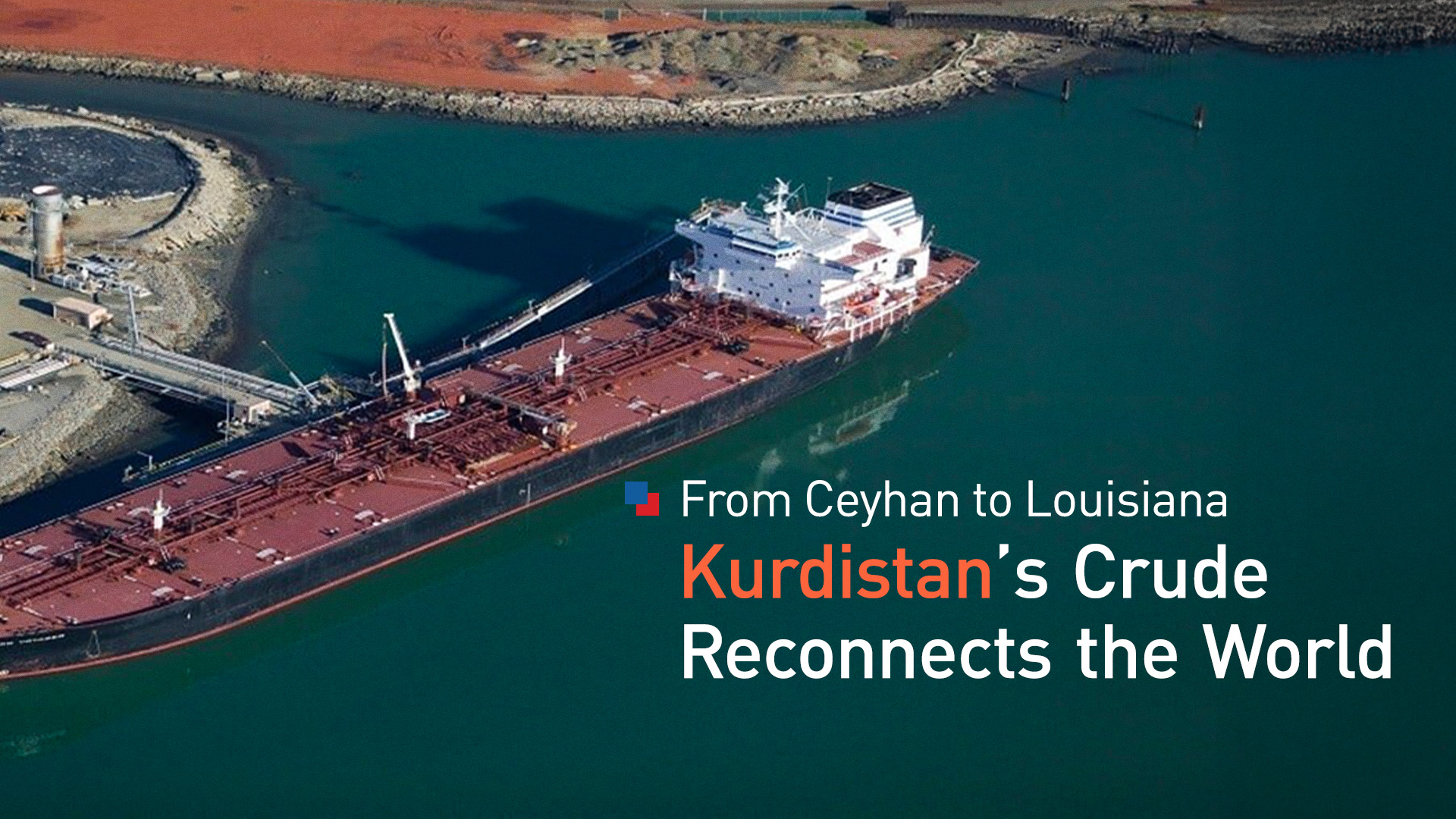
ERBIL (Kurdistan24) — A landmark shipment of crude from the Kurdistan Region of Iraq arrived at the Louisiana Offshore Oil Port on November 24, marking the first U.S. delivery of Kurdistan Region oil in more than two years and spotlighting the Kurdistan Region’s renewed importance in global energy markets. The milestone was made possible by a U.S.-facilitated interim agreement in September that reopened the Iraq-Turkey Pipeline (ITP) after a prolonged shutdown and brought Baghdad, Erbil, and international oil companies (IOCs) back to the table.
The analysis—published by the Washington Institute and co-authored by Ambassador James Jeffrey and Senior Fellow Noam Raydan—emphasizes that the successful loading of around 1 million barrels of Kurdistan crude at the Turkish port of Ceyhan underscores not only Washington’s diplomatic leverage but also the Kurdistan Region’s strategic energy value.
Marine tracking data reviewed by Kpler and TankerTrackers.com confirms that more shipments of Kurdistan-sourced crude are expected to reach the United States in the coming weeks.
U.S. refiners have shown strong demand for the medium-sour grades produced in Kurdistan—grades that are not widely available in domestic U.S. production but remain essential for refineries designed to process heavier blends.
Before the ITP closure in March 2023, most Kurdistan exports were destined for Mediterranean and European buyers. But the new cargoes—sometimes mislabeled as “Kirkuk” crude despite being sourced entirely from Kurdistan fields—signal a diversification of buyers under the Iraqi federal government's marketing authority, SOMO.
The rebranding reflects Baghdad’s consolidation of northern crude under a single commercial identity, even as exports remain predominantly Kurdish in origin.
Washington’s fingerprints are evident across Iraq’s modern energy framework—from supporting the Kurdistan Region’s co-management rights over new oil in Iraq’s 2005 constitution, to mediating revenue-sharing arrangements between Erbil and Baghdad, to backing U.S. investment in both northern and southern fields.
The reopening of the ITP aligns with U.S. strategic priorities: stabilizing a key OPEC producer, supporting American companies considering expansion in Kurdistan, and countering Iranian influence by demonstrating the concrete benefits of cooperation with Washington.
The ITP itself remains a geostrategic asset: its twin lines have a theoretical capacity of 1.5 million barrels per day, though far below that in practice without major refurbishment. Expanding exports through the pipeline would deepen Baghdad-Ankara ties and, ideally, dilute Iran’s influence in Iraq’s energy decisions.
Beyond oil, the Kurdistan Region’s significant non-associated gas reserves offer Iraq one of its few realistic paths to reducing dependence on Iranian energy imports. As Baghdad and Erbil improve their energy coordination, U.S. and international firms could expand gas production and electricity cooperation across the country.
But these opportunities have not gone unnoticed by Iran-aligned groups: Kurdistan’s largest gas complex was struck by a rocket attack last week in what analysts view as an attempt to slow Erbil-Baghdad energy integration.
U.S. and European pressure has already pushed Turkey to reduce purchases of Russian crude. Access to northern Iraqi crude through the ITP—especially at competitive pricing—offers Ankara a politically safer and geographically closer alternative.
A broader ITP agreement between Iraq and Turkey, observers note, could also help de-escalate long-running legal disputes over a decade of Kurdish oil exports conducted without Baghdad’s prior approval.
The Washington Institute’s analysis concludes that the renewed flow of Kurdistan Region oil to global markets—especially to the United States—demonstrates both the economic logic of Kurdish production and the strategic importance of sustained American engagement in Iraq’s energy sector.