U.S. Sanctions ICC Judges Over Israel Probe
The US sanctioned two ICC judges over Israel probes, drawing praise from Netanyahu and sharp rejection from the court, deepening a global legal standoff.
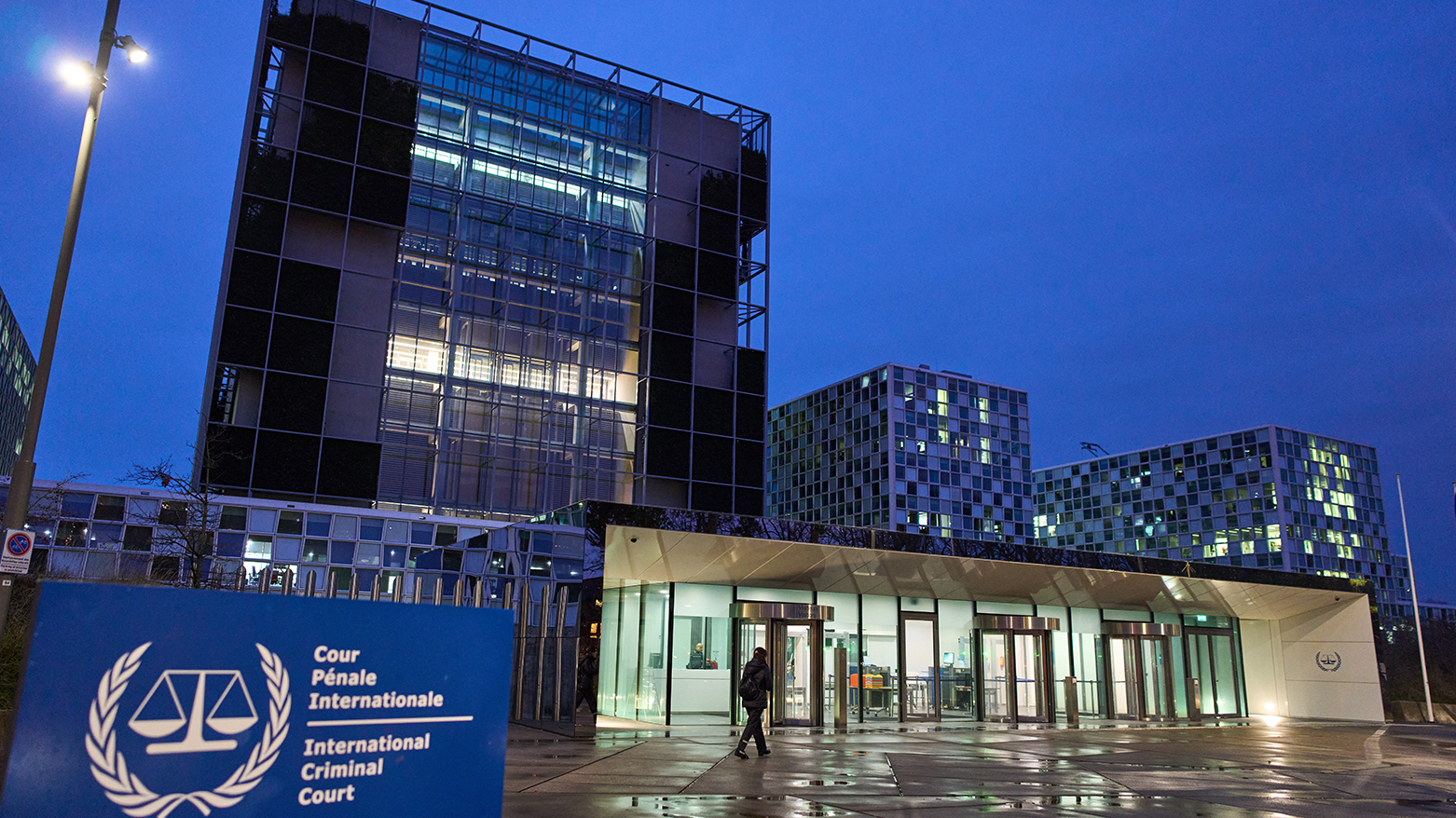
ERBIL (Kurdistan24) – The United States on Thursday imposed sanctions on two judges of the International Criminal Court, accusing them of engaging in what Washington described as illegitimate and politicized actions against Israel, a move that sharply escalates the Trump administration’s confrontation with the world’s top war crimes tribunal and draws strong reactions from both Israel and the court itself.
In a press statement issued on Thursday, Secretary of State Marco Rubio announced the designation of ICC judges Gocha Lordkipanidze of Georgia and Erdenebalsuren Damdin of Mongolia under Executive Order 14203, which authorizes sanctions against the International Criminal Court.
Secretary Rubio said the two judges had “directly engaged in efforts by the ICC to investigate, arrest, detain, or prosecute Israeli nationals, without Israel’s consent,” including by voting with the majority to reject Israel’s appeal against the court’s jurisdiction on Monday.
The announcement places the United States in direct and open conflict with the ICC at a moment of heightened international scrutiny over the war in Gaza and the court’s efforts to pursue accountability for alleged war crimes.
Secretary Rubio framed the sanctions as a defense of sovereignty, arguing that the ICC’s actions against Israel set a “dangerous precedent for all nations” and represented an abuse of power that Washington would not tolerate.
“Our message to the Court has been clear,” Rubio said in the statement, emphasizing that neither the United States nor Israel is a party to the Rome Statute, the treaty that established the ICC, and therefore both countries reject the court’s jurisdiction.
He warned that Washington would continue to respond with “significant and tangible consequences” to what he described as the ICC’s “lawfare and overreach”.
The sanctions quickly drew praise from Israel’s leadership. According to AFP, Israeli Prime Minister Benjamin Netanyahu publicly welcomed the US decision, thanking Washington for what he called “decisive leadership and strong action” against the judges.
Writing on social media, Netanyahu said Israel appreciated the determination of the United States, under President Donald Trump, to confront what he described as the “scourge of lawfare,” which he argued threatens both nations.
Rubio explicitly linked the sanctions to a recent ICC ruling that upheld arrest warrants issued against Netanyahu and former Israeli defense minister Yoav Gallant, AFP reported.
The warrants, issued in November 2024, accuse the two Israeli leaders of war crimes and crimes against humanity in connection with the Gaza conflict. On Monday, the judges rejected a challenge by Israel seeking to halt the investigation, a decision that appears to have directly triggered the latest US action.
The International Criminal Court, for its part, responded with a sharp rebuke. In a statement cited by AFP, the court said it “strongly rejects” the new US sanctions, describing them as a “flagrant attack against the independence of an impartial judicial institution”.
The ICC warned that threatening judges for applying the law undermines the rule of law itself and places the international legal order at risk.
The court said it would continue to carry out its mandate “with independence and impartiality,” acting in accordance with the Rome Statute and in the interest of victims of international crimes, despite the growing pressure from Washington.
The ICC also confirmed that the two sanctioned judges had voted to reject Israel’s challenge aimed at ending the Gaza war crimes probe.
The latest move adds to an expanding list of US sanctions targeting the court.
According to AFP, the United States has now sanctioned nine ICC judges and prosecutors over their involvement in investigations related to Israel.
This campaign represents one of the most aggressive efforts by any country to directly penalize officials of an international judicial body.
The confrontation underscores a fundamental clash over the reach and legitimacy of international justice.
The ICC, established as a court of last resort to prosecute genocide, crimes against humanity, and war crimes when national systems fail to do so, is supported by most Western democracies.
Neither the United States nor Israel, however, has ratified the Rome Statute, a fact Washington repeatedly cites to justify its rejection of the court’s authority.
For the Trump administration, the sanctions are part of a broader strategy to shield US and Israeli nationals from international legal scrutiny.
Rubio’s statement portrayed the ICC’s actions as not merely misguided but as a direct violation of sovereignty, arguing that allowing the court to proceed would expose Americans and Israelis to what Washington views as illegitimate prosecution.
Critics, including the ICC itself, see the issue very differently.
By sanctioning judges for their judicial decisions, they argue, the United States risks undermining the independence of international courts and weakening the global system designed to hold perpetrators of serious crimes accountable.
The ICC’s warning that the international legal order is being placed at risk reflects broader concerns among legal experts and human rights advocates, though such views were not elaborated upon in the statements cited by AFP.
The dispute also highlights the deepening politicization of international justice in the context of the Gaza war.
Israel’s leaders have fiercely rejected the ICC’s investigation, arguing that Israel has a functioning legal system capable of addressing allegations against its military and political leadership.
The court, however, has determined that it has jurisdiction and that the threshold for issuing arrest warrants has been met.
By stepping in with sanctions, the United States has signaled that it is prepared to go beyond diplomatic objections and take punitive action against international judges.
The move strengthens Israel’s position politically but further isolates Washington from many of its allies, most of whom continue to support the ICC as a cornerstone of the international justice system.
As the ICC vows to press ahead with its work and the United States promises further consequences, the standoff appears set to intensify.
What is at stake is not only the fate of a specific investigation but also the balance between national sovereignty and international accountability in an era of increasingly polarized global politics.