28 Years of Trade: “Pirajnan” Market Stands As s Living Symbol of Soran’s Popular Economy
Pirajnan market in Soran, established 28 years ago, remains a crowded popular hub despite its name meaning “the elderly women.” Driven by low prices and tourism growth, it is now dominated by young vendors and shoppers.
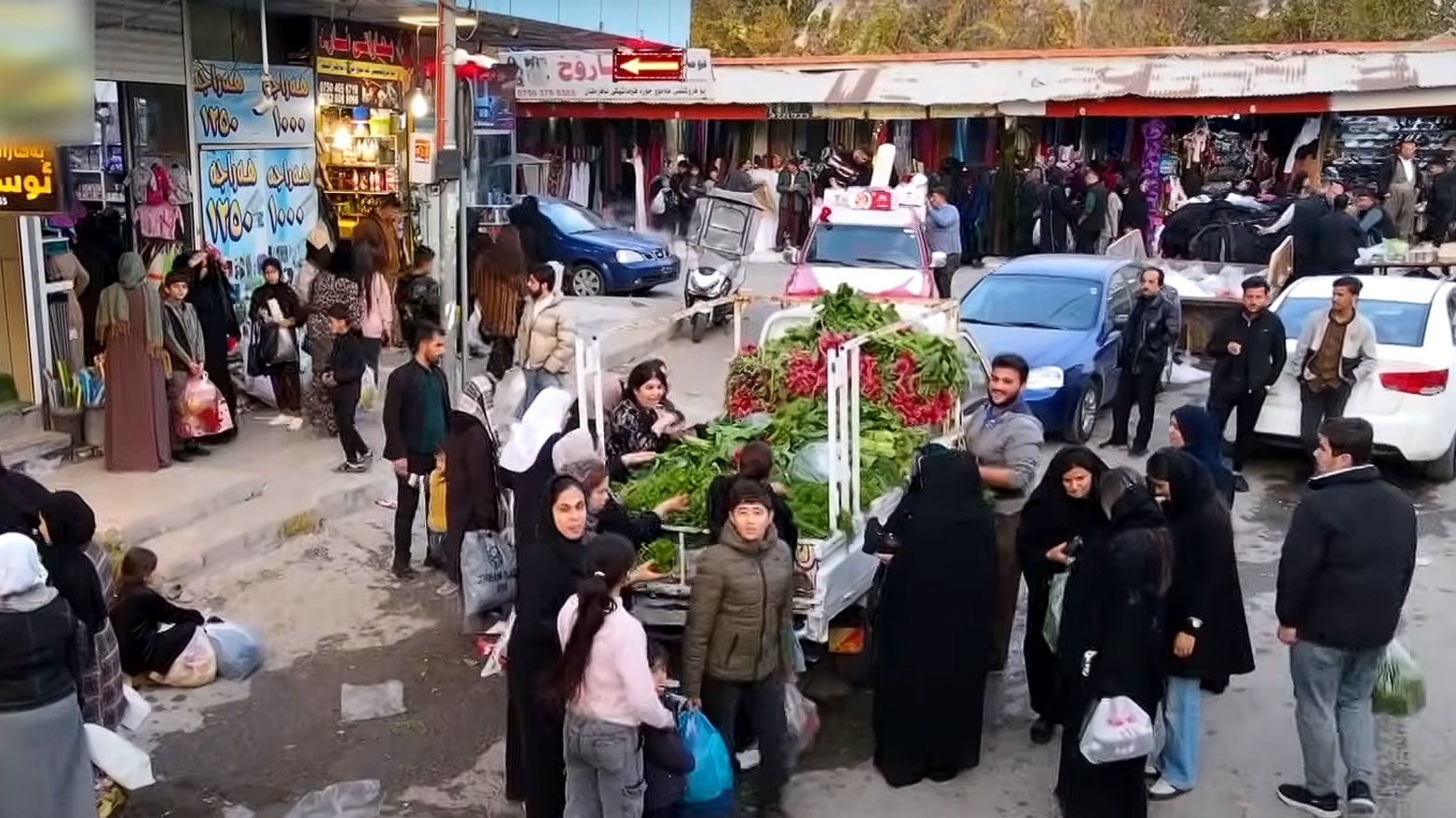
ERBIL (Kurdistan24) - As evening falls over Soran, the narrow lanes of Pirajnan market come alive with motion, voices, and color. Cold winter air does little to slow the steady flow of shoppers, as one of the district’s oldest popular markets continues to assert its place not only as a trading center, but as a social landmark shaped by nearly three decades of daily life.
Pirajnan market, located in the center of Soran district within the Soran Independent Administration, is among the most crowded local markets, particularly during evening hours. Despite low temperatures, buying and selling remain active, reflecting the market’s enduring appeal.
Despite its name meaning “the elderly women,” Pirajnan market has evolved into a vibrant youth-driven hub at the heart of Soran, blending history, affordability, and growing tourism momentum.
What draws attention immediately is the contrast between the market’s name and its reality. The market today is dominated by young vendors and young shoppers, creating a striking generational shift without erasing its original identity.
Najirwan Mohammed, a vendor working in the market, told Kurdistan24 that the daily turnout is driven primarily by affordable prices. He explained that the market becomes especially busy when tourists arrive in Soran, as many head directly to Pirajnan. According to him, its simplicity, aesthetic appeal, and noticeably lower prices compared to other markets make it a preferred destination for both residents and visitors.
Trader Kamal Warti offered insight into the origin of the market’s name. He said Pirajnan dates back to a period when elderly women regularly came to the area to sell yogurt, often exchanging it for household goods and daily necessities. That practice, he explained, embedded the name in local memory, and it has remained in use ever since.
Today, the market retains its popular character and sees heavy foot traffic in the evenings. Most of its visitors are young people, and the majority of goods sold cater to women and children, reinforcing its role as a family-oriented commercial space.
Shima Latif, a resident of Soran, said the market is largely dedicated to women, noting that all essential items are available in one place and at lower prices. Another shopper, Firmesk Latif, echoed this view, saying that although the market is known as the “elderly women’s market,” it is now mostly frequented by young people. She described it as lively, crowded, and attractive, with low prices playing a key role in increasing demand.
Established 28 years ago, Pirajnan market does not serve only the residents of Soran and nearby areas. Tourists, particularly during holidays, regularly visit the market, adding to its commercial vitality and reinforcing its place in the district’s public life.
The continued vibrancy of Pirajnan market coincides with broader economic and tourism growth in the Soran Independent Administration. Over recent years, Soran has emerged as a focal point for tourism projects and private investment, generating new employment opportunities and increasing visitor numbers. This expanding tourism landscape has strengthened demand for local markets, allowing long-standing popular spaces such as Pirajnan to benefit directly from the district’s transformation.
After 28 years, Pirajnan market remains more than a place of trade. It stands as a living reflection of Soran’s social change, where history and youth intersect daily, and where affordability, tradition, and tourism converge to keep the heart of the popular market beating.