Iran Executes Man Convicted of Spying for Israel as Capital Punishment Rates Surge
Iran executed alleged Israeli spy Aqil Keshavarz Saturday amid a record surge in death penalties, raising acute fears for imprisoned boxer Mohammad Javad Vafaei Sani.
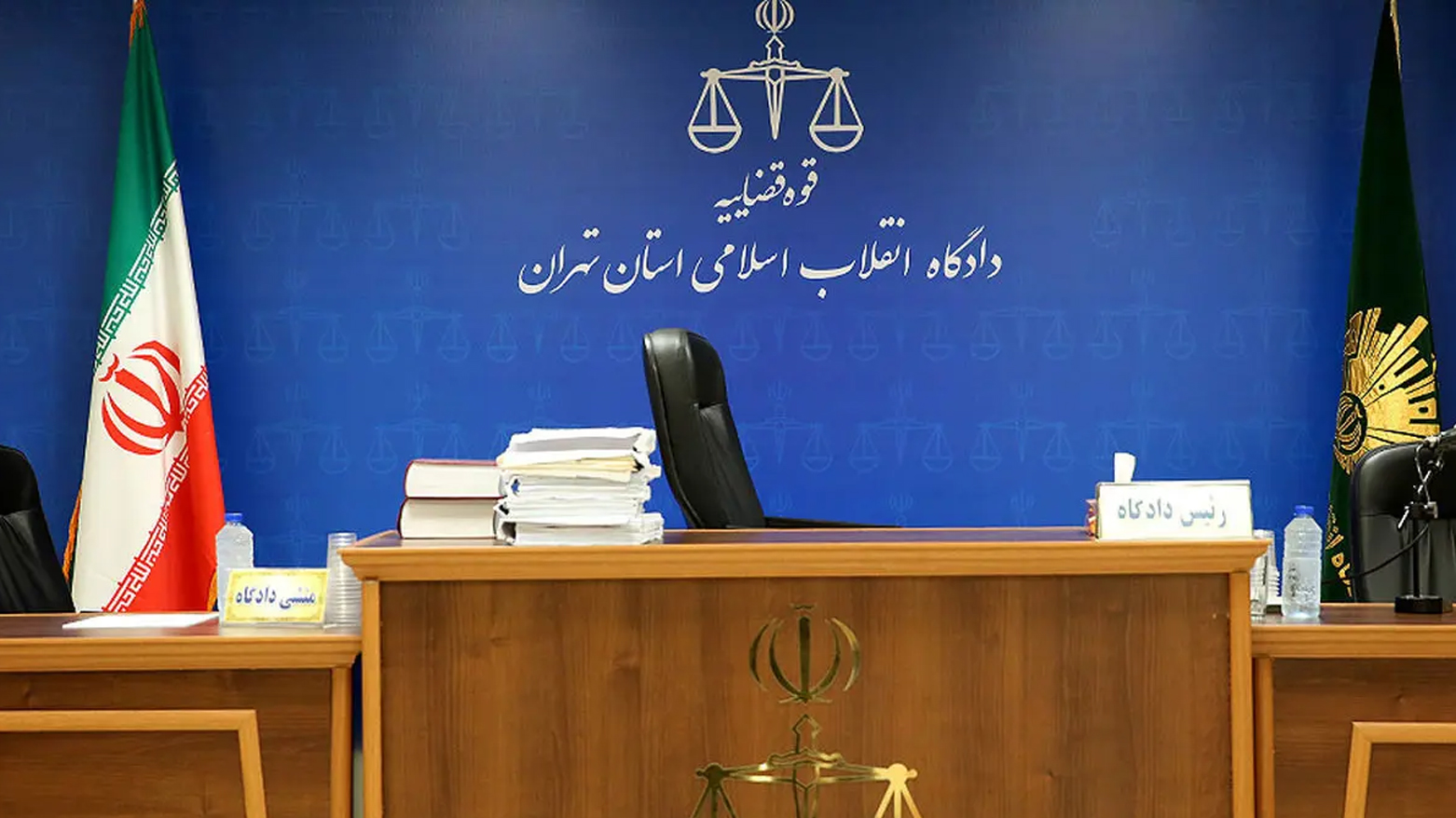
ERBIL (Kurdistan24) — Iranian authorities executed a man on Saturday morning convicted of espionage for Israel, the judiciary announced, marking the latest application of the death penalty in a year that human rights organizations describe as seeing a historic and alarming surge in state-sanctioned killings.
The execution of Aqil Keshavarz, which took place at dawn following approval by the country’s Supreme Court, was reported by the Mizan Online News Agency, the official media outlet of Iran’s judiciary.
The hanging comes as international observers warn that the Islamic Republic is carrying out executions at a rate unseen in three decades, with fears mounting for other high-profile prisoners, including a boxing champion currently held in Mashhad.
According to the judiciary’s report, Keshavarz was convicted on charges of "espionage in favor of the Zionist regime," intelligence communication, and providing photographs of sensitive military and security sites.
Judicial officials stated that the death sentence was carried out after all legal procedures were completed and the verdict was upheld by the nation’s highest court.
The case against Keshavarz reportedly began in April or May of 2025. Mizan reported that a patrol unit belonging to the Protection Organization of the Islamic Republic of Iran Army detained Keshavarz in Urmia, a city in northwestern Iran.
Officers alleged they observed him photographing the headquarters building of the Urmia Infantry Division.
While Keshavarz initially claimed he was in the city to attend a scientific conference at Urmia University, authorities said an inspection of his mobile phone revealed incriminating evidence.
Investigators reportedly found a message from a sender identified only by the username "Osher," which officials linked to Israeli intelligence services.
The discovery prompted a wider investigation that the judiciary claims unearthed a deep network of communication between the accused and foreign entities.
Subsequent searches of Keshavarz’s hotel room reportedly yielded a coded notebook containing names and addresses of various Iranian security institutions.
Authorities also searched his primary residence, seizing additional documents.
Mizan stated that the investigation revealed Keshavarz had established contact with both the Israeli military and the Mossad intelligence agency through "cyberspace," conducting more than 200 specific missions prior to his arrest.
The judiciary’s account paints a picture of an operative who began by sending messages hostile to the Islamic Republic to gain the trust of Israeli handlers.
To demonstrate his utility, he allegedly provided the Israeli army with details regarding a warehouse rumored to be a missile production site.
Following this initial exchange, the convict reportedly expanded his activities, supplying coordinates and specifications for four other buildings and warehouses.
The scope of the alleged espionage covered multiple major Iranian cities, including Tehran, Isfahan, Shahroud, and Urmia.
Missions described in the case file included photographing targeted locations, examining traffic patterns on specific routes, conducting opinion polling, and planting tracking devices.
The judiciary noted that financial compensation for these activities was handled through digital currency; a Mossad officer allegedly transferred funds to Keshavarz’s digital wallet after the completion of each task.
In addition to the charges of spying for Israel, the judiciary linked Keshavarz to the People’s Mojahedin Organization of Iran (MEK), an opposition group Tehran classifies as a terrorist organization.
The report cited Keshavarz’s academic background—he withdrew from a mining engineering program in 2015 or 2016 before switching to architecture—and noted that his family held "monarchist tendencies."
His uncle was identified as a former member of the MEK. Investigators claimed that in 2022 and 2023, Keshavarz communicated with MEK-affiliated groups via Telegram, sending images and participating in slogan-writing campaigns.
Keshavarz’s execution occurs against a backdrop of intensifying use of capital punishment in Iran. According to rights groups, the number of executions in 2025 has reached levels not seen in thirty years.
Data cited by Amnesty International and Iran Human Rights indicates that at least 1,000 people were executed in the first nine months of the year, with current estimates suggesting the total has now surpassed 1,500.
This surge has heightened concerns regarding the fate of Mohammad Javad Vafaei Sani, a 30-year-old local boxing champion imprisoned in Mashhad.
Vafaei Sani was arrested in 2020 following his participation in nationwide protests in 2019. Like Keshavarz, the boxer faces accusations of supporting the MEK. He was convicted of "corruption on Earth"—a broad charge often used in national security cases—and sentenced to death.
The threat to Vafaei Sani’s life appears to have escalated significantly in recent days. On December 15, the Supreme Court rejected his request for a retrial.
Coinciding with that legal defeat, prison authorities unexpectedly granted him a visit from his mother, a gesture that campaigners interpret as a potential final meeting.
According to reports from The Guardian, his mother was informed that his case file had been forwarded to the department responsible for the implementation of sentences.
"His life is in grave danger, the execution of his death sentence could occur at any moment," said Shahin Gobadi of the foreign affairs committee of the National Council of Resistance of Iran.
Gobadi alleged that the athlete has been subjected to extensive torture and solitary confinement over the past five years in an effort to force him to renounce the opposition group.
Amnesty International has termed the legal proceedings against Vafaei Sani a "grossly unfair trial" and noted that the revolutionary courts handling such cases lack independence.
Nassim Papayianni, a senior campaigner on Iran for Amnesty, stated that the charge of "corruption on Earth" fails to meet international standards of legality and clarity. "People tried before such courts are systematically denied their fair trial rights," Ms. Papayianni said, calling for an immediate halt to any execution plans.
The potential execution of another athlete has drawn condemnation from the global sporting community.
In November, a coalition of more than 20 Olympic medalists and international athletes, including tennis legend Martina Navratilova, signed a letter urging Tehran to spare Vafaei Sani.
Mauricio Sulaimán Saldívar, president of the World Boxing Council, issued a statement arguing that executing a boxer for expressing his ideas constitutes a "direct attack on the fundamental values of sport and human dignity."
Iran has a documented history of executing athletes involved in political dissent. Previous cases include Habib Khabiri, captain of the national football team, executed in 1984; Fourouzan Abdi, captain of the women’s volleyball team, executed in 1988; and Navid Afkari, a wrestling champion executed in 2020.
Observers and human rights experts suggest the current spike in executions is part of a broader strategy by Iranian authorities to stifle dissent and consolidate power in the wake of the "Woman, Life, Freedom" uprising that began in 2022.
Amnesty International has described the situation as an "execution crisis" of "horrific proportions," alleging that the death penalty is being weaponized to spread fear among the population.
While the judiciary characterized Keshavarz’s execution as the neutralization of a "Zionist spy" who explicitly confessed to intending to strike a blow against the system, the concurrent rise in executions suggests a widening crackdown.
Mizan’s report emphasized that Keshavarz "knowingly" cooperated with enemy services, but for international monitors, his death is another statistic in a record-breaking year of state violence.