Zuhair Abdulmasih Abdoka, Kurdistan's Renowned Artist and Peshmerga Veteran, Dies in Sweden
Prominent artist and Peshmerga Zuhair Abdulmasih Abdoka passed away in Sweden. He was a founder of Kurdistan TV and a pioneer of Kurdish and Syriac theater and cinema.
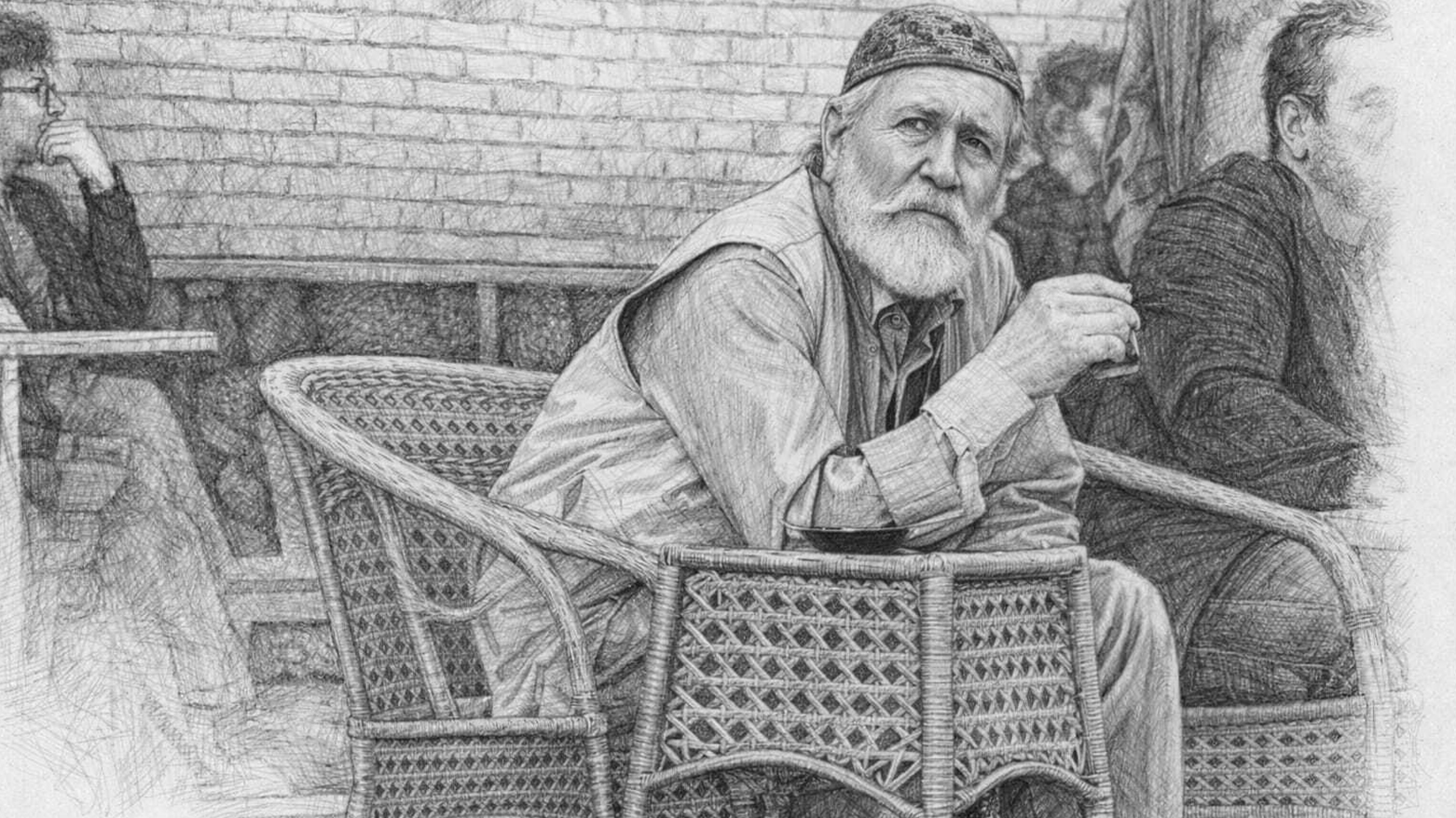
ERBIL (Kurdistan24) — Zuhair Abdulmasih Ilya Abdoka, a celebrated figure in the cultural and political history of the Kurdistan Region who blended a prolific career in the arts with service as a Peshmerga during the Great September Revolution, has died aged 77. He passed away in the city of Eskilstuna, Sweden, following a long struggle with illness, according to a statement announcing his death.
Mr. Abdoka, widely regarded as one of the "genuine sons" of Ankawa and a pillar of the Chaldean and Kurdish communities, leaves behind a legacy spanning more than half a century. His career was defined by a dual commitment to artistic expression and national struggle, making him a prominent name among the Christians of Kurdistan and Iraq.
Zuhair Abdulmasih Abdoka was also the uncle of the Kurdistan Regional Government’s Minister of Transport and Communications, Ano Abdulmasih Abdoka. In light of this familial connection and the late artist’s cultural stature, KRG Prime Minister Masrour Barzani issued an official message of condolence, which stated:
Mr. Ano Jawhar Abdoka
Minister of Transport and CommunicationsOn the passing of your respected uncle, the renowned artist of Kurdistan, Zuhair Abdulmasih, I extend my deepest condolences and sympathy to you and share in your grief.
Zuhair Abdulmasih was a distinguished patriotic actor and director whose contributions rendered invaluable service to Kurdish cinema, drama, and theater.
May Almighty God grant his soul eternal peace and bestow patience and comfort upon you and your family.
Masrour Barzani
Prime Minister of the Kurdistan Regional Government
December 21, 2025
A Life Rooted in Education and Art
Born in 1948 in Ankawa, a historic Christian suburb of Erbil, Mr. Abdoka was the eldest son of the late educator Abdulmasih Ilya Abdoka and the late Sara Toma Bahnan Ali Bag.
His early life was shaped by his father’s profession; he completed his primary education in the town of Alqosh, where his father served as a teacher for eighteen years. He later returned to Erbil to complete his secondary education.
Mr. Abdoka’s formal journey into the arts began in Baghdad.
In the 1972-1973 academic year, he obtained a Bachelor's degree in Directing from the Academy of Fine Arts in Baghdad. This academic foundation launched a career that would see him present numerous prominent works across theater, television, and cinema, performing and directing in the Syriac, Kurdish, and Arabic languages.
The Revolutionary and the Journalist
While establishing himself as an artist, Mr. Abdoka was deeply involved in the political movements of the era.
His artistic works initially found a platform on Baghdad radio and television, but his commitment to the Kurdish cause led him to join the Kurdistan Students Union and the Kurdistan Democratic Party (KDP).
Rising through the ranks of the political organization, he eventually served as an assistant to the martyr Dara Tawfiq. During this period, he also worked at the newspaper Al-Ta'akhi in Baghdad, contributing to the intellectual and media landscape of the movement.
His political activism culminated in his joining the ranks of the Great September Revolution under the leadership of the late Mulla Mustafa Barzani.
Mr. Abdoka’s service was not without personal cost; he was wounded during a bombing of the Voice of Kurdistan-Iraq station. Following his injury, he was sent to Iran for medical treatment on the orders of President Barzani.
Like many of his comrades, he was eventually forced into displacement and exile following the signing of the 1975 Algiers Agreement, a geopolitical development that temporarily quelled the Kurdish uprising.
Pioneering Cinema and Theater
Throughout his life, Mr. Abdoka’s artistic output reflected the pain, suffering, and aspirations of the people of Kurdistan. He is credited with a significant role in developing Kurdish drama and directing works for major Kurdish artists.
His directorial debut in Ankawa came in 1969 with the play The Bishop's Candlesticks, an adaptation of Victor Hugo's novel Les Misérables. This early work set a tone for a career often focused on themes of justice and human struggle.
One of his most historic contributions to the region’s culture was his involvement in cinema.
Mr. Abdoka directed and filmed Towards Freedom (Nahu al-Hurriya), which is recognized as the first movie produced about the revolution.
This project, presented in his mother tongue of Syriac-Chaldean, underscored his dedication to preserving and elevating the narratives of his community.
In the realm of theater, he directed the well-known play Sibo at the Assyrian Cultural Club in Baghdad on February 1, 1971.
His extensive theatrical portfolio includes works such as Son of the Soil (Ibn al-Turab), presented in Syriac-Chaldean, and Breakfast at Eight, which was staged in Baghdad during the 1970s.
In Ankawa, he directed A Month's Salary, also in the Syriac language.
His influence extended to television, where he directed works for Kirkuk Television in the Kurdish language, including the famous television play What Right Does Tapo Have?.
His broad repertoire also included directing for Kurdish theater in productions such as Light and Question.
Legacy in the Diaspora
Later in his career, Mr. Abdoka was one of the founders of Kurdistan TV, further institutionalizing the region's media landscape.
His artistic merit was formally recognized at the first International Film Festival in Erbil, where he was awarded the Best Actor award for his participation in the film Triangle of Death.
Even after relocating to Sweden, where he lived for many years, Mr. Abdoka continued his creative pursuits. He presented the play Arkhal in the Syriac-Chaldean language, maintaining his connection to his heritage while in the diaspora.
A comprehensive list of his works highlights the breadth of his contribution.
Since 1969, he presented the operetta Tara, and plays such as The Candles, The Cursed, The Last Door, Khola of Chakhmakh, The Homeless, The Withered Flower, Jiq u Niq, and The Game of Love.
His filmography includes Muhammad Messenger of Freedom, The Train, House on the Hill, Mr. Monster, Ms. Clawzer, The Unexpected Guest, Towards Salvation, Fit, and Return. He also produced the documentary film Epics of the Peshmerga and theatrical works including Dimdim Castle and Khan of the Gold Hand.
A Community in Mourning
Mr. Abdoka is survived by his wife, the engineer Faten Pauls Bithon, and their three children: Zheen, Darya, and Dana, who reside in Sweden. He is also survived by his siblings: Zuheira in Sweden; Jawhar and Fayza in Ankawa; Jawhara and Fayez in the United States; and Fayrouz in Australia.
Mr. Abdoka was as a man who left an "immortal fingerprint" in the artistic and cultural memory of his people, representing a unique blend of creativity and national commitment.
This article has been updated, adding KRG Prime Minister's message of condolence. Updated on Sunday, Dec. 21, 2025, at 01:30 PM.