Baghdad’s New Year Celebrations Muted as Christian Population Dwindles
Baghdad New Year preparations are muted as the Christian population drops from 1.5m to 300k, depressing markets and forcing celebrations indoors.
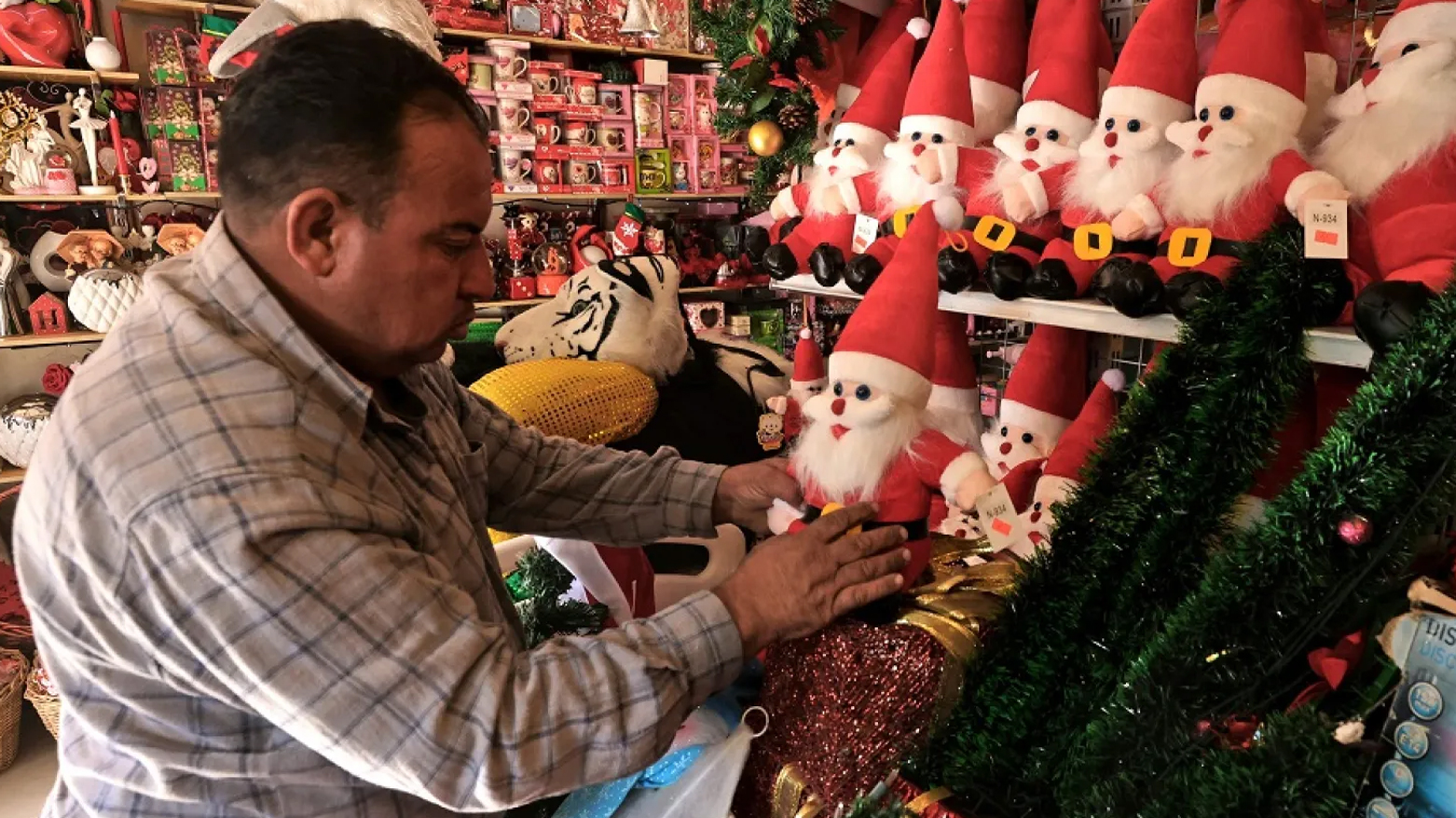
ERBIL (Kurdistan24) — The festive preparations that typically characterize the approach of the New Year in the Iraqi capital have failed to materialize with the necessary vigor this season, a downturn attributed to a complex mix of economic stagnation, a lack of suitable public venues, and a profound demographic shift that has seen the country’s Christian population collapse by roughly 80 percent over the past two decades.
According to a new report by Kurdistan24's correspondent Dilan Barzan, the streets of Baghdad are displaying notably less enthusiasm for the upcoming holiday season compared to previous years.
The dampening of the holiday spirit is intrinsically linked to the mass exodus of Iraqi Christians, a community that has historically been the custodian of Christmas and New Year traditions in the country.
Data released by the Iraqi Human Rights Commission indicates that the number of Christian citizens in Iraq has plummeted from a pre-2003 population of 1.5 million to approximately 300,000 today.
The Iraqi Human Rights Commission stated that the primary drivers of this migration were the instability of the security situation and the persistent threat of terror and intimidation directed against the minority group.
Consequently, more than one million Christian citizens have packed up and left their homes since 2003, heading toward safer havens such as the Kurdistan Region or emigrating to foreign countries entirely.
This departure has left a cultural void in Baghdad, where the remaining population is finding it increasingly difficult to sustain the celebratory atmosphere of the past.
The impact of this demographic contraction is being felt acutely in the local marketplace.
Abdulrahman Mohammed, a shopkeeper in Baghdad, told Kurdistan24 that the demand for holiday-related goods has seen a sharp decline. "Every year as shopkeepers, we bring Christmas supplies to our shops, such as Christmas trees and Santa Claus outfits," Mohammed said.
However, he noted that the commercial response this year has been weak. "So far, a small portion of citizens have purchased their necessities. Compared to previous years, our market is very bad this year; last year, many people used to buy these items."
Kurdistan24's correspondent highlighted a shift in social behavior alongside the economic downturn.
In previous years, the Christian community in Iraq placed significant importance on their occasions and festivals, creating a ripple effect of joy that engaged the broader public.
With the majority of that demographic now residing outside federal Iraq, a large portion of the remaining citizens view these occasions as normal days. The absence of the Christian community has contributed to a general retreat from public celebration, with many residents opting to remain in their homes rather than engaging in communal festivities.
Beyond the demographic factors, the city’s infrastructure for leisure appears ill-equipped to handle public celebrations for the general populace, particularly the youth.
Ali Falah, a Baghdad citizen, expressed frustration regarding the lack of inclusive public spaces for celebrating the New Year.
"To spend our time on New Year's, we don't know where to go," Falah said. He pointed out that most venues enforce strict entry policies, noting that "most places are for families."
This restriction leaves young men with limited options, forcing them to either congregate in coffee shops and cafeterias or loiter on the streets. As a result, Falah noted, "most of us remain at home."
The reluctance to celebrate publicly is also rooted in lingering concerns over social friction and security.
Karar Qaisar, another citizen interviewed by Kurdistan24, explained that while there is a desire for communal joy, the reality often falls short.
"Some people make preparations for New Year's at home or come onto the streets," Qaisar observed. "We would like for everyone to hold a joyous celebration together, but sometimes problems arise, so every year our celebration is small."
The cumulative effect of these challenges is a holiday season that lacks the vibrancy of the past.
The displacement of the Christian population has fundamentally altered the character of New Year's in Baghdad. What was once a season marked by widespread public festivities is becoming an increasingly private affair, constrained by a lack of specialized venues for expressing joy and the memory of a community that has largely departed.
The statistics provided by the Human Rights Commission serve as a stark quantifier of this cultural erosion.
The reduction of the Christian population from 1.5 million to 300,000 represents not just a loss of people, but a loss of the traditions they upheld.
As war and continuous threats forced these citizens to relocate to the Kurdistan Region or abroad, the capital has been left with a holiday season that shopkeepers and residents alike describe as falling short of what is necessary.
Kurdistan24 correspondent in Baghdad, Dilan Barzan, contributed to this report.