Senior U.S. Diplomat Says Momentum is Building to Disarm Militias and Restore the State’s Monopoly of Arms in Iraq
Zalmay Khalilzad says pressure is building in Iraq to disarm militias and restore the state’s monopoly of arms, citing internal calls and external warnings. He urges seizing the moment to advance DDR amid looming strike threats.
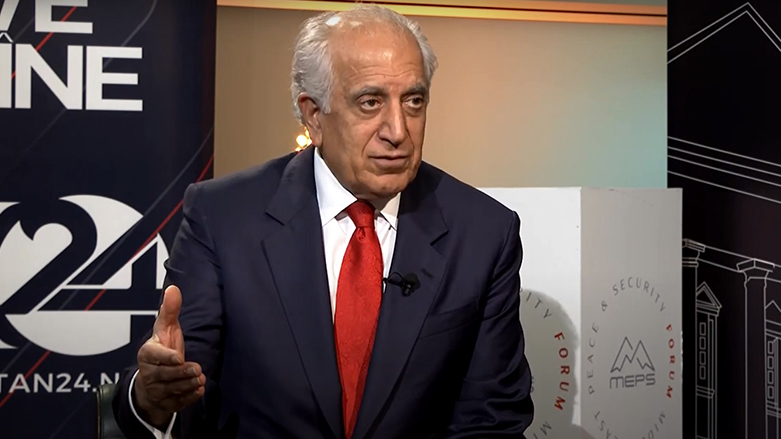
ERBIL (Kurditsna24) - As pressure mounts on armed factions across Iraq, a senior US diplomat has signaled what he described as a rare opening to restore the state’s monopoly over weapons, urging Iraqi leaders to seize a moment shaped by converging internal demands and external warnings.
Zalmay Khalilzad, the twenty-sixth US Permanent Representative to the United Nations and the former US Ambassador to Iraq, said in a post on X that Iraq is witnessing “growing political pressure in support of disarming the militias and for the state having the monopoly of arms.” He added that “even some militias are making statements expressing a willingness to disarm,” calling the development “encouraging.”
Khalilzad said external pressure aimed at keeping militias out of the next government, and potentially targeting those that refuse to disarm, “has been helpful,” arguing that it complements internal pressure from political and religious leaders. He cautioned, however, that Iraq “has a long way to go to demobilize, decommission and reintegrate (DDR) the militias,” noting that these groups retain “enormous political, economic and fire power” and have Iran’s backing. “Given Iran’s weakness, there is an opportunity now to succeed,” he wrote. “This opportunity must be seized.”
In #Iraq there is growing political pressure in support of disarming the militias and for the state having the monopoly of arms. Even some militias are making statements expressing a willingness to disarm. This is encouraging. The external pressure to keep the militias out of…
— Zalmay Khalilzad (@realZalmayMK) December 21, 2025
Khalilzad’s remarks come as Iraq’s government and key political actors have received what were described as unprecedented warning messages over the past two weeks, cautioning of imminent, large-scale military strikes inside the country, according to Asharq Al-Awsat. The warnings, delivered by an Arab state and a Western intelligence service, contained “serious” and detailed assessments of escalating threats and prompted swift political reactions from Shiite armed factions.
Citing informed sources, Asharq Al-Awsat reported that a senior Iraqi official confirmed Baghdad had been alerted by a “friendly country,” followed by rapid concessions from Shiite factions on weapons control. Potential targets were said to include government institutions linked to armed factions and the Popular Mobilization Forces, influential financial and military figures, and sites and depots housing drones, missiles, and training camps.
The first warning reportedly came from an Arab country maintaining good relations with both Washington and Tehran, cautioning that Baghdad was close to facing a swift military strike similar to the targeting of Hamas’s political office in Doha in September 2025. Iraqi officials and politicians were told the threat level was “extremely serious,” with Israel said to be discussing having received a green light from the United States to act independently in the Iraqi theater.
According to Asharq Al-Awsat, the warnings accelerated political statements by factions calling for “restricting weapons to the state,” though many simultaneously requested additional time and freedom of action within what they termed a “national framework.” A senior Shiite figure within the Coordination Framework said the messages “changed the balance” and pushed party leaders to move quickly, despite deep disagreements over the mechanism and trusted authority to oversee disarmament.
Against this backdrop of warnings and political maneuvering, Khalilzad argued that sustained external pressure must continue to reinforce internal demands for DDR, describing militia weapons as a “grave threat to Iraq’s sovereignty, stability and prosperity,” and urging Iraqi leaders to act while the opening remains.