U.S. Envoy Welcomes Iraqi Armed Groups’ Disarmament Signals, Urges Binding National Framework
Mark Savaya praises Marjaeya’s moral leadership but warns that intentions must translate into comprehensive, irreversible action under state authority.
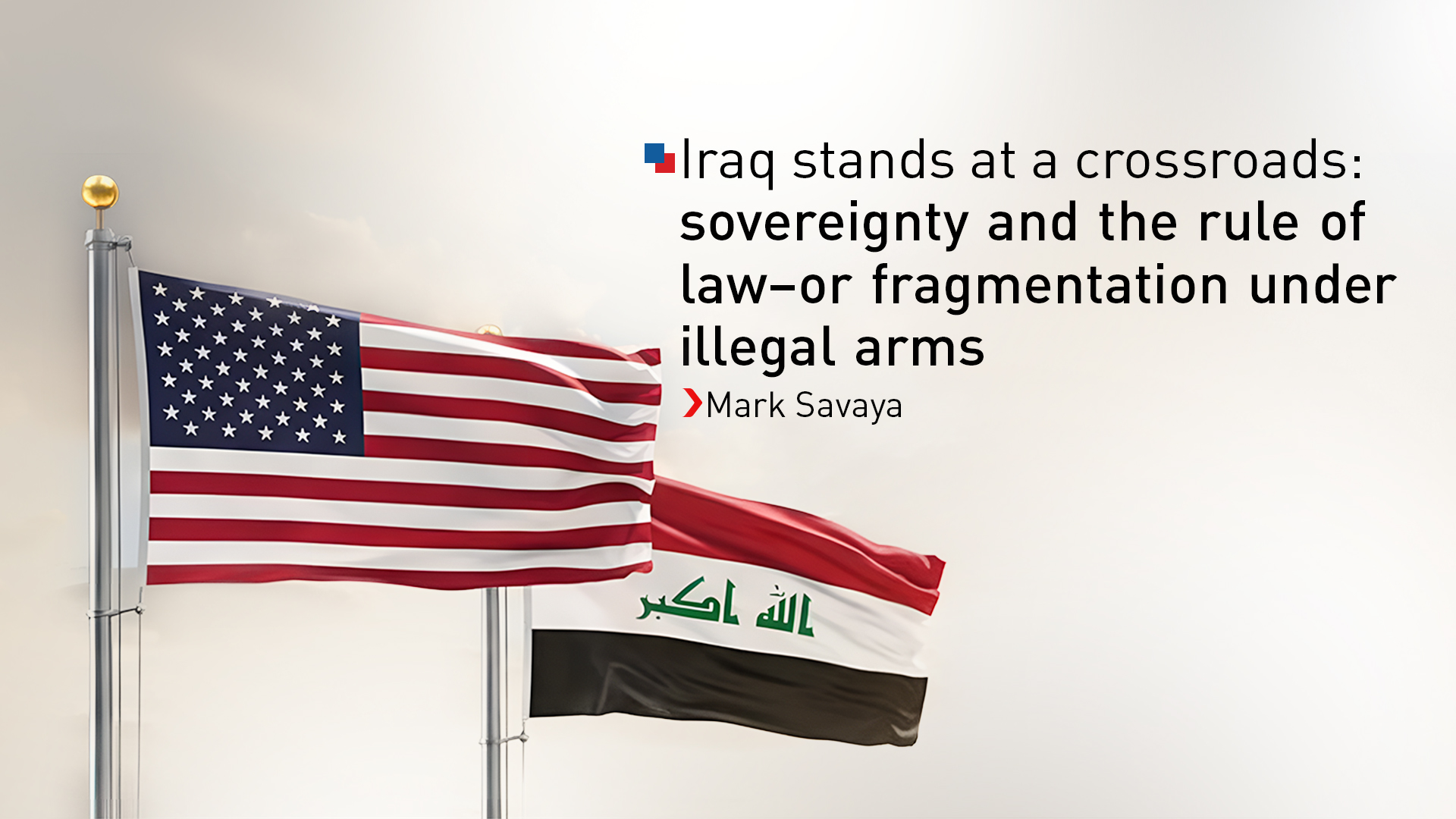
ERBIL (Kurdistan24) — The United States Special Envoy to the Republic of Iraq, Mark Savaya, has welcomed reported steps by Iraqi armed groups toward disarmament, describing them as an encouraging development while stressing that statements of intent must be followed by concrete, binding measures that place all weapons firmly under state control.
In a statement posted on X, Savaya said the reported moves reflect a “positive response to the longstanding calls and aspirations of the Marjaeya and our respected religious authorities,” praising their “wisdom, moral leadership, and principled guidance,” which he said continue to serve as a national compass for Iraq.
However, the U.S. envoy cautioned that verbal commitments alone are insufficient. “Disarmament must be comprehensive, irreversible, and implemented through a clear and binding national framework,” Savaya said, emphasizing that the process must include the full dismantling of all armed factions and an orderly, lawful transition of their members into civilian life.
Savaya underscored that the Iraqi Constitution and the rule of law leave no ambiguity on the issue of arms. “No political party, organization, or individual has the right to possess or operate armed formations outside the authority of the state,” he said, adding that this principle applies uniformly across all parts of Iraq without exception.
He stressed that the exclusive authority to bear arms and use force must reside solely with legitimate federal and regional institutions tasked with organizing and commanding the country’s armed forces.
The envoy’s remarks come amid renewed debate in Iraq over the future of armed groups operating outside formal state structures. Since the defeat of ISIS territorially in 2017, successive Iraqi governments have pledged to strengthen state authority and curb the influence of non-state armed actors, many of which emerged during the fight against the extremist group.
Despite these pledges, the issue has remained politically sensitive, intersecting with internal power balances, regional rivalries, and concerns over sovereignty.
Religious authorities, particularly the Marjaeya in Najaf, have repeatedly called for the primacy of the state, the rule of law, and the protection of national unity. Their guidance has often been invoked as a moral reference point in moments of crisis, including during mass protests and periods of heightened insecurity.
Savaya framed the current moment as a critical turning point for the country. “Iraq stands today at a decisive crossroads,” he said, arguing that the country can either move toward “sovereignty, stability, prosperity, unity, and the rule of law,” or remain mired in “a cycle of fragmentation and insecurity,” where illegal armed groups exploit national resources for personal gain and external agendas.
The statement reflects Washington’s long-standing position in support of a sovereign, stable Iraq with a monopoly on the use of force, while also signaling expectations that recent signals from armed groups must translate into enforceable, nationwide action if Iraq is to consolidate state authority and move toward lasting stability.