Sudani’s Coalition Says It Is Reconsidering Support for Nouri al-Maliki as Prime Ministerial Candidate
Bahaa al-Araji, head of al-Sudani's Coalition bloc in the Iraqi Parliament, said it is reviewing its position on Maliki’s nomination, citing domestic and international opposition as negotiations within the Coordination Framework continue.
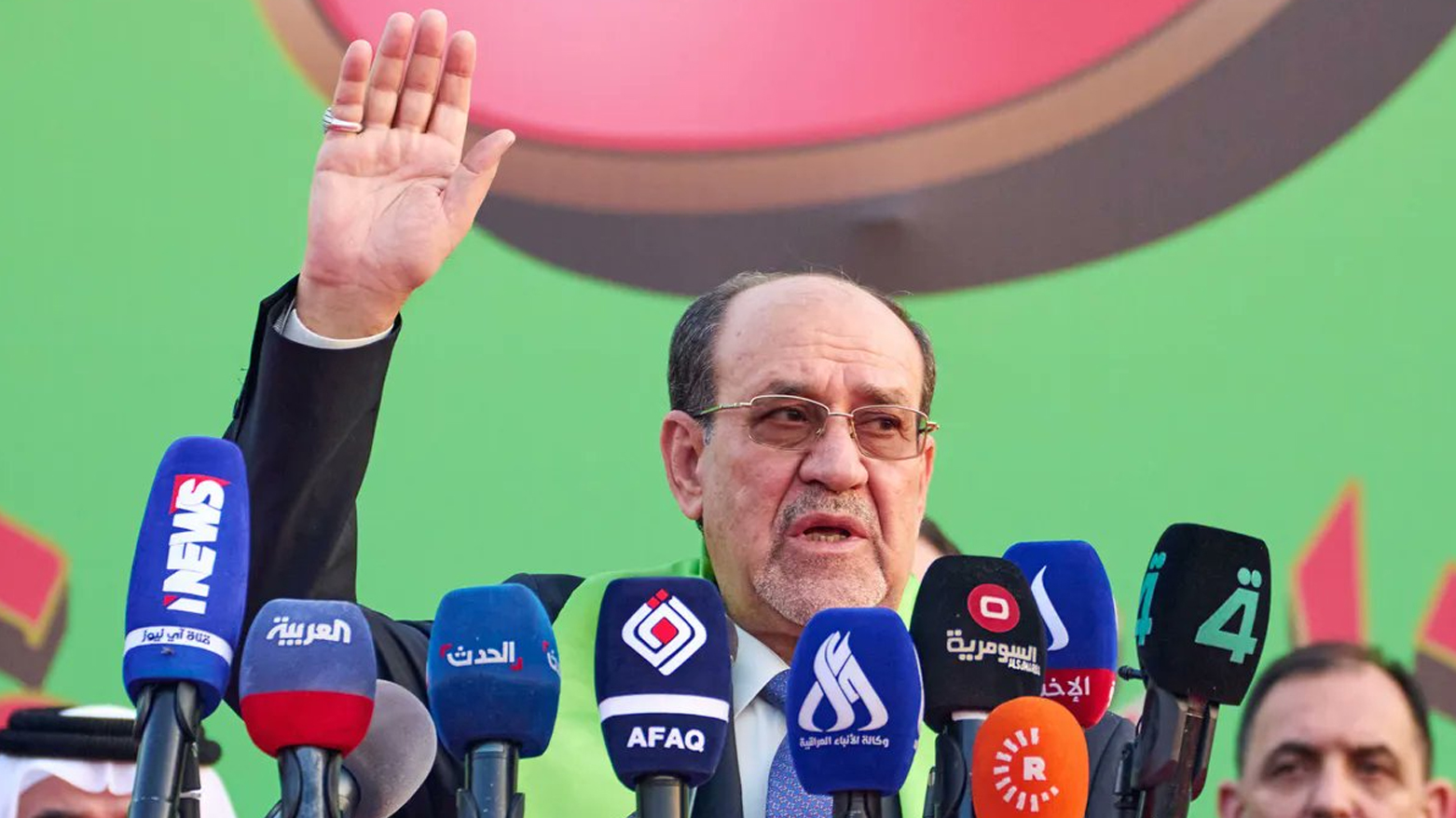
ERBIL (Kurdistan24) - Sudani’s political coalition has announced it is reviewing its support for Nouri al-Maliki as a candidate for Iraq’s next prime minister, citing opposition from key domestic factions as well as regional and international actors, according to a statement issued Sunday.
Bahaa al-Araji, head of the Reconstruction and Development Coalition bloc in the Iraqi Parliament, said on his official account on the social media platform X that the coalition is reconsidering its backing of Maliki for the premiership. The announcement came on Saturday, amid ongoing disagreements within Iraq’s Shiite-led Coordination Framework over the nomination.
In a post dated Saturday, al-Araji outlined the rationale behind Prime Minister Mohammed Shia al-Sudani’s initial support for Maliki. “Mr. al-Sudani’s objective in supporting Mr. al-Maliki’s nomination was to push for an end to the political deadlock and proceed toward finalizing constitutional mandates,” al-Araji wrote.
He said the move was made in fulfillment of commitments to constituents and reflected Sudani’s stated intention to be “part of the solution rather than a party to the crisis,” with the aim of forming a government possessing full executive powers.
However, al-Araji said the effort had encountered resistance. “This course of action currently faces rejection from key factions within the Coordination Framework and political forces across the national landscape, as well as regional and international opposition,” he wrote.
He added that these developments necessitate “a re-evaluation of the tools and mechanisms required to achieve the desired goal, independent of personal biases and interests.”
The statement marks the clearest indication to date that Sudani’s coalition may withdraw or alter its support for Maliki’s candidacy as negotiations over government formation continue.
Maliki, leader of the State of Law Coalition and a former prime minister, has faced mounting opposition within the Coordination Framework, an alliance of predominantly Shiite parties that has played a decisive role in shaping Iraq’s executive leadership since the 2021 parliamentary elections.
Disagreements over his nomination have disrupted recent meetings of the Framework.
Fahd al-Jibouri, a leader within the National al-Hikma Movement, said Washington had “clearly delivered a final deadline” requiring Maliki to step aside by Sunday.
He predicted that the Coordination Framework would convene before the deadline expired to reach a decisive resolution and suggested that the most likely outcome would be Maliki’s withdrawal and the nomination of an alternative candidate.
Al-Jibouri attributed the absence of full leadership meetings in the past week to deep internal divisions among Shiite leaders over whether to maintain Maliki’s candidacy or replace him. Instead of comprehensive sessions, he said, smaller bilateral and trilateral meetings were being held in an effort to reach a compromise before the stated deadline.
A senior figure from the Fatah Alliance offered a contrasting assessment. Mahmoud al-Hayani, a Fatah leader, said Maliki remains the Coordination Framework’s sole official nominee for prime minister. He said the Framework is expected to meet in the coming days and reiterated that Maliki continues to be formally endorsed.
“Maliki has not withdrawn and remains determined to assume the premiership,” al-Hayani said. He added that Maliki has expressed willingness to comply if the Coordination Framework formally requests his withdrawal.
Al-Hayani argued that Iraq is entering what he described as a critical phase marked by new challenges and developments, requiring a “strong personality” to lead the government.
He dismissed what he characterized as unilateral statements attributed to U.S. President Donald Trump regarding a potential veto of Maliki’s return, saying such messages would not constitute an official U.S. government position unless formally communicated through Congress.
He added that if Tom Barrack, identified as the U.S. representative to Iraq, were to formally declare a veto, it would be regarded as an official American stance.
In addition to defending Maliki’s nomination, al-Hayani confirmed that alternative names have been discussed within political circles, including Abu Ali al-Basri, Hamid al-Shatri, and Saleh al-Hasnawi. He said, however, that priority remains with Maliki.
The debate over Maliki’s candidacy has unfolded against the backdrop of reported international concern. The United States views Maliki’s potential return with concern, citing his previous tenure as prime minister from 2006 to 2014.
According to the background materials, Washington believes that period was characterized by escalating sectarian conflict, corruption, and a weakened military, developments that ultimately paved the way for the rise of ISIS.
Sudani’s coalition did not elaborate in its statement on the specific nature of the regional and international opposition referenced by al-Araji. However, his remarks underscore the broader political calculations surrounding the nomination and the effort to break what he described as a political deadlock.
The Coordination Framework has served as a central arena for negotiations over Iraq’s executive leadership. Any shift in support among its constituent blocs could alter the balance of forces shaping the selection of the next prime minister.
The Reconstruction and Development Coalition’s reassessment comes as internal fragmentation within the Framework has become more visible. Competing narratives from leaders within al-Hikma and Fatah reflect divergent views over how to proceed amid reported external pressure and domestic disagreement.
Al-Jibouri indicated that the Framework’s inability to hold regular meetings over the past week stemmed from unresolved divisions. He said smaller meetings were intended to facilitate consensus before the expiration of the reported U.S. deadline.
By contrast, al-Hayani maintained that Maliki’s nomination remains intact and that the Framework would address the matter collectively in the coming days.
Sudani’s initial backing of Maliki, as described by al-Araji, was framed as a procedural step aimed at completing constitutional mandates and forming a government with full executive authority. The subsequent reconsideration signals a possible recalibration in response to political realities both within and beyond the Coordination Framework.
As of Sunday, no formal announcement had been made by the Coordination Framework regarding a final decision on Maliki’s candidacy. Statements from leading figures indicate that discussions are ongoing and that multiple outcomes remain under consideration.