KDP Delegation Intensifies Government Formation Talks with Shiite and Sunni Leaders in Baghdad
KDP delegation holds high-level talks in Baghdad with Nouri al-Maliki, Ammar al-Hakim, and Muthana al-Samarrai to resolve government formation and budget issues ahead of the Dec 29 parliament session.
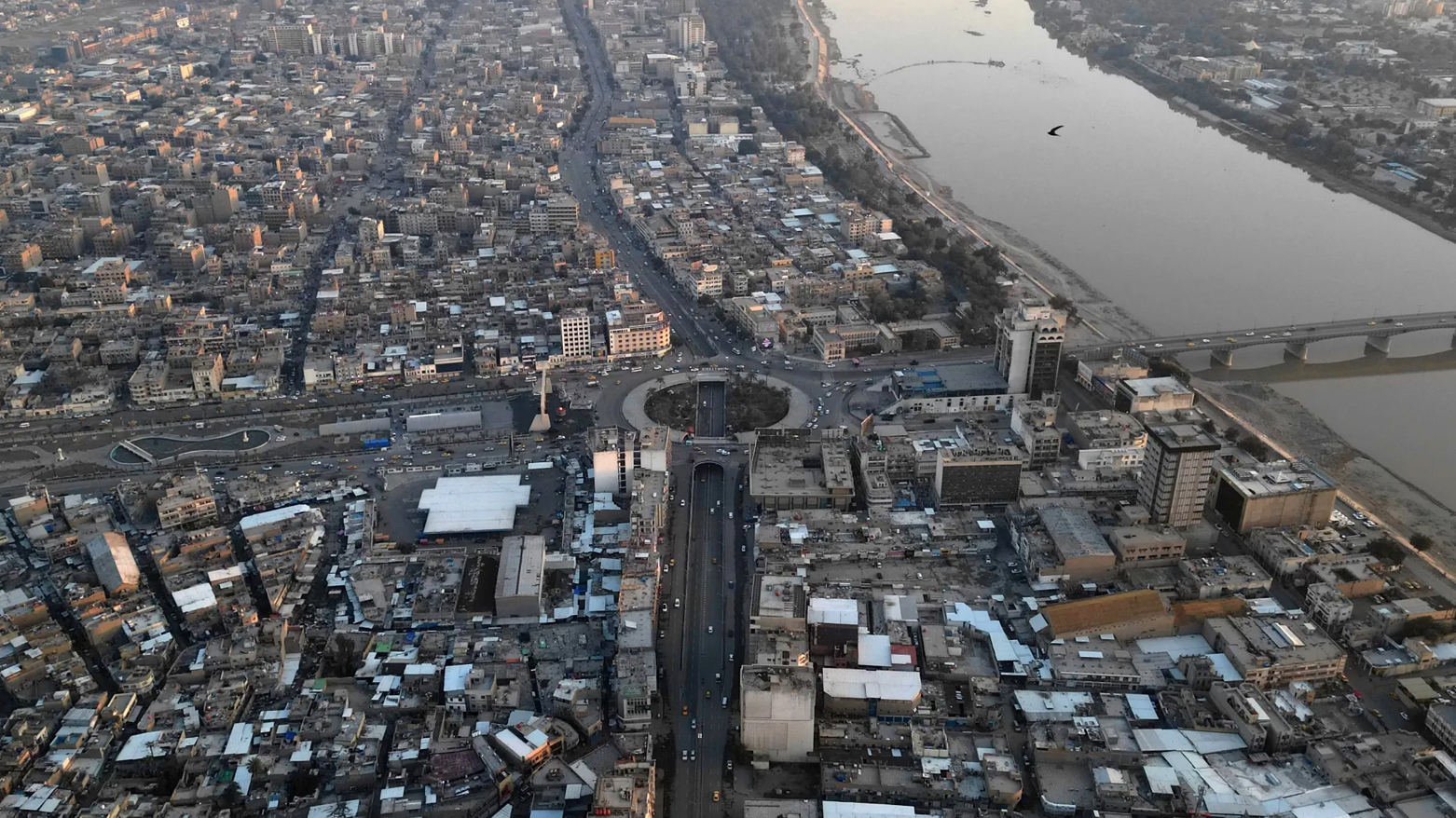
ERBIL (Kurdistan24) — A high-level negotiating delegation from the Kurdistan Democratic Party (KDP) engaged in a series of critical meetings with Iraq’s senior political leadership on Tuesday, meeting with prominent figures from both Shiite and Sunni blocs in an effort to break the political stalemate surrounding the formation of the country’s next government.
The diplomatic push in the capital comes just days before the newly elected parliament is scheduled to convene.
The delegation, led by Fazil Mirani, the Head of the Executive Body of the KDP Politburo, arrived in Baghdad on Monday evening, tasked with navigating the complex coalition negotiations that have followed the Council of Representatives election held on Nov. 11.
With the first session of the new legislative term set for Dec. 29 by presidential decree, political factions are under increasing pressure to finalize agreements on the largest parliamentary bloc and the distribution of sovereign posts.
On Tuesday morning, the KDP representatives began their itinerary at the "Salam" Palace, where they were received by Iraqi President Latif Rashid.
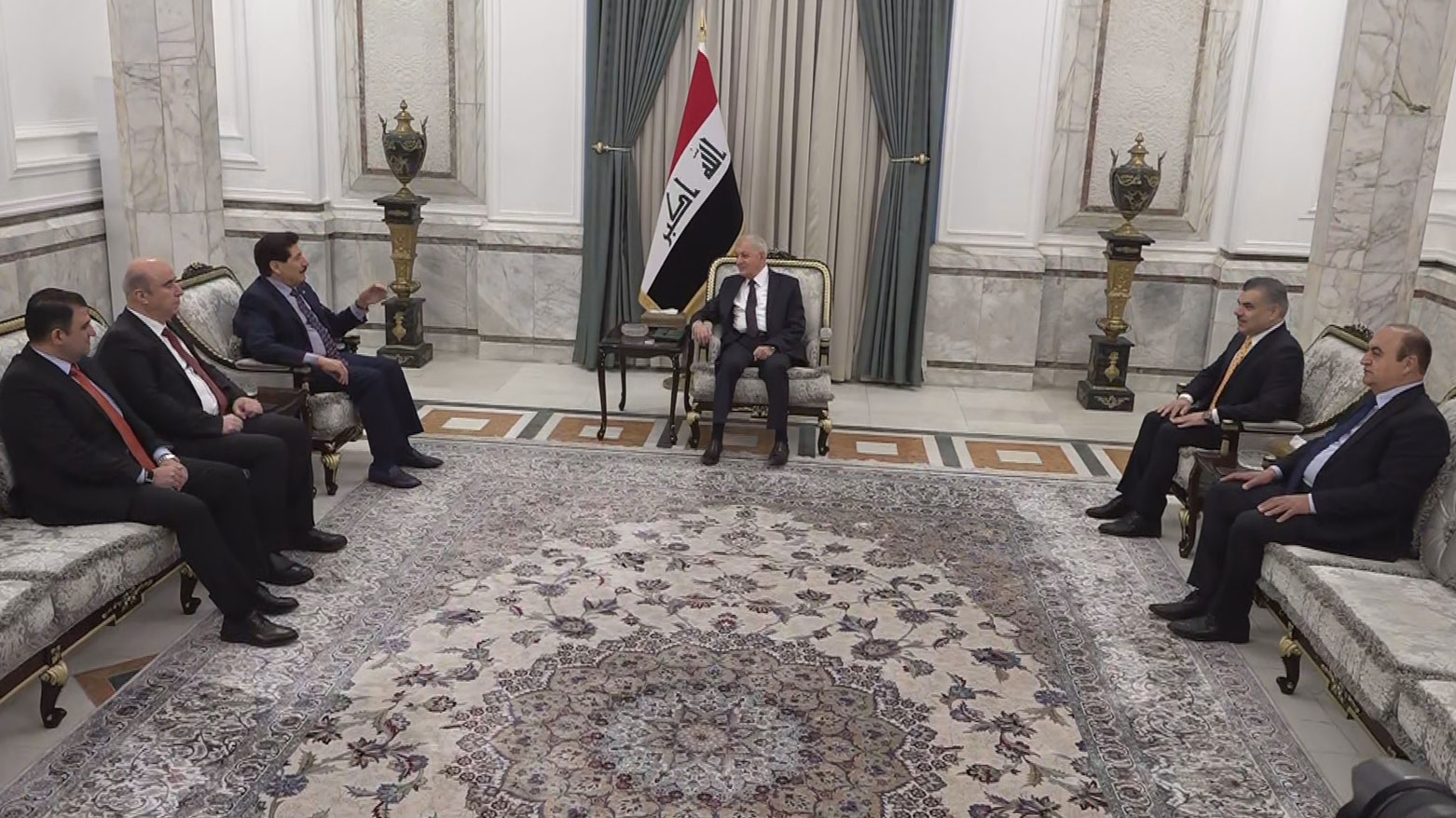
According to party statements, this initial consultation served as the opening move in a day of high-stakes dialogue intended to settle the Kurdish share in the future cabinet.
Following the meeting with the President, the delegation traveled to the Green Zone residence of Nouri al-Maliki, the head of the State of Law Coalition, for in-depth discussions regarding the composition of the new administration.
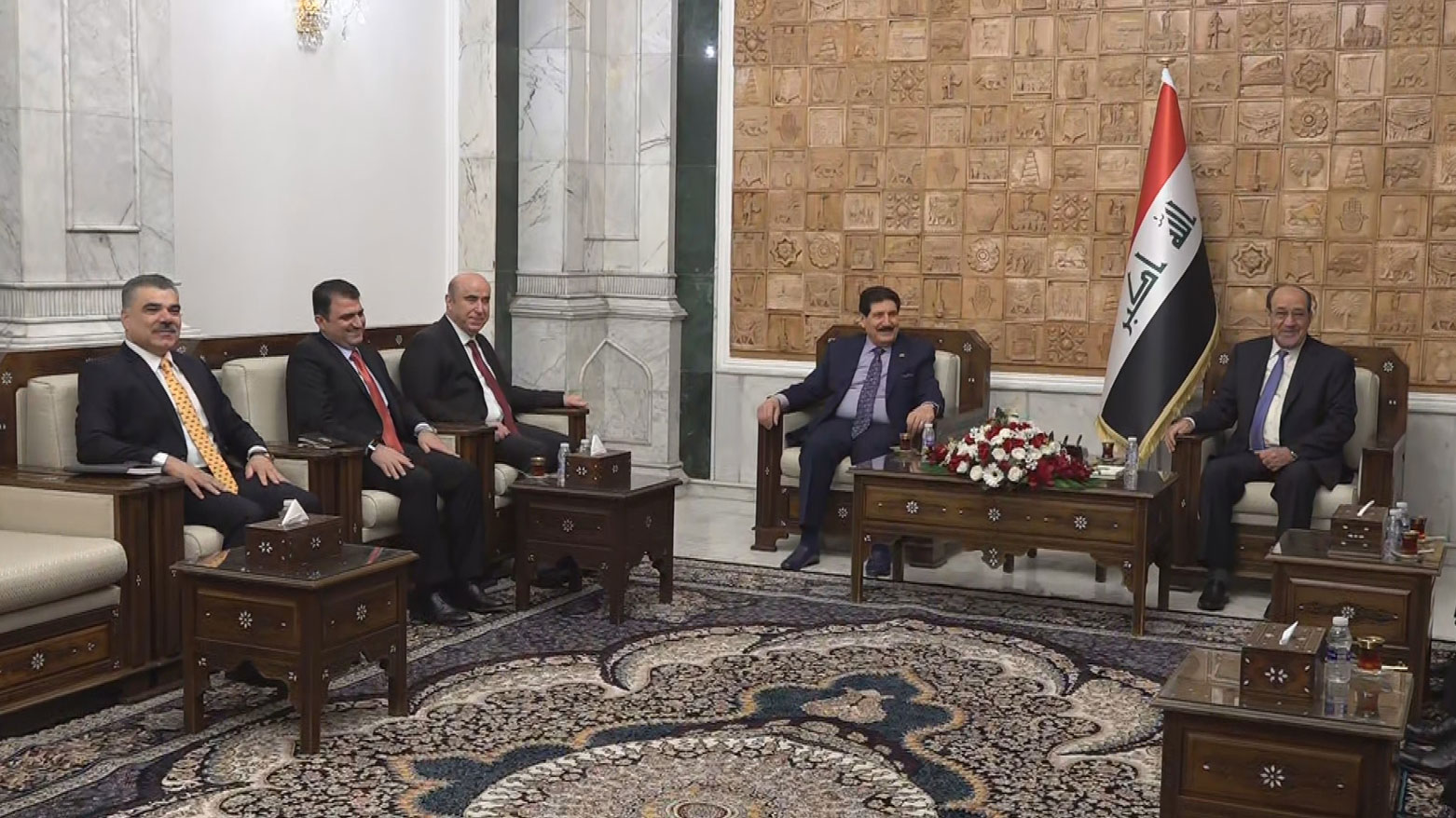
The diplomatic activity continued into the afternoon as the KDP officials held separate sessions with two other key political leaders: Ammar Hakim, the head of the National Hikma Movement, and Muthanna al-Samarrai, the head of the Azm Alliance.
These discussions are part of a broader strategy by the KDP to engage with a wide spectrum of Sunni and Shiite factions to ensure the party’s electoral entitlements are recognized.

The KDP delegation includes senior party figures comprising Fuad Hussein and Nawzad Hadi, both members of the Politburo; Omed Sabah, a member of the Central Committee; and Faris Isa, the head of the Kurdistan Regional Government’s representation in Baghdad.
The party, which emerged as the primary victor in the elections at the level of the Kurdistan Region and as a leading force across Iraq, is actively asserting its right to play a central role in the selection of the next President of the Republic and the allocation of ministerial portfolios.
The timing of these meetings is pivotal.
The political landscape in Baghdad is currently characterized by intense maneuvering within and between the major sectarian components.
While the KDP presses for the principles of "balance, partnership, and consensus," parallel negotiations among Sunni factions have exposed deep rifts regarding the speakership of the parliament, a post traditionally reserved for the Sunni community.
On Tuesday, Sunni political parties were scheduled to convene at the home of the politician known as "Abu Mazen" in an attempt to unify behind a single candidate for Speaker of Parliament.
The contest has largely narrowed to a rivalry between Muthanna al-Samarrai and Mohammed al-Halbousi, the head of the Taqadum Party.
Sources close to the negotiations indicate that Samarrai is currently viewed as the strongest candidate, benefiting from what observers describe as moderate political stances and broad support within the Shiite Coordination Framework.
The urgency of the Sunni deliberations follows an inconclusive meeting of the Sunni "National Political Council" held last Sunday at the home of Defense Minister Thabet Abbasi.
That gathering failed to yield a final decision due to the intensity of the competition. Ammar Azzawi, a member of the Siyada Alliance, stated in a press release that presenting multiple candidates would only delay the political process, urging a decisive outcome at Tuesday’s meeting to pave the way for the government formation.
Thabet Abbasi’s name has also been circulated as a potential contender, though momentum appears to be shifting toward Samarrai.
Simultaneously, the Shiite Coordination Framework, which constitutes the largest parliamentary force, is accelerating its own internal processes.
In its 255th periodic meeting held on Monday at the office of Sheikh Humam Hamoudi, the Framework discussed the latest reports from its sub-committees and reviewed roadmaps presented by various political forces.
The attendees reached a consensus on the necessity of speeding up the designation of a Prime Minister to ensure the constitutional process aligns with the country's legal framework.
The Coordination Framework also used the Monday meeting to reiterate its firm stance on national security, issuing a statement emphasizing that weapons must remain exclusively in the hands of state institutions.
This position was framed as part of a comprehensive national project designed to maintain peace and protect Iraq’s stability during the transition of power.
For the KDP, the stakes extend beyond cabinet appointments to fundamental structural issues between Erbil and Baghdad. The delegation’s mandate was solidified during an expanded meeting of the party’s Central Committee on December 18, supervised by President Barzani.
The final statement from that gathering explicitly called for a "permanent and fundamental solution" to the chronic disputes over the federal budget and the salaries of Kurdistan Region employees, insisting that these matters be resolved in a manner compatible with the federal system.
Furthermore, the committee demanded serious efforts to amend the current Iraqi election law, citing the existence of "injustice" within the prevailing statute.
Mirani, writing on his private Facebook page on Monday prior to the meetings, outlined a philosophy of negotiation that goes beyond mere political bartering.
He described national dialogue as a "conscious project" rather than a protocol procedure, warning that the success of any negotiation depends on a genuine readiness to listen.
In an interview with Kurdistan24 before departing for the capital, Mirani cautioned that influential parties must pause to address prominent issues substantively, noting that failure to control internal problems could allow them to escalate to dangerous levels, potentially inviting interference by external forces.
As the December 29 deadline for the first parliamentary session approaches, the outcome of the KDP’s current round of diplomacy in Baghdad is expected to be a deciding factor in the shape of Iraq’s next government.
The inability of Shiite, Sunni, and Kurdish factions to reach a preliminary agreement on the package of the three presidencies—Prime Minister, Speaker, and President—remains the primary obstacle the delegation seeks to overcome.