Kurdish-led Forces and Syrian Government Close to Political Deal, Official Says
US-based Syrian Kurdish representative tells Kurdistan24 both sides are serious about implementing a March agreement despite clashes and regional interference
ERBIL (Kurdistan24) - Despite renewed violence and deep mistrust, there is a serious intention on both sides—Damascus and the Syrian Democratic Forces (SDF)—to move forward with implementing the March 10 agreement, according to Bassam Said Ishaq, the Syrian Democratic Council (MSD)—the political wing of the SDF—representative in the United States.
Speaking in an interview with Kurdistan24 from Washington, Ishaq said both parties are under mounting internal and international pressure to stabilize Syria and advance a political settlement.
“Yes, indeed, there is intention on both sides, from the Syrian Democratic Forces and from the Syrian government, to reach an agreement,” Ishaq said. “There are many reasons for this intention to exist, because there is internal pressure from the Syrian people for stability across all Syrian territory.”
He added that the international community, particularly following the lifting of the Caesar sanctions, wants to see Syria move toward security and economic development, calling it “an international demand as well as an internal one.”
Ishaq said recent clashes in Aleppo should not be viewed as deliberate efforts by either side to derail the agreement. “As for what happened in Aleppo, those obstacles were not intentional by either side, but they occurred,” he said.
Asked about comments by another MSD representative who accused Turkey of repeatedly intervening to undermine agreements between Damascus and the MSD, Ishaq said regional interference is a reality but distinct from the intent of the Syrian parties.
“What I am talking about is the intention; these two sides have the intention, but regional interventions are beyond the will of the Syrians,” he said. “Those who want to reach a solution are the Syrians themselves.”
He said the MSD understands Turkey’s security concerns but stressed that Syrians also have their own interests. “We understand those interventions and the security interests of Turkey. However, we as Syrians also have our interests; the interest of Syrians is security,” Ishaq said, emphasizing that building trust is central to reaching any solution.
On how trust can be built after years of conflict and renewed fighting, Ishaq criticized hostile media rhetoric. “Harsh and unstable media rhetoric does not allow trust to be built,” he said. “No one trusts someone who threatens them.”
He called for a unified Syrian media discourse that promotes reconciliation rather than accusations. “Our most important need as Syrians is for a discourse that is logical, not accusatory,” he said.
Regarding political dialogue, Ishaq said meetings between Damascus and Kurdish political representatives have taken place in the past but were later sidelined. “It is up to Damascus, which we want to succeed in uniting Syrians, to dialogue with all Syrians,” he said, adding that stability must not be imposed through fear or suppression, but through reconciliation and meeting the demands of the Syrian revolution.
On the role of the United States, Ishaq said Washington can play a constructive role by engaging all parties. “America can talk to all parties, whether it's the MSD, Damascus, or Ankara,” he said, adding that US engagement could help reduce hostile rhetoric and facilitate dialogue.
He said members of Congress from both parties support a political solution that respects the sacrifices of the SDF and contributes to building a Syrian state with its center in Damascus.
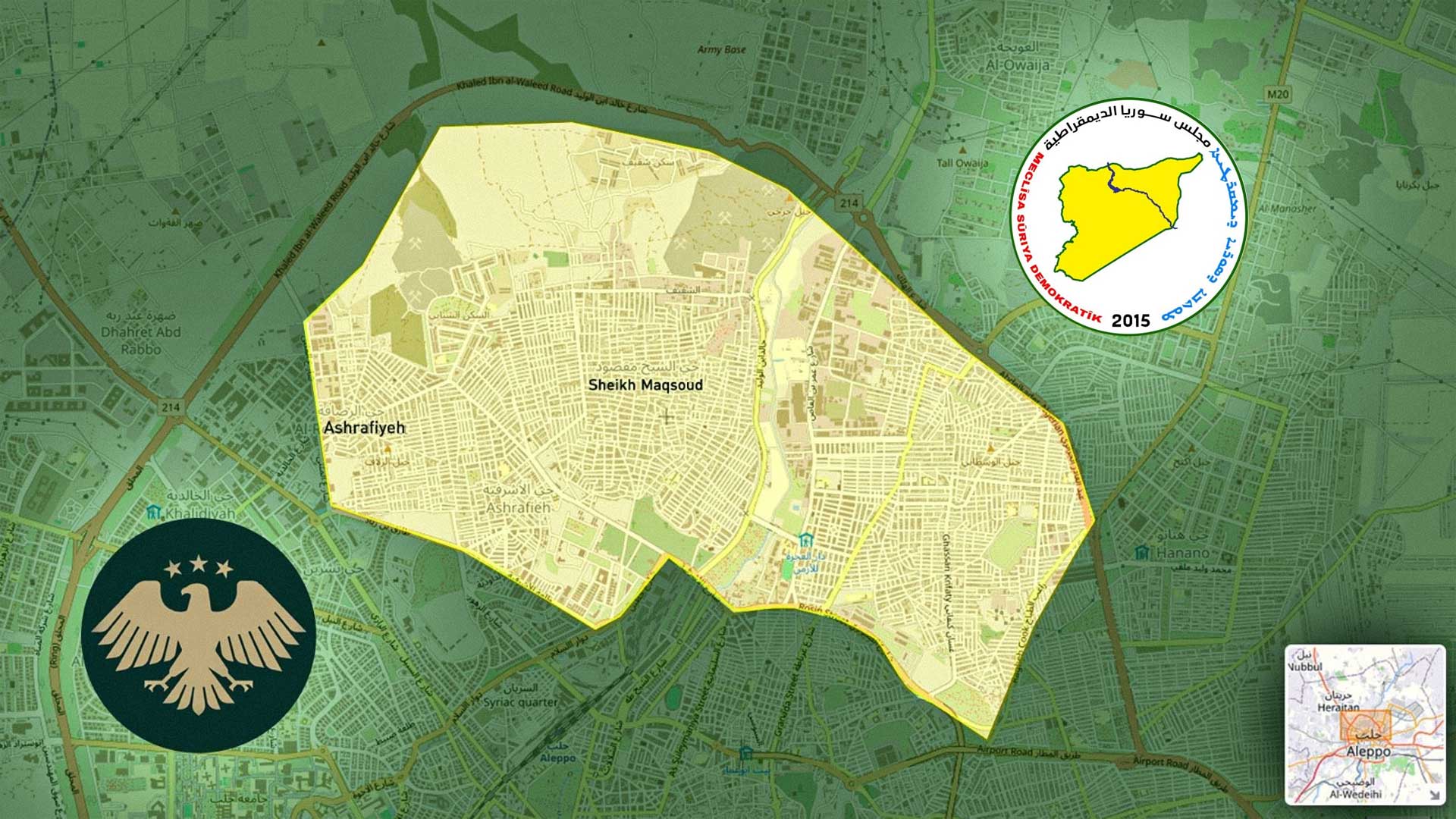
The interview comes as Kurdish neighborhoods in Aleppo—Sheikh Maqsoud and Ashrafiyeh—remain under severe security pressure despite the announcement of a ceasefire between Internal Security Forces and Syrian government forces.
According to reports, government forces have imposed a tight siege on the two neighborhoods, restricting the entry of essential supplies. Syrian media reported that residents are allowed to leave the areas but are prevented from returning, while food deliveries by commercial vehicles have been blocked, raising concerns over shortages of bread and basic necessities.
The Aleppo Health Directorate and the Syrian Democratic Forces said clashes on Monday and Tuesday resulted in the deaths of nearly five civilians and injuries to more than 26 others. Shelling also caused a complete power outage across wide areas of the two neighborhoods.
Civil activist Sirwan Bakr said many families have fled their homes out of fear of renewed fighting or a prolonged siege, moving toward Afrin and other areas. Residents also reported that despite relative calm along front lines, Syrian government forces have erected new concrete barriers and security points, further increasing tensions.
Aleppo Governor Azzam Gharib said technical teams are working to repair damage to electricity and communications networks, but did not specify when the siege would be lifted or roads reopened.
As violence, sieges, and regional pressures complicate the landscape, MSD officials say dialogue remains the only viable path forward, warning that without trust, inclusive discourse, and genuine Syrian-led negotiations, stability will remain elusive.