Jordan Launches Airstrikes Against Drug Trafficking Networks in Southern Syria
Jordan carried out airstrikes against drug trafficking networks in southern Syria, targeting smuggling hubs in Sweida, as part of ongoing efforts to counter organized narcotics operations and broader security threats along its border.
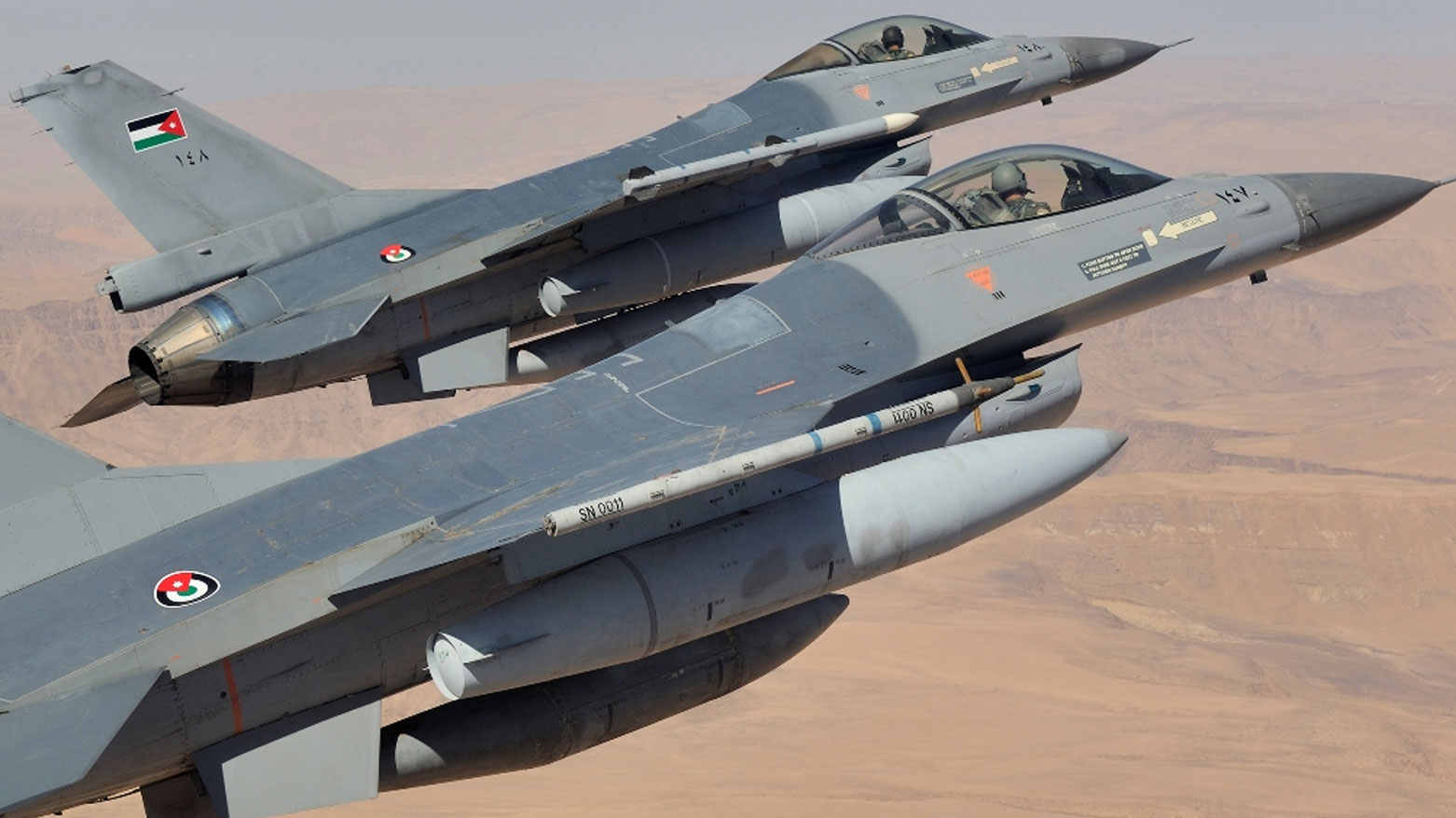
ERBIL (Kurdistan24) - As night fell over southern Syria, the sound of airstrikes cut through the border region, marking a new escalation in Jordan’s campaign against drug trafficking networks operating along its northern frontier.
On Wednesday night, the Jordanian army carried out several airstrikes targeting drug smuggling networks in southern Syria, according to reports from Syrian state media, later confirmed by an official statement from the Jordanian military.
The Syrian state-run Al-Ikhbariya channel reported via Telegram that the Jordanian strikes targeted “drug trafficking networks and farms used for storing narcotics in the southern and eastern countryside of Sweida.”
In a separate statement, the Jordanian Armed Forces said the strikes hit “a number of factories and facilities used by arms and drug dealers as bases for launching their operations toward Jordanian territory,” adding that the operations were conducted “in coordination with regional partners.”
A resident from the southern Sweida border area, speaking to Agence France-Presse on condition of anonymity, said “the shelling was extremely intense and targeted farms and smuggling routes.”
Jordan regularly announces the foiling of drug smuggling attempts across its 375-kilometer border with Syria, particularly involving Captagon pills, which were produced on a large scale during the rule of Syria’s ousted president Bashar al-Assad following the outbreak of the conflict in 2011.
Jordanian authorities have repeatedly stated that these smuggling operations are “organized” and have at times involved the use of drones, as well as protection from armed groups. These factors have prompted Jordan to use its air force on multiple occasions to strike such groups and down their drones.
The latest strikes are not the only Jordanian military operations conducted on Syrian soil in recent weeks.
On Dec. 20, 2025, Jordan confirmed that its air force participated in US-led airstrikes against ISIS targets in Syria, carried out in retaliation for the killing of three US citizens earlier that month.
The United States launched the strikes on Dec. 19, targeting multiple locations across Syria with the stated aim of eliminating ISIS fighters and weapons. The operation followed an attack near Palmyra by a Syrian gunman that killed two US soldiers and an American civilian interpreter, and wounded several others.
In a statement at the time, the Jordanian Armed Forces said Royal Jordanian Air Force jets took part in “precise airstrikes targeting several ISIS positions in southern Syria.” Jordan is a member of the US-led global coalition against ISIS, which includes around ninety countries, and which Syria has recently joined.
US Central Command (CENTCOM) said more than seventy targets were struck across central Syria using fighter jets, attack helicopters, and artillery, with Jordanian fighter aircraft providing support. While the US military did not disclose casualty figures, the Syrian Observatory for Human Rights reported that at least five people were killed, including the leader and members of an ISIS cell.
According to the Jordanian military, those operations aimed to prevent extremist groups from using southern Syria as a staging ground to threaten neighboring countries, amid indications that ISIS had regrouped and rebuilt capabilities in the area.
From combating drug trafficking networks to participating in international counterterrorism operations, Jordan’s expanding military footprint along its northern border underscores its determination to confront cross-border threats it says endanger national and regional security.