Syria Redenominates Currency, Seeking Relief for Citizens and Markets
Syria will launch a redenominated currency on Jan. 1, 2026, removing two zeros to ease transactions and stabilize the economy following the lifting of U.S. sanctions and the end of the Assad era.
ERBIL (Kurdistan24) – The Central Bank of Syria is poised to introduce a new series of banknotes to the market at the beginning of the new year, initiating a significant monetary overhaul designed to facilitate financial transactions and alleviate the logistical burdens plaguing citizens after years of hyperinflation.
As reported by local correspondents on Saturday, the introduction of the new currency, which will feature a redenomination removing two zeros from the face value of the pound, represents a critical technical adjustment within a broader strategy to stabilize the nation's economy following more than a decade of civil war and the recent lifting of international sanctions.
The Central Bank’s directive, confirmed by reporting from Kurdistan24’s correspondent on Saturday, outlines a currency structure consisting of six new denominations.
Under the new valuation system, a banknote of 5,000 "old" liras will be replaced by a denomination of 50 "new" liras.
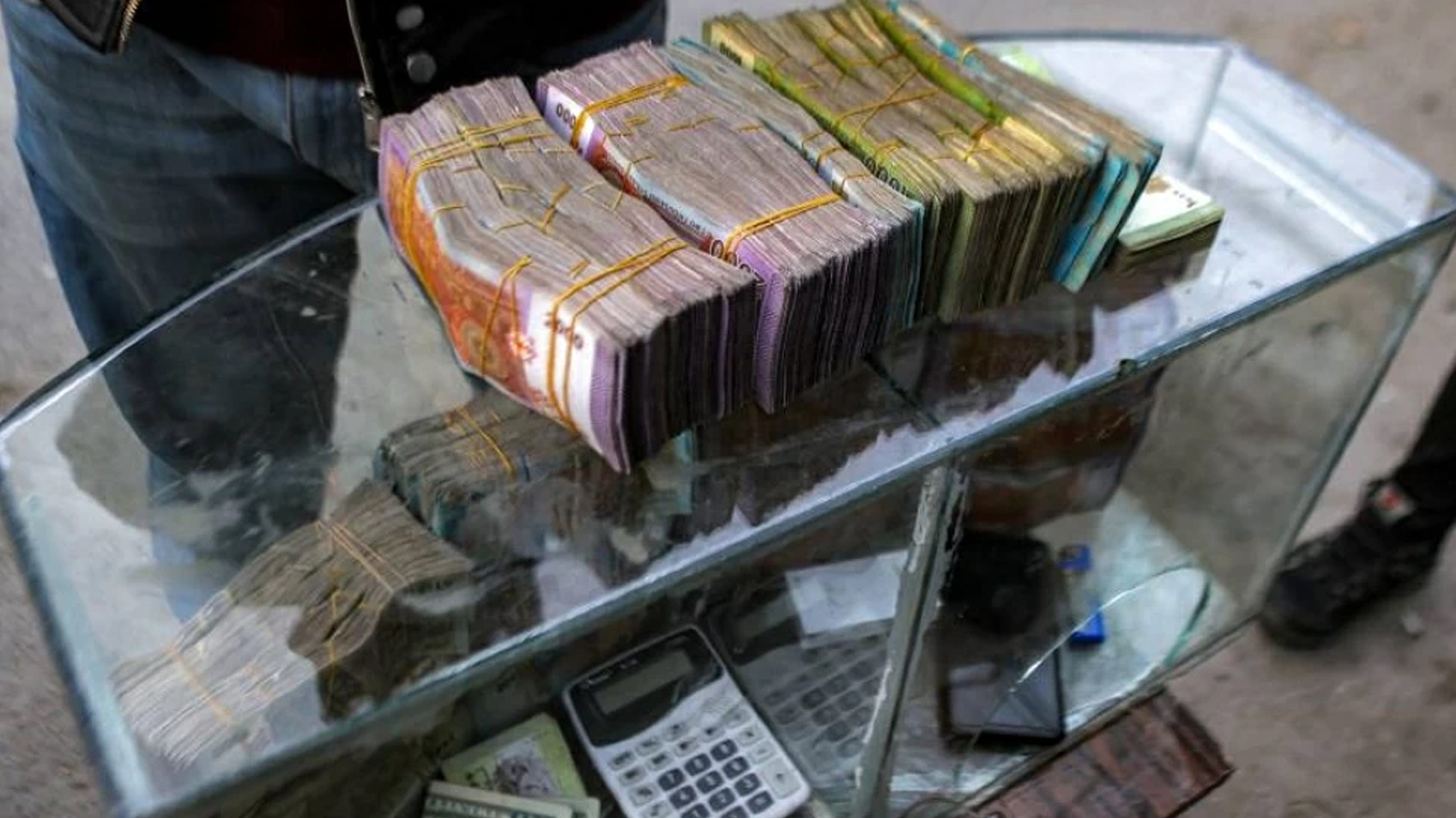
This recalibration is intended to simplify the daily buying and selling processes for a population that has been forced to carry large bundles of cash for basic necessities due to the historic depreciation of the Syrian pound.
The Central Bank of Syria has emphasized that the transition to the new currency will be executed in stages rather than as an abrupt overnight switch.
According to the bank's latest communications, the new banknotes will be introduced to the market gradually, allowing the financial system to adapt bit by bit.
This phased approach aims to mitigate potential market shocks as the country moves away from the old currency, which officials have described as having become nearly "valueless" in terms of purchasing power.
The move follows a formal announcement made on Thursday by Abdulkader Husrieh, the governor of the Central Bank of Syria, who confirmed that the replacement process would begin on January 1, 2026.
Speaking to reporters earlier in the week, Governor Husrieh characterized the rollout as a "pivotal national juncture" and "a firm step toward stability and economic recovery."
He described the revamped Syrian pound as "a symbol of our financial sovereignty after the liberation," signaling a clear intent by the new authorities to mark a fresh start for the country’s financial system following the fall of former President Bashar al-Assad.
The economic context necessitating this shift is stark. Since the outbreak of the civil war in 2011, the Syrian economy has weathered a catastrophic collapse.
Reports indicate that the value of the Syrian pound plunged from approximately 50 to the U.S. dollar before the conflict to roughly 10,000–11,000 in recent times.
This dramatic devaluation eroded purchasing power and fueled record levels of inflation. By removing zeros from the currency, the Syrian government is attempting to exert control over inflation metrics and restore functionality to daily commerce.
On the streets of Syria, the reaction to the imminent change has been largely positive, with residents expressing relief at the prospect of a more manageable monetary system.
Aman Sabsab, a citizen interviewed by Kurdistan24 reporter Anwar Abdullatif, highlighted the practical benefits of the redenomination. "The new currency is easier for dealing," Sabsab told the reporter.
"Previously, to buy a necessity, we had to carry a large amount of money, but now we conduct our transactions with a few pieces of currency, and our work has become much easier," he added.
This sentiment was echoed by Wasif Kassem, another citizen who spoke to reporters on Saturday. Kassem viewed the decision as a "great facilitation for all strata and segments," including employees, merchants, and shopkeepers.
He expressed a collective hope that the price of the Syrian lira would stabilize, noting that the currency's volatility has had a "very negative impact on the country's economy."
The business community has also signaled cautious optimism regarding the reform.
Safwan Tahir, a merchant, described the redenomination as an important step, drawing parallels to other nations that have navigated similar economic crises.
"Several countries remove zeros from their currencies during economic crises," Tahir said. "This action has more positive effects than negative ones and leads the general economic situation toward improvement."
Beyond the logistical improvements, the new currency carries significant political weight. Reports indicate that the decision contains several "political symbols," reflecting the country's new leadership.
Previous banknotes bore the images of Bashar al-Assad and his father, Hafez al-Assad, who ruled Syria for decades. The new authorities have sought to move beyond these symbols, and the redesign is viewed as a physical manifestation of that political transition.
Governor Husrieh noted earlier that further details on the implementation and design would be unveiled at a press conference scheduled for Sunday.
The success of this monetary intervention is closely linked to the broader international environment.
Earlier this month, the United States announced the permanent lifting of the so-called Caesar sanctions, a development expected to ease Syria’s economic isolation and facilitate foreign investment.
Economic experts cited in Saturday’s reports emphasize that the currency reform must be buttressed by broad economic restructuring. They argue that for trust to fully return to the Syrian lira, the technical change of banknotes must be strengthened by supporting domestic production and increasing exports.
Governor Husrieh has sought to assuage fears that the change might negatively impact the currency's real value.
In his Thursday statement, he reiterated that the replacement of banknotes is a technical measure that would not, in itself, fuel inflation, as the new notes are simply replacing existing ones in circulation. However, officials acknowledge that restoring confidence remains one of their most urgent challenges.
As Syria approaches the January 1 launch date, the focus remains on the practical execution of the rollout.
With the economy having passed through an extremely difficult decade, the gradual introduction of the new lira serves as both a functional necessity for the market and a symbolic closing of the chapter on the war-torn economy of the past.