Two Killed as Syrian Forces Disperse Alawite Protests in Coastal Cities, Monitor Says
Syrian security forces dispersed Alawite protests in coastal cities, killing at least two people, according to monitors, as authorities blamed former regime remnants amid conflicting accounts.
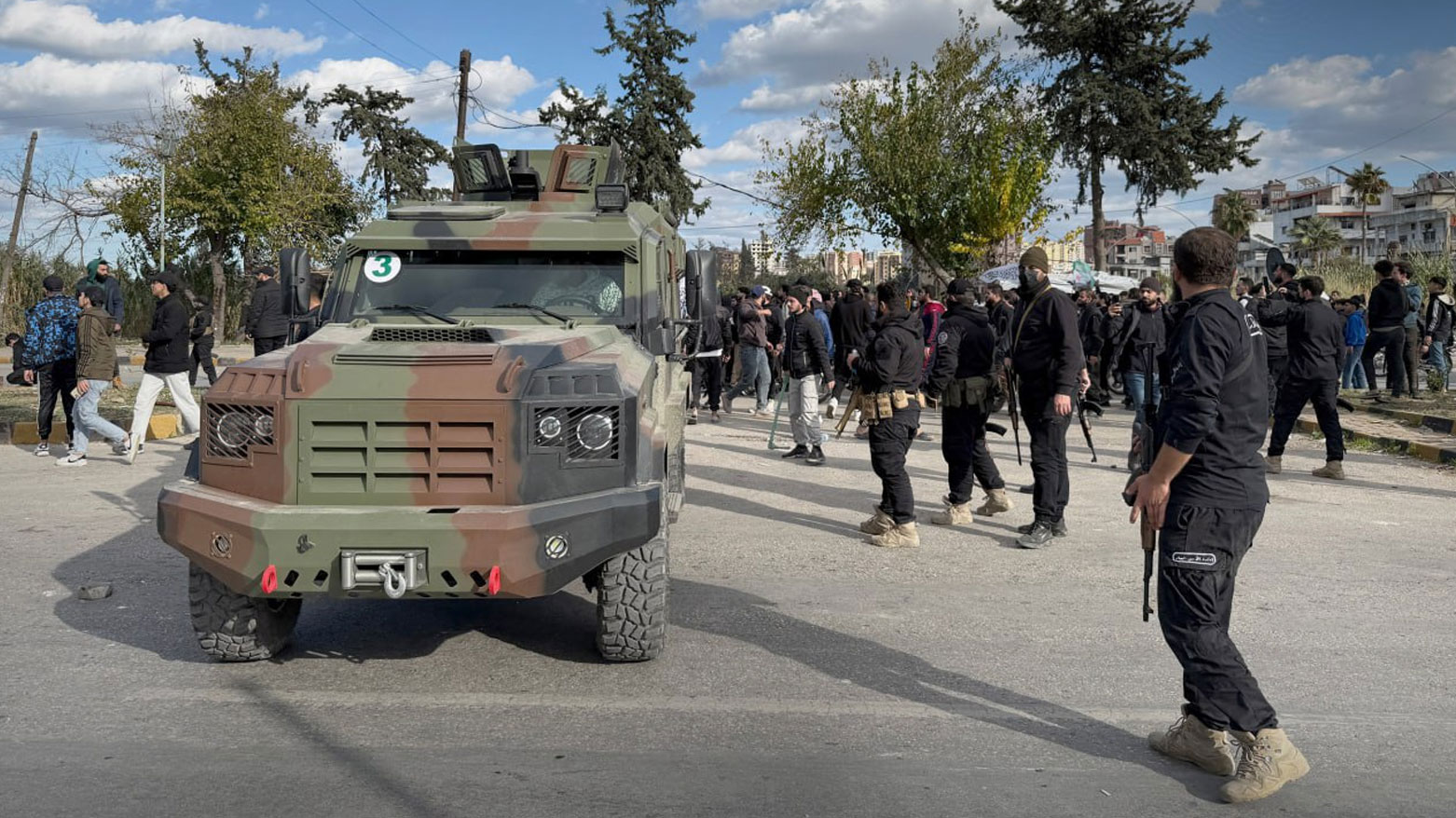
ERBIL (Kurdistan24) - A tense security crackdown unfolded across Syria’s coastal and central regions as Syrian security forces dispersed protests held by members of the Alawite community, leaving at least two people dead and dozens injured, according to a war monitor.
The Syrian Observatory for Human Rights (SOHR) said Syrian security forces killed two people while breaking up peaceful demonstrations on Sunday. A medical source told AFP that two bodies were transferred to a local hospital. Syrian authorities did not confirm that security forces opened fire, instead stating that they had “contained the situation” and accusing what they described as “remnants” of the former government of Bashar al-Assad of attacking security personnel.
According to SOHR, security forces deployed armored vehicles to protest gathering points around al-Azhari roundabout in Latakia. In the nearby city of Jableh, firefighters were used to spray water cannons at demonstrators in an attempt to disperse crowds.
The monitor also alleged that security forces staged what it described as “mock clashes,” presenting them as confrontations with former regime elements in order to justify attacking and dispersing unarmed protesters.
Thousands of members of the Alawite community took part in demonstrations to protest what they described as violations and crimes committed against them.
Read More: Thousands of Alawites Rally in Syria Seeking Autonomy After Deadly Homs Mosque Bombing
The observatory reported that transitional authority forces deployed thousands of personnel, accompanied by armored vehicles, into the streets of several areas to suppress the demonstrations. Protesters in Tartus were subjected to live gunfire and tear gas along the city’s main thoroughfare, resulting in numerous injuries.
According to SOHR sources, the demonstrations began peacefully without any signs of weapons or attacks. However, authorities moved quickly to suppress the protests, particularly in al-Da‘tour neighborhood in Latakia, where house raids and incursions were carried out, accompanied by gunfire into the air, spreading fear among civilians.
Meanwhile, the Syrian transitional government presented a sharply different narrative. The Syrian Arab News Agency (SANA) reported that three people were killed and sixty others injured due to attacks by “remnants of the former regime” against security forces and civilians during the protests in Latakia.
Latakia’s Directorate of Health told SANA that injuries treated at hospitals included wounds from bladed weapons, stones, and gunfire, which it attributed to attacks carried out by former regime elements against security personnel and civilians. The directorate also said two ambulances were put out of service after being attacked and damaged during their operations, while medical staff continued providing emergency care.
Latakia’s Internal Security Commander, Brig. Gen. Abdulaziz al-Ahmad, said security forces and protesters were subjected to direct gunfire from an unidentified source in the al-Mashrou‘ al-‘Ashir neighborhood while gathered at al-Azhari roundabout and Republic Highway, resulting in injuries among civilians and security personnel.
He added that an armed group allegedly concealed among protesters targeted a special missions checkpoint tasked with securing the area by throwing an offensive grenade, wounding two members of the internal security forces.
The events come amid rising public anger in Syria’s coastal regions, as SOHR continues to document security violations and the pursuit of peaceful demonstrators across multiple areas, highlighting deepening tensions and sharply divergent accounts of responsibility for the violence.