Iranian President Calls for Dialogue as Tehran Shopkeepers Protest Currency Collapse
Rial’s sharp depreciation fuels economic unrest amid inflation and sanctions pressure.
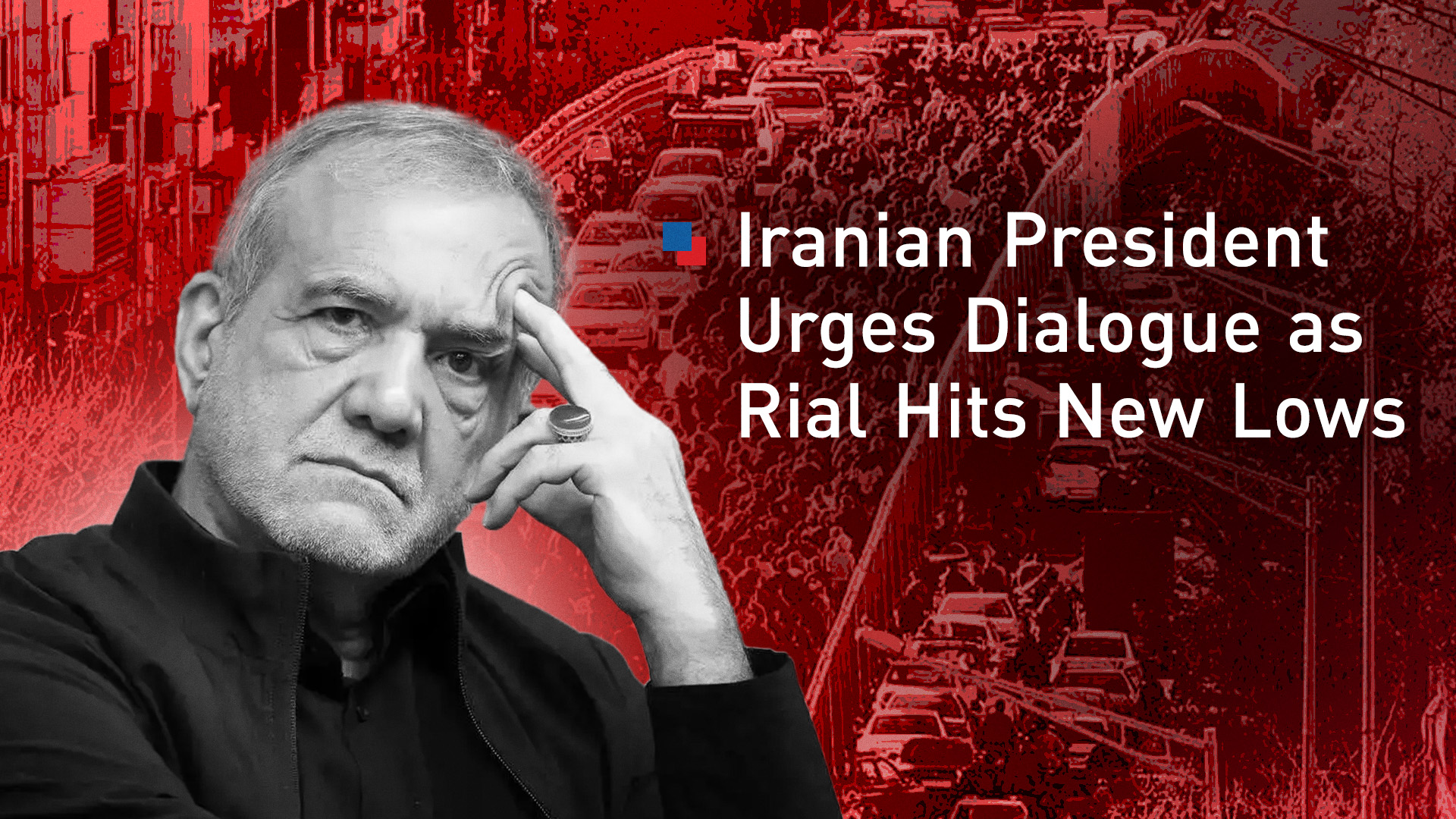
ERBIL (Kurdistan24) — Iranian President Masoud Pezeshkian has urged his government to listen to what he described as the “legitimate demands” of protesters, following several days of demonstrations by shopkeepers in Tehran over worsening economic conditions, according to AFP.
State media reported on Tuesday that shopkeepers in the capital closed their stores for a second consecutive day on Monday, as Iran’s embattled national currency fell to new lows on the unofficial market.
The U.S. dollar was trading at around 1.42 million rials on Sunday, compared with approximately 820,000 rials a year earlier, while the euro neared 1.7 million rials, according to currency-monitoring websites cited by AFP.
“I have asked the Interior Minister to listen to the legitimate demands of the protesters by engaging in dialogue with their representatives so that the government can do everything in its power to resolve the problems and act responsibly,” Pezeshkian said, according to the state-run IRNA news agency.
Protesters are calling for immediate government action to curb exchange-rate volatility and to outline a clear economic strategy, the pro-labour ILNA news agency reported on Monday.
According to AFP correspondents, sharp price fluctuations have disrupted the sale of imported goods, with both sellers and buyers delaying transactions amid uncertainty.
“Continuing to do business under these conditions has become impossible,” ILNA quoted protesters as saying.
The conservative-aligned Fars news agency published images showing demonstrators occupying a major commercial thoroughfare in central Tehran. Another photograph appeared to show tear gas being used to disperse the crowd. Fars reported that “minor physical clashes” occurred between some protesters and security forces, warning that such gatherings could contribute to instability.
Separately, Iranian Chief Justice Gholamhossein Mohseni Ejei called for the “swift punishment of those responsible for currency fluctuations,” according to the justice ministry’s Mizan news agency.
The government has also announced a change in leadership at the central bank. Presidency communications official Mehdi Tabatabaei said President Pezeshkian had decided to appoint Abdolnasser Hemmati as governor of the Central Bank.
Hemmati previously served as economy and finance minister but was dismissed by parliament in March following the rial’s sharp depreciation.
On Sunday, Pezeshkian presented the budget for the next Persian year to parliament, pledging to combat inflation and rising living costs. Official data put year-on-year inflation at 52 percent in December, though this figure does not fully reflect price increases for basic goods, according to analysts cited by AFP.
Iran’s economy has been under strain for decades due to Western sanctions, pressures that intensified after the United Nations reinstated international sanctions linked to Iran’s nuclear program in late September. Those measures had been lifted a decade earlier. Western governments and Israel accuse Iran of seeking to develop nuclear weapons, allegations Tehran has consistently denied.