Rubio Highlights Iran Threat, Transatlantic Ties, and Global Security Priorities in Munich
U.S. Secretary of State Emphasizes Preventing Iranian Nuclear Capability While Supporting Alliances and Diplomacy.
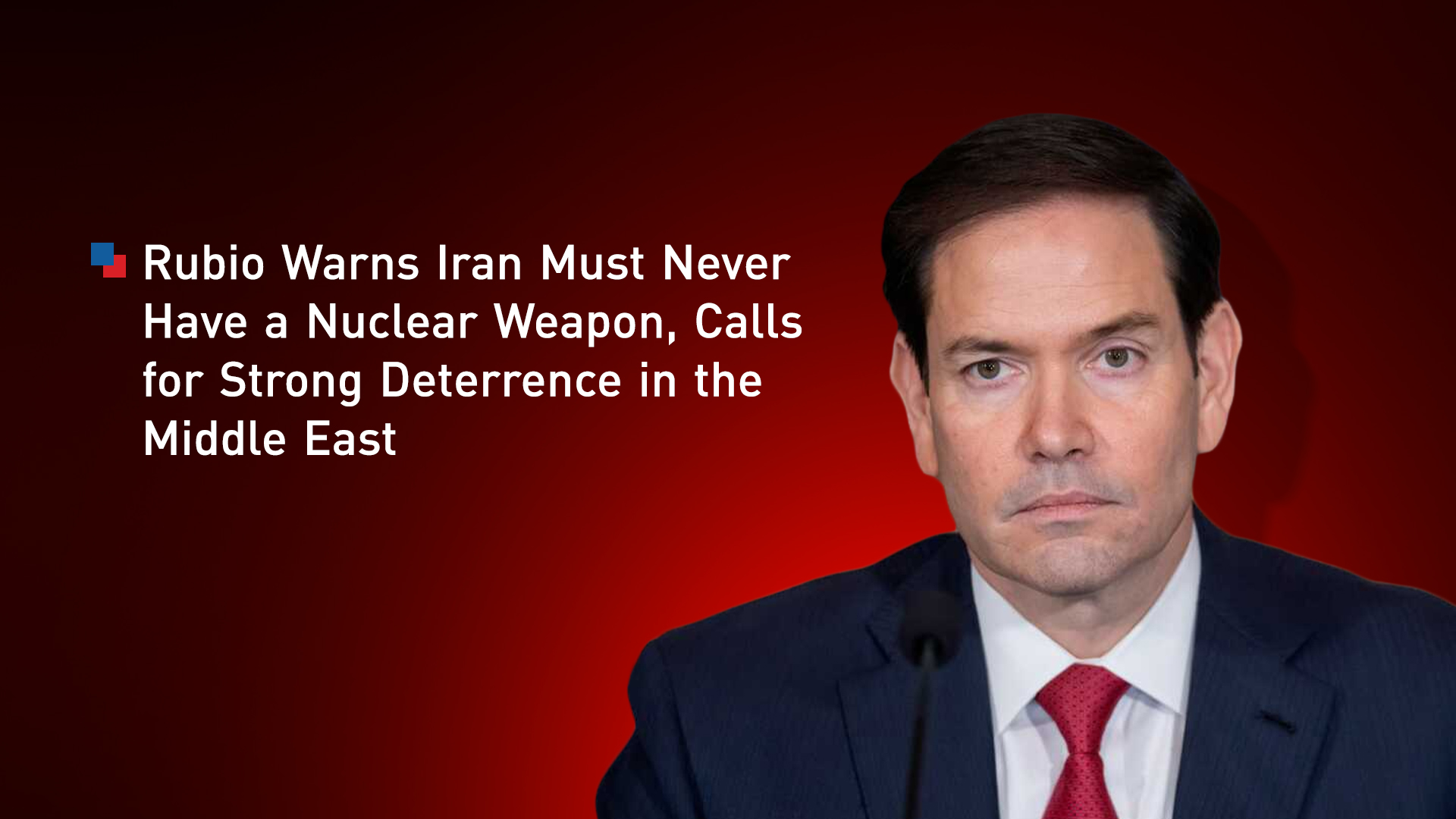
ERBIL (Kurdistan24) — U.S. Secretary of State Marco Rubio spoke at length with Bloomberg News on Saturday, on the sidelines of the Munich Security Conference, addressing transatlantic relations, the evolving geopolitical landscape, Iran’s nuclear threat, and broader U.S. foreign policy priorities, according to a version of the interview released by the U.S. State Department.
On Iran, Rubio told Bloomberg that preventing Iran from acquiring a nuclear weapon remains a top U.S. priority. Rubio stressed that the U.S. must maintain sufficient military presence in the region to deter potential Iranian strikes against American forces or allied bases, while also supporting diplomatic efforts to reach a deal with Tehran.
Rubio explained that Washington’s regional posture is twofold: first, to prevent Iran from gaining nuclear capability, which poses a threat to the United States, Europe, and global security; second, to ensure sufficient firepower in the Middle East to prevent miscalculations by Tehran that could escalate into a broader conflict.
He noted that President Donald Trump prefers resolving challenges through negotiation where possible, and that U.S. envoys Steve Witkoff and Jared Kushner have upcoming meetings to explore potential progress.
Addressing transatlantic relations, Rubio emphasized that the U.S.-Europe partnership must rest on both shared values and responsibilities. ‘People don’t fight and die for abstract ideas,’ he said, noting that defending civilization and cultural heritage is central to sustaining the alliance.
He emphasized that calls for urgent or critical actions by Europe are rooted in shared interest, not criticism, highlighting the importance of capable allies prepared to defend common values.
Rubio drew parallels between the Cold War and current strategic competition with China, stressing the need for resilient Western supply chains free from dependency or extortion.
He noted that while today’s world differs from the Cold War era, collective action remains essential to safeguard national interests and maintain global security.
Rubio defended engagement with China as a necessary practice of diplomacy, emphasizing that meeting with other nations does not compromise alliance cohesion or shared objectives.
Addressing Russia’s invasion of Ukraine, Rubio described the conflict as brutal and costly for both sides, estimating that Russian forces suffer thousands of fatalities weekly while Ukraine faces extensive infrastructure damage.
He reiterated the United States’ commitment to supporting Ukraine with military aid and sanctions on Russia, while also highlighting America’s unique capacity to facilitate potential negotiations for a diplomatic resolution, though he cautioned that an ultimate settlement may be difficult to achieve.
Rubio defended U.S. policy amid concerns that Europe might underperform in providing support to Ukraine, noting that historical contributions from the United States were decisive in sustaining Ukraine during the early days of the conflict.
He stressed that the war will not end with a clear military victor and that negotiations, if successful, will require difficult compromises acceptable to both sides.
Turning to Cuba, Rubio criticized the regime’s economic model as unsustainable, emphasizing that the government’s control over the economy prevents the population from achieving prosperity. He highlighted ongoing humanitarian aid efforts and the need for political and economic freedoms as part of any path forward.
Rubio’s interview coincides with the 62nd Munich Security Conference, a key annual gathering where heads of state, foreign ministers, and senior officials convene to discuss global security, defense, and strategic cooperation.
The forum has provided Rubio an opportunity to highlight the interdependence of transatlantic allies, the challenges posed by rising powers, and the U.S. commitment to diplomacy, defense, and stability across multiple theaters, from Europe to the Middle East.
Through this engagement, Rubio framed the United States as both a proactive and pragmatic actor on the world stage, emphasizing shared values, strategic alliances, and a willingness to pursue both hard and soft power solutions to global crises.