US Defends Israel’s Somaliland Recognition at UN
US defends Israel's Somaliland recognition at UN, citing double standards, amid international condemnation and accusations of a plan to displace Palestinians from Gaza.
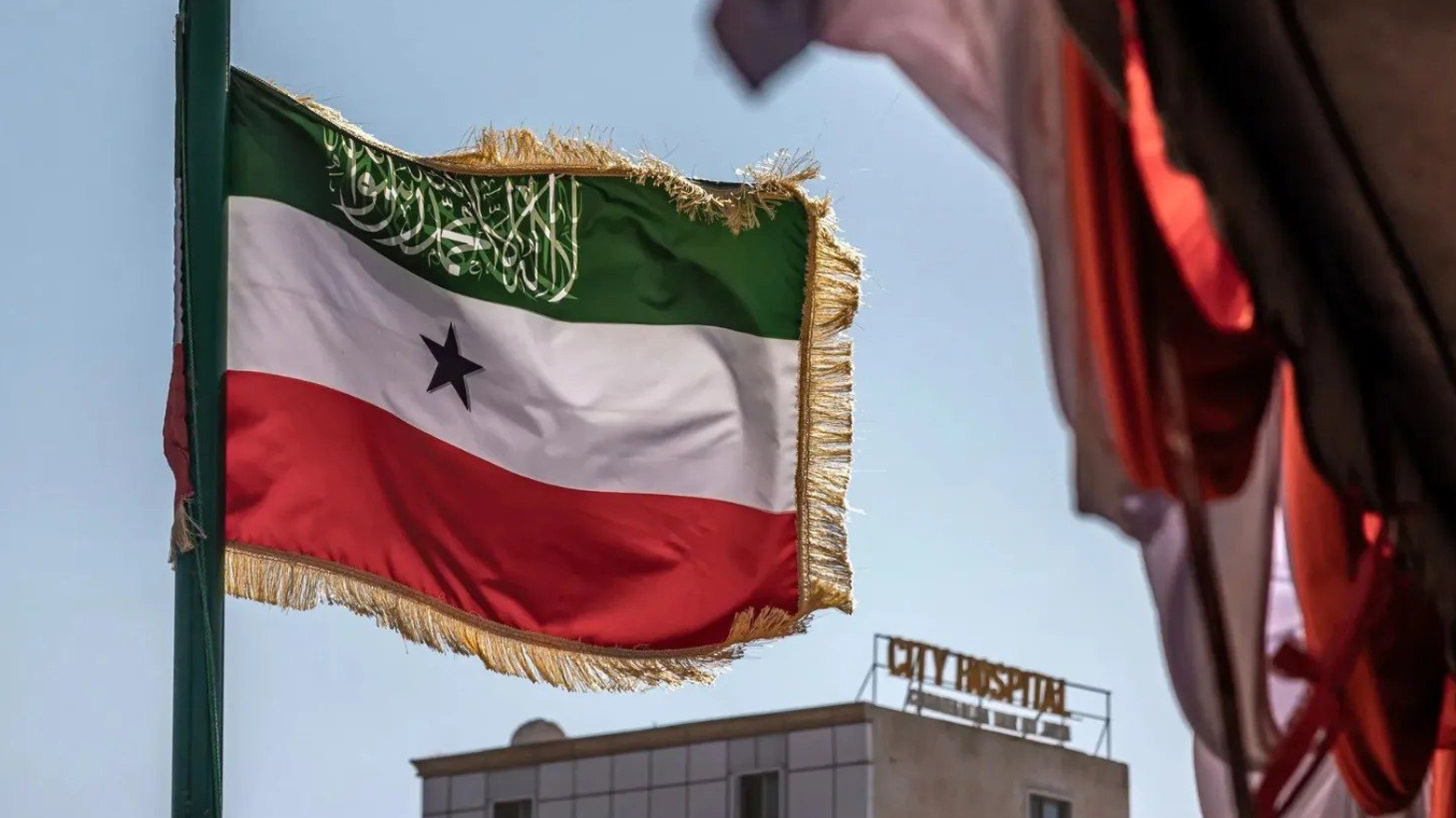
ERBIL (Kurdistan24) — The United States on Monday defended Israel’s right to formally recognize the breakaway territory of Somaliland, comparing the controversial diplomatic move to the unilateral recognition of a Palestinian state by numerous countries and accusing fellow UN Security Council members of applying “double standards.”
The declaration came during an emergency Security Council meeting convened to address the international discord following Israel’s announcement last week, which made it the first nation to recognize Somaliland and drew swift condemnation from Somalia, the African Union, and the European Union.
In a session marked by sharp disagreement, the deputy U.S. ambassador to the UN, Tammy Bruce, argued that Israel’s actions were within its sovereign purview, according to reports by AFP and The Times of Israel.
“Israel has the same right to conduct diplomatic relations as any other sovereign state,” Bruce stated. “Earlier this year, several countries, including members of this council, made the unilateral decision to recognize a nonexistent Palestinian state, and yet no emergency meeting was called to express this Council’s outrage.”
Despite this defense of Israel’s diplomatic prerogative, Bruce clarified that Washington’s own position on the matter remains unchanged. U.S. President Donald Trump has stated his opposition to the recognition of Somaliland, and Bruce affirmed on Monday that “there has been no change in American policy.”
The comparison drawn by the United States between Somaliland and Palestine was immediately rejected by other diplomats. Slovenian Ambassador Samuel Zbogar, whose country has recognized Palestinian statehood, countered that the two cases were fundamentally different.
“Palestine is not part of any state. It is illegally occupied territory, as declared by the International Court of Justice, among others,” Zbogar said, as reported by both AFP and The Times of Israel. He argued that Somaliland, in contrast, “is part of a UN member state and recognizing it goes against” the UN Charter.
Somalia’s ambassador, Abukar Osman, whose nation is a current member of the Security Council, denounced Israel’s move in the strongest terms, calling it an “act of aggression is aimed at encouraging fragmentation of the territory of Somalia” and demanding the UN’s unequivocal rejection of the decision.
Other member states, while not directly naming Israel, voiced their firm commitment to Somalia’s territorial integrity. United Kingdom Ambassador James Kariuki reaffirmed his country’s support for “the sovereignty, territorial integrity, political independence and unity of Somalia.”
The emergency session also became a forum for Arab and Muslim nations to voice suspicions about Israel’s motives, linking the recognition to the ongoing conflict in Gaza.
The 22-member Arab League’s UN Ambassador, Maged Abdelfattah Abdelaziz, told the council that the organization rejects “any measures arising from this illegitimate recognition aimed at facilitating forced displacement of the Palestinian people or exploiting northern Somali ports to establish military bases,” according to The Times of Israel.
This concern was echoed by Pakistan’s Deputy UN Ambassador, Muhammad Usman Iqbal Jadoon. “Against the backdrop of Israel’s previous references to Somaliland of the Federal Republic of Somalia as a destination for the deportation of Palestinian people, especially from Gaza, its unlawful recognition of Somaliland region of Somalia is deeply troubling,” Jadoon said.
According to a previous report by The New York Times, news reports earlier this year indicated that the United States and Israel had approached Somaliland about accepting the resettlement of Palestinians from Gaza, though Somaliland officials said at the time that no such discussions had occurred.
In its reaction to the recognition announcement, Egypt also reaffirmed its “categorical rejection of any plans to displace the Palestinian people outside their land.”
Israel’s representative at the UN, Jonathan Miller, sought to quell the regional anxieties, characterizing the move as an “opportunity to strengthen stability.” As reported by AFP and The Times of Israel, Miller insisted the decision was “not a hostile step towards Somalia, and it does not preclude future dialogue between the parties.”
Israel’s decision on Friday ended a 34-year quest for global validation by Somaliland, which declared independence from Somalia in 1991 as the country descended into civil war.
As detailed by The New York Times, the autonomous region in northwestern Somalia has since established its own elected parliament, currency, military, and police force, and has been described as an area of relative stability in the turbulent Horn of Africa. However, its lack of international recognition has severely limited its ability to access global markets and forge security agreements.
The recognition agreement carries significant strategic implications for both parties. For Israel, it represents an expansion of its diplomatic footprint in the Muslim world.
Prime Minister Benjamin Netanyahu said the move “is in the spirit of the Abraham Accords,” the 2020 agreements brokered by the first Trump administration that normalized relations between Israel and several Arab nations, The New York Times reported. Netanyahu added that Israel plans to immediately pursue cooperation with Somaliland in agriculture, health, technology, and the economy.
For Somaliland, a region of about five million people, the backing of a sovereign state could open doors for further diplomatic and economic engagement. Located across the strategically vital Gulf of Aden from Yemen, Somaliland has for years cultivated ties with Republican lawmakers and conservative policy groups in the United States.
According to The New York Times, Somaliland officials have expressed eagerness to lease a port and a Cold War-era airstrip to the United States in exchange for recognition, which they believe would attract foreign investment and bolster their security.
The move, however, has been met with stiff international opposition. Somalia’s government immediately criticized what it called an “unlawful step,” insisting that Somaliland remains an “integral, inseparable, and inalienable part” of its territory.
The African Union Commission, representing 55 member states, firmly rejected any initiative aimed at recognizing Somaliland as an independent entity. Egypt’s foreign minister also held calls with his counterparts in Somalia, Turkey, and Djibouti, with all underscoring their “complete rejection of any unilateral measures that could undermine Somali sovereignty.”
This widespread wariness is rooted in the fear among many nations that recognizing one breakaway region could set a precedent and encourage a cascade of other secessionist movements globally.
Some analysts have also warned that the recognition could destabilize the region, potentially bolstering terrorist groups such as Al Shabab and complicating relations with key regional powers like Egypt and Turkey.
Somaliland itself has faced internal conflict, battling local militias for control of the city of Las Anod since 2023, with its forces being accused by Amnesty International of indiscriminately killing and injuring civilians, charges the government has denied.
The debate at the Security Council thus exposed the deep geopolitical fault lines activated by Israel’s decision, intertwining the sovereignty of a UN member state with the unresolved Israeli-Palestinian conflict and the broader strategic competition underway in the Horn of Africa.