U.S. Observers Alarmed by Iraqi Parliament’s Choice of Adnan Fayhan as Deputy Speaker
US officials voice alarm over Adnan Fayhan's election as Iraqi Deputy Speaker, citing his alleged role in a 2007 attack killing 5 American soldiers.
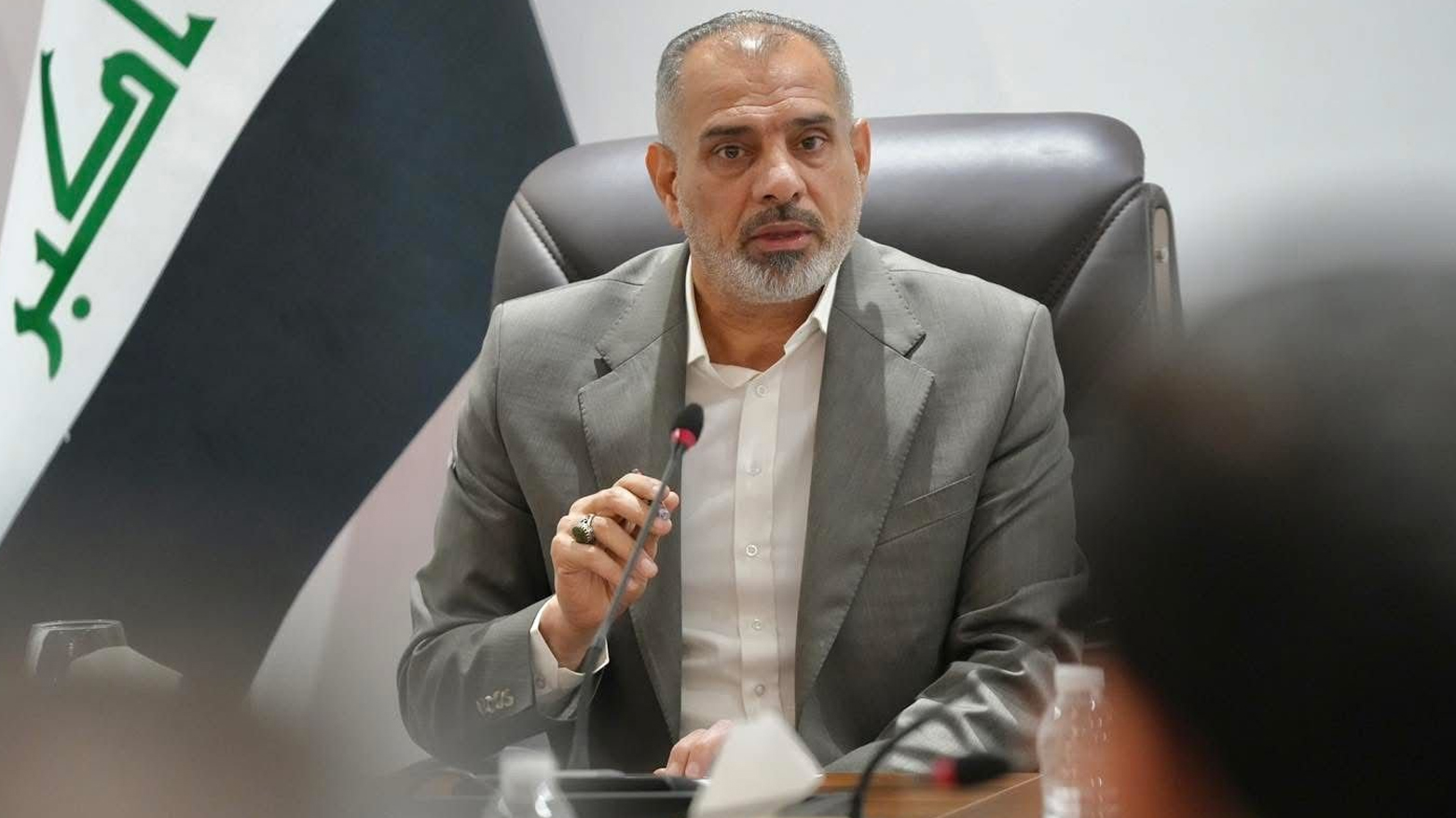
ERBIL (Kurdistan24) — The election of Adnan Fayhan as the First Deputy Speaker of the Iraqi Parliament on Monday has precipitated a wave of concern among American officials and policy experts, who characterize the ascent of the former militia commander as a troubling signal for the future stability of Iraq and its relationship with the United States.
According to reporting from Washington by Kurdistan24, the elevation of Fayhan to the second-highest position in the Iraqi legislature is being viewed by American media and intelligence monitors as a potential return to an era of "darkness and instability," casting a shadow over the nation’s political trajectory.
Isa Hassan, a reporter for Kurdistan24 in Washington, reported on Monday, Dec. 29, 2025, that the reaction in the U.S. capital has been shaped heavily by intelligence assessments and policy reports detailing Fayhan’s alleged history of militant activity.
Central to these concerns is a dossier of information highlighted by The Washington Institute for Near East Policy, which relies on American intelligence data to identify Fayhan as a figure deeply implicated in insurgent violence against coalition forces during the height of the Iraq War.
Specifically, the reports cite Fayhan’s alleged involvement in the planning of a complex attack in 2007 in the city of Karbala, which resulted in the deaths of five American soldiers.
The appointment of Fayhan marks a significant political milestone for the Sadiqoun parliamentary bloc, the political wing of Asaib Ahl al-Haq (AAH), a U.S.-designated terrorist organization. However, for American policymakers, his rise to the deputy speakership serves as a stark reminder of the enduring influence of Iran-backed militia networks within the Iraqi state apparatus.
The Washington Institute for Near East Policy, in a comprehensive background report authored by analysts Michael Knights, Ameer al-Kaabi, and Hamdi Malik, has previously detailed the extensive intelligence file on Fayhan, noting that U.S. government sources have long classified him as an Iran-backed operator who transitioned from paramilitary leadership to political office.
The scrutiny on Fayhan centers on the events of January 20, 2007, at the Karbala Provincial Joint Coordination Center (PJCC).
According to the background analysis provided by The Washington Institute, Fayhan, also known as Adnan Fayhan al-Dulaymi, was identified by U.S. authorities as a key organizer of the raid.
The operation was one of the most brazen attacks on U.S. forces during the conflict; assailants posing as an American security team infiltrated the compound, resulting in the kidnapping and subsequent murder of five U.S. soldiers. Four of the victims were found executed, bound and blindfolded, a detail that has made the incident a lasting point of contention in U.S.-Iraq security relations.
Intelligence declassified by the U.S. government and cited by The Washington Institute reveals that Qais al-Khazali, the leader of AAH and a detainee at the time, provided testimony verifying Fayhan’s role.
The interrogation reports indicate that Fayhan served as the leader of the "Special Groups"—Washington’s terminology for early AAH cells—for the central Iraq region.
His area of command reportedly encompassed Diwaniyah, Karbala, Hillah, and Najaf. Khazali told interrogators that Fayhan visited him in Sadr City, Baghdad, to present the attack plan for the PJCC, seeking approval to ensure the operation complied with sharia law and to receive the militia leader's blessing.
The background material further indicates that the 2007 attack was not a purely domestic operation. U.S. satellite imagery and intelligence assessments from the period suggested that the Islamic Revolutionary Guard Corps-Qods Force (IRGC-QF) supported the assault, providing training facilities inside Iran that included a full-scale mock-up of the Karbala facility to prepare the attackers.
Fayhan was subsequently detained by U.S. authorities in connection with acts of anti-American terrorism. He remained in custody until 2010, when he and Khazali were released as part of an exchange for the bodies of British civilians who had been kidnapped and murdered in Iraq.
Following his release, Fayhan’s career pivoted toward political institutionalization, a trajectory that has now culminated in his election as First Deputy Speaker.
As detailed by The Washington Institute, upon his release, he initially led AAH’s political office in Lebanon in 2011, where he organized "axis of resistance" conferences alongside Hezbollah and various Palestinian factions. Returning to Iraq after the U.S. military withdrawal in 2011, he was instrumental in building the Sadiqoun bloc, which secured its first parliamentary victory in 2014.
His political ascent has been characterized by a merging of militia influence and electoral maneuvering. In February 2024, prior to his current parliamentary leadership role, Fayhan was selected as the governor of Babil province.
That appointment, as described by The Washington Institute, was controversial; it was conducted during a late-night session that was boycotted by seven of the eighteen provincial council members. Analysts viewed that governorship as a major consolidation of power for AAH, marking the group's first control of a provincial governorate.
Throughout his political career, Fayhan has maintained a staunchly anti-Western stance and has continued to align himself with regional militant movements.
In October 2023, following the attacks by Hamas against Israel, Fayhan publicly congratulated the "heroes of the Palestinian resistance," expressing full support for the operation known as "al-Aqsa Flood." In statements cited by The Washington Institute, he referred to Israel as a "cancerous gland" and pledged unwavering support until "victory is accomplished."
Furthermore, his tenure in Iraqi politics has been marked by close association with high-ranking Iranian military figures. Following the 2014 parliamentary elections, Fayhan joined the Popular Mobilization Forces (PMF) and participated in operations to retake the Jurf al-Sakhar area.
During this period, he was photographed alongside Qasem Soleimani, the late commander of the IRGC-QF. The Washington Institute report notes that in the years since, Fayhan has campaigned on a platform restricting the resettlement of Sunni populations in Jurf al-Sakhar, making exceptions only for individuals linked to notables under the control of Shia militia blocs.
The methodology behind the political success of Fayhan’s bloc has also drawn the attention of researchers. The Washington Institute’s analysis of the 2018 parliamentary elections described a campaign by Al-Sadiqoun that involved voter intimidation and ballot manipulation, which reportedly contributed to the bloc increasing its representation from one to fifteen seats.
During his subsequent terms in parliament, including service on the defense and security committee, Fayhan consistently opposed the presence of U.S. military forces in Iraq, maintaining this position even when such forces were present at the invitation of the central government in Baghdad.
The election of a figure with such a documented history of antagonism toward the United States to a constitutional leadership role has sparked the current wave of anxiety reported by Kurdistan24.
American media outlets have interpreted the move as a sign that the political wing of the "resistance" factions is deepening its capture of Iraqi state institutions. The concern is that Fayhan’s new position grants him significant influence over the legislative agenda and parliamentary procedures, potentially complicating U.S. diplomatic and security engagement with Baghdad.
Fayhan is widely regarded as the closest political advisor to Qais al-Khazali. His transition from a field commander accused of orchestrating lethal attacks on American troops to the First Deputy Speaker of Parliament represents, according to the analysts at The Washington Institute, the most successful political experiment for AAH to date.
Before his governorship and subsequent parliamentary leadership, he acted as a representative for the Coordination Framework factions in negotiations regarding appointments to the elite Counter Terrorism Service, further illustrating the depth of his integration into the state’s security and political architecture.
As reports from Washington circulate regarding the implications of this election, the narrative emerging from U.S. platforms suggests that the elevation of Fayhan is not merely a personnel change, but a strategic shift.
The Kurdistan24 reporting from Washington highlights that observers see this as a pivot toward an "unclear future," where the distinctions between pro-Iran militia networks and the sovereign government of Iraq become increasingly blurred.
With the memory of the Karbala attack and the subsequent years of conflict still resonant in American policy circles, the presence of its alleged planner at the helm of the Iraqi Parliament is expected to introduce new friction into the complex dynamic of U.S.-Iraq relations.