Record Cold and Heavy Snow Paralyze Eastern Kurdistan; Hundreds of Villages Cut Off
Heavy snow and -17°C temps in Eastern Kurdistan blocked 400 villages, cut power to 300, and forced army intervention, officials report.
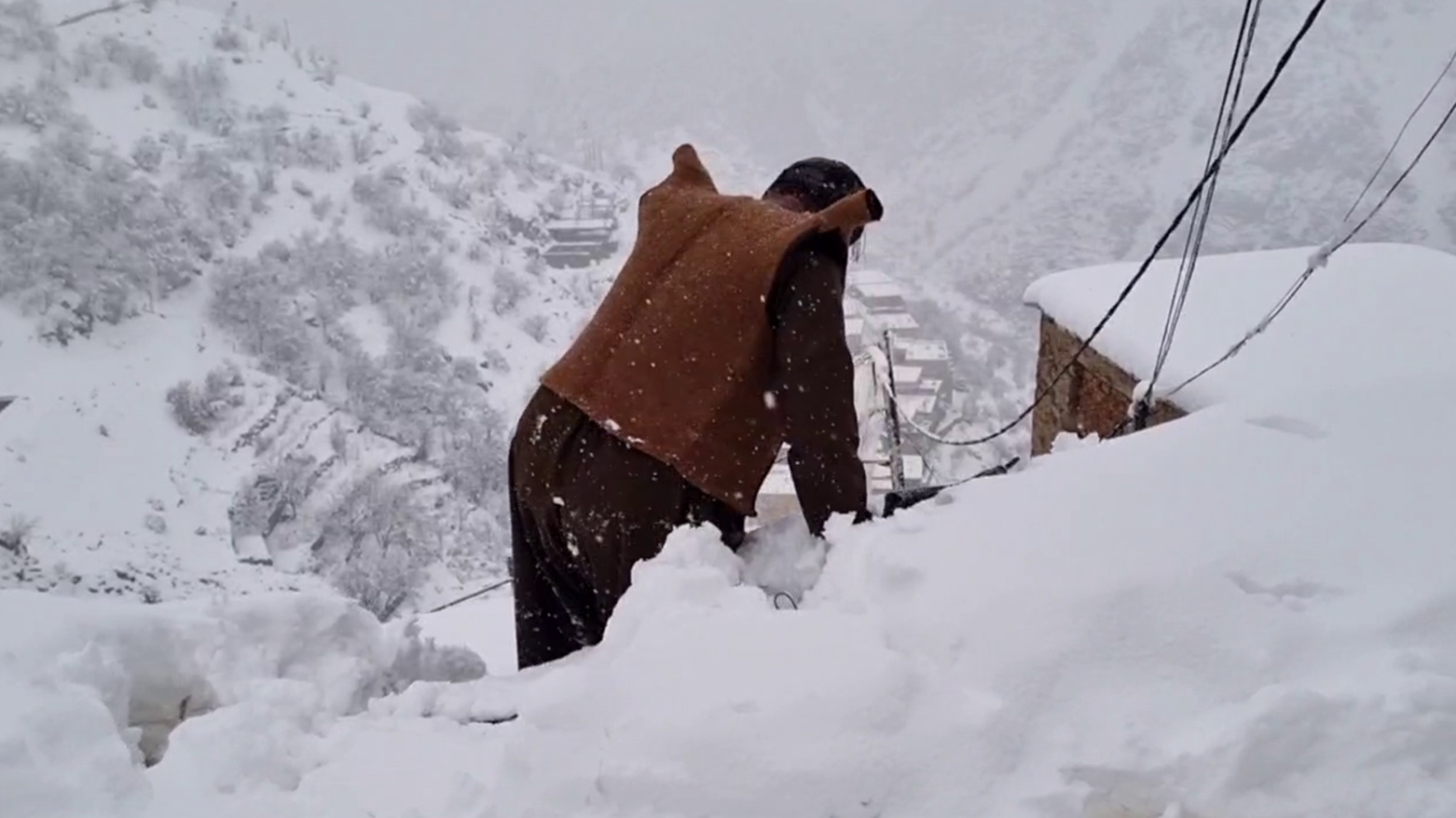
ERBIL (Kurdistan24) — A severe and unprecedented winter storm system has engulfed Eastern Kurdistan, bringing record-breaking low temperatures to Urmia province and causing widespread infrastructural paralysis across the Sina governorate.
As of Tuesday, Dec. 30, 2025, officials reported that the town of Takab registered as the coldest location in Iran, while heavy snowfall and blizzards have severed road access to hundreds of villages and disrupted essential utilities for thousands of residents.
The extreme weather event has necessitated the mobilization of national army forces and the invocation of emergency legal measures to commandeer private machinery for rescue operations.
According to local authorities, the dual threats of sub-freezing temperatures and impassable roads have created a crisis management scenario that may require assistance from neighboring governorates if conditions persist.
Unprecedented Cold in Urmia Province
The severity of the cold wave was quantified by the Mahabad Meteorology Directorate, which confirmed that the region is experiencing some of the most extreme temperatures of the year.
Ardalan Mohammadpour, the head of the directorate, told the IRNA news agency on Tuesday that an "unprecedented cold wave" had blanketed Urmia province, resulting in one of the coldest nights recorded this year.
According to Mohammadpour, the town of Takab plummeted to minus 17 degrees Celsius over the past 24 hours, making it the coldest city in Iran during that period.
The precipitous drop in temperature was accompanied by heavy snowfall, further compounding the hazardous conditions. Takab was not the only municipality to suffer under the freeze; Chaldiran recorded a temperature of minus 15 degrees Celsius, ranking as the second-coldest place in the country.
In contrast, the town of Naqadeh recorded the highest temperature in the monitored area, though it still remained well below freezing at minus 2.2 degrees Celsius.
Mohammadpour provided further meteorological context regarding precipitation levels, noting that the system brought significant moisture alongside the cold. During this specific period, Takab received the highest amount of precipitation in Urmia province, registering 19 millimeters.
On the lower end of the spectrum, both Naqadeh and Miandoab recorded four millimeters of precipitation.
The forecast offers little immediate relief for the beleaguered region.
The Head of the Mahabad Meteorology Directorate announced that the cold wave is expected to continue through Wednesday. Meteorological models predict that temperatures will remain dangerously low, reaching approximately minus 12 degrees Celsius in the coming days.
Crisis in Sina: Isolation and Blackouts
While Urmia province grappled with record lows, the neighboring Sina (also known as Sanandaj) governorate faced a mounting logistical and humanitarian emergency driven by blizzards and snow accumulation. Arash Zarehtan Lahoni, the Governor of Sina, announced on Tuesday that the weather system had effectively isolated a vast portion of the rural population.
Speaking to the Mehr news agency following an extraordinary meeting of the governorate’s crisis management team, Governor Lahoni revealed the extent of the disruption. "As a result of the heavy snowfall and blizzard of the past few days, traffic roads to 400 villages are blocked," he stated.
The physical isolation of these communities has been compounded by a collapse in utility services.
Governor Lahoni confirmed that electricity has been cut off to 300 villages, plunging residents into darkness amidst the freezing conditions.
Furthermore, the telecommunications infrastructure has been compromised, with internet and telephone lines out of service for more than 91 villages, severely hampering communication with the outside world.
Emergency Response and Military Involvement
Faced with this multi-front crisis, provincial authorities have established a strict hierarchy of operations. Governor Lahoni emphasized that the immediate strategic priority is the preservation of life. "Our priority is rescuing those who are trapped on the roads and then repairing electricity, internet, and telephone lines," he said.
The governor outlined a phased approach to restoring order.
Teams are currently focused on clearing and removing snow from the main arterial roads to re-establish supply lines. Once the primary routes are secured, machinery will be directed toward clearing village access roads. Only after physical access is restored will electricity repair teams be deployed to reconnect the severed power grids in the affected villages.
The severity of the situation on the roads has necessitated the intervention of the armed forces. Governor Lahoni indicated that Army forces have been coordinating closely with the governorate's emergency institutions. This military-civilian cooperation has been specifically directed toward rescue missions on the Takab-Saqqez road, a critical route where travelers had become trapped in the snow and blizzard conditions.
Mobilization of Private Sector Assets
To augment the state’s capacity to clear snow and rescue stranded citizens, the local government has invoked emergency legal powers.
Governor Lahoni announced that, based on Article 15 of the Crisis Management Law, he has ordered that all shovels and heavy machinery belonging to the private sector be placed at the immediate disposal of emergency teams.
Acknowledging the burden this places on private entities, the governor called on the sector to cooperate fully with relevant parties during this "special situation." He offered assurances that the state would assume financial responsibility for the requisitioned equipment, announcing that the costs of their assistance will be covered by the government.
The administration remains wary that local resources may yet prove insufficient. Governor Lahoni concluded his assessment with a contingency plan, stating, "If necessary, we will request assistance from other governorates to confront this situation."
Sina City Encircled by Closures
The impact of the storm has choked off access to the city of Sina itself. Gharib Sajjadi, the Mayor of Sina , provided a grim update to the Mehr news agency on Tuesday, reporting that the city is virtually cut off from the surrounding region.
"Currently, almost all main roads leading to the city of Sina are closed," Mayor Sajjadi said. He detailed specific closures that have paralyzed regional transport.
A severe blizzard has forced the closure of the Salwatabad-Dehgolan road, a key connector. Additionally, the route from Baqerabad towards Hosseinabad has been impassable for nearly two hours, and the road connecting Mariwan to Sina is also closed.
Other major thoroughfares remain open but are in a precarious state. The Mayor noted that traffic on the Sina-Kamyaran road is currently facing extreme difficulty due to heavy snowfall, warning that there is a strong possibility this route will also be closed in the coming hours if conditions do not improve.
In light of these hazardous conditions, Mayor Sajjadi issued a public advisory asking citizens to avoid all unnecessary travel. He urged the public to cooperate with emergency and service agencies to facilitate the ongoing rescue and clearing operations.
As Eastern Kurdistan braces for another day of freezing temperatures and logistical challenges, the combined efforts of municipal workers, the military, and the private sector are focused on breaking the siege of snow that has severed hundreds of communities from the national grid.