Death Toll Reaches 200 After Landslides Collapse Mineral Mines in Eastern Congo
Landslides at an M23-controlled coltan mine in eastern Congo killed at least 200 people. The disaster highlights the humanitarian and security crisis in the mineral-rich North Kivu province.
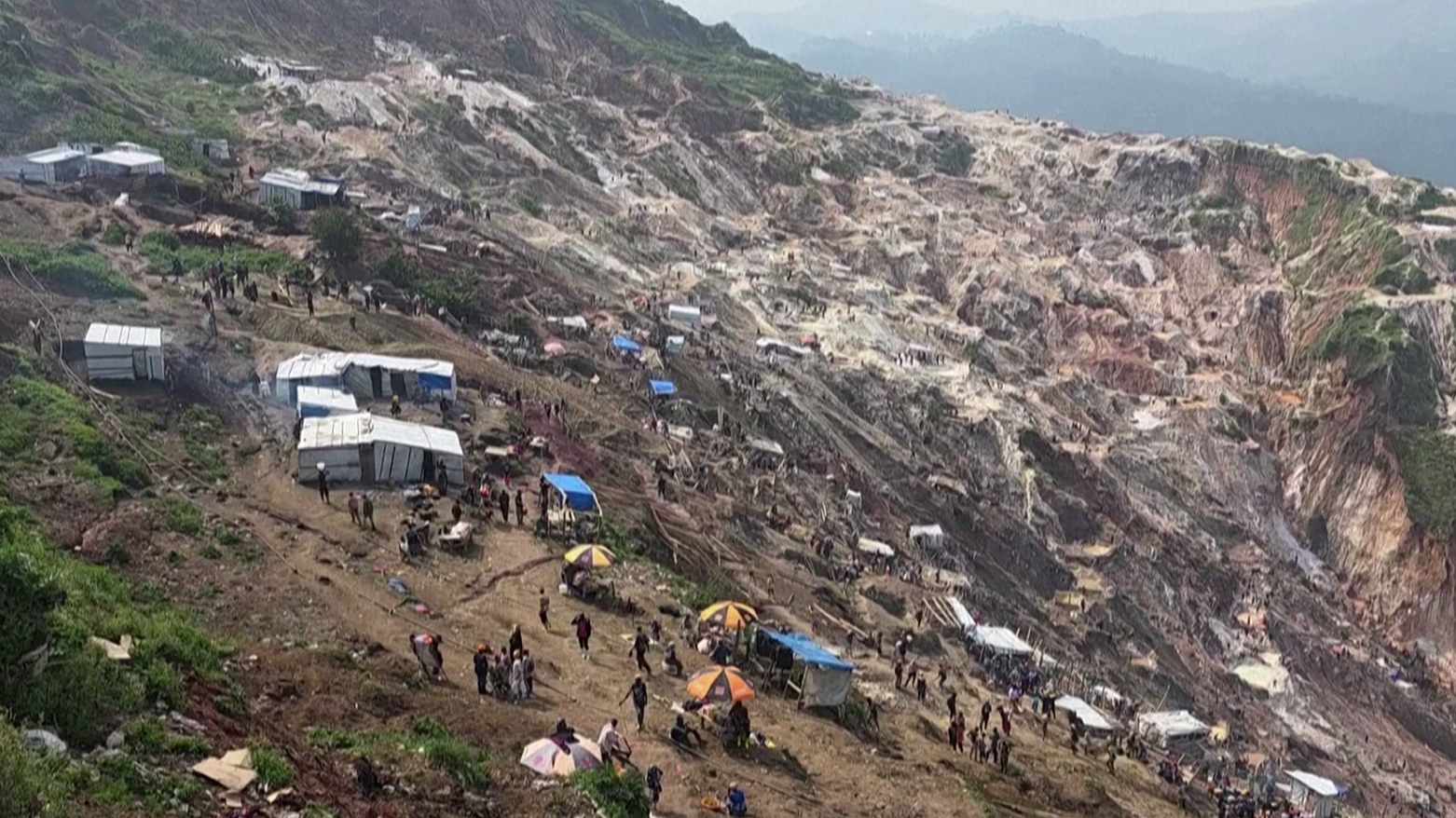
ERBIL (Kurdistan24) - At least 200 people were killed this week when heavy rains triggered a series of catastrophic landslides at a major coltan mining site in the eastern Democratic Republic of Congo, according to reports from rebel authorities on Saturday. The disaster occurred at the Rubaya mines in North Kivu province, a strategic and mineral-rich area currently under the control of the M23 insurgent group.
As reported by The Associated Press, the collapse took place on Wednesday when parts of a hillside gave way following a period of intense precipitation. Lumumba Kambere Muyisa, a spokesperson for the rebel-appointed governor of North Kivu, confirmed the scale of the loss in an interview with the agency, stating that the death toll has already surpassed 200.
He noted that the figure is expected to rise as many victims remain entombed under mud and debris and have yet to be recovered by search teams.
The humanitarian fallout from the event has overwhelmed local resources. Muyisa told The Associated Press that several survivors who sustained injuries were initially transported to three separate health facilities in the town of Rubaya.
Plans were in place on Saturday for ambulances to begin transferring the most severely wounded to Goma, the provincial capital located approximately 50 kilometers away.
In response to the crisis, the rebel administration has temporarily suspended all artisanal mining activities at the site and ordered the relocation of residents who had established makeshift shelters in the immediate vicinity of the hazardous mining zones.
Details provided by Agence France-Presse (AFP) further clarified the timeline of the disaster, noting that the primary collapse occurred Wednesday afternoon, followed by a second significant landslide on Thursday morning.
Witnesses on the ground described a harrowing scene of environmental collapse. Franck Bolingo, a freelance miner who witnessed the event, told Agence France-Presse that the rain was immediately followed by a slide that "swept people away," burying some in the open and leaving others trapped within the deep mining pits.
The M23-appointed governor of North Kivu, Eraston Bahati Musanga, also addressed the situation in comments to Agence France-Presse, confirming that while some bodies had been retrieved, the total number of deceased remained difficult to quantify with precision but suggested a significant loss of life.
Despite the evident danger and the official suspension of work, Agence France-Presse video footage from Friday showed dozens of scavengers continuing to shovel through the vast site. Men and women, some equipped only with tank tops and rubber boots, were seen sifting through the pits in a desperate search for minerals.
The Rubaya mining region is one of the world’s most critical sources of tantalum, a rare metal extracted from coltan. According to The Associated Press, the area accounts for more than 15 percent of the global supply of the mineral.
Tantalum is an essential component in the high-tech manufacturing sector, utilized extensively in the production of smartphones, laptops, computers, and aircraft engines.
Agence France-Presse noted that some estimates place the region’s contribution to the global coltan market as high as 30 percent, while the wider eastern Congo is believed to contain between 60 and 80 percent of the world’s total coltan reserves.
The M23 group, which maintains control over these lucrative resources, seized Rubaya in May 2024. The insurgents have since established an administration parallel to the Congolese state to regulate and exploit the mining operations.
United Nations experts cited by Agence France-Presse estimate that the group generates approximately $800,000 per month from the mine through the imposition of taxes on the trade and transport of the mineral. This revenue is largely derived from a tax of seven dollars per kilogram on the production and sale of coltan.
The geopolitical dimensions of the disaster are complex. United Nations experts have accused Rwanda of using the M23 militia to siphon off the mineral wealth of the Democratic Republic of Congo, an allegation that Rwanda has consistently denied.
The Associated Press noted that while a U.S.-brokered deal was signed between the Congolese and Rwandan governments, and negotiations between the rebels and the central government are theoretically ongoing, fighting continues to rage across several fronts in the east.
This persistent violence has claimed numerous civilian and military casualties and hindered the establishment of a stable regulatory framework for the mining industry.
Eastern Congo has remained in a state of near-constant crisis for decades, driven by the competition for its vast reserves of gold, tin, and coltan. The Associated Press reported that the various overlapping conflicts have created one of the world’s largest humanitarian emergencies.
More than seven million people are currently displaced within the country, including 100,000 individuals who have been forced to flee their homes since the beginning of this year alone. The insecurity has prompted several international mining firms to temporarily halt their operations in the eastern provinces as the M23 continues its territorial expansion.
For the miners in Rubaya, the risks of the trade are compounded by the lack of formal safety standards in artisanal pits.
Olivier Zinzabakwira, a miner who spoke to Agence France-Presse, recounted a narrow escape from a pit during the Wednesday landslide. His testimony underscores the precarious nature of life for the scavengers who risk their lives in unregulated mines to meet the global demand for electronics components.
The United States has maintained an active role in the region's diplomacy, not only to mitigate the humanitarian crisis but also to secure strategic interests. The deal between Congo and Rwanda, facilitated by Washington, is intended to open up access to critical minerals for the U.S. government and American corporations.
However, the events in Rubaya this week illustrate that the benefits of this high-level diplomacy have yet to reach the local population, who continue to face the dual threats of military violence and environmental catastrophe.
As search efforts continue under the mud in North Kivu, the international community is once again confronted with the human cost of the "coltan chain." The 200 deaths reported by rebel authorities mark a grim milestone in the exploitation of Congo’s natural resources.
With search operations ongoing and the proximity of residential shelters to unstable hillsides, the final toll of the Rubaya landslides remains a subject of grave concern for both local officials and international monitoring groups.