Iraqi Environmental Watchdog Warns Tigris River is Poisoned, Threatening Health of Millions
An environmental watchdog says the Tigris contains hazardous organic pollutants threatening public health in Baghdad, Wasit, Maysan, and Basra, warning the river has become a dumping ground and calling for urgent action.
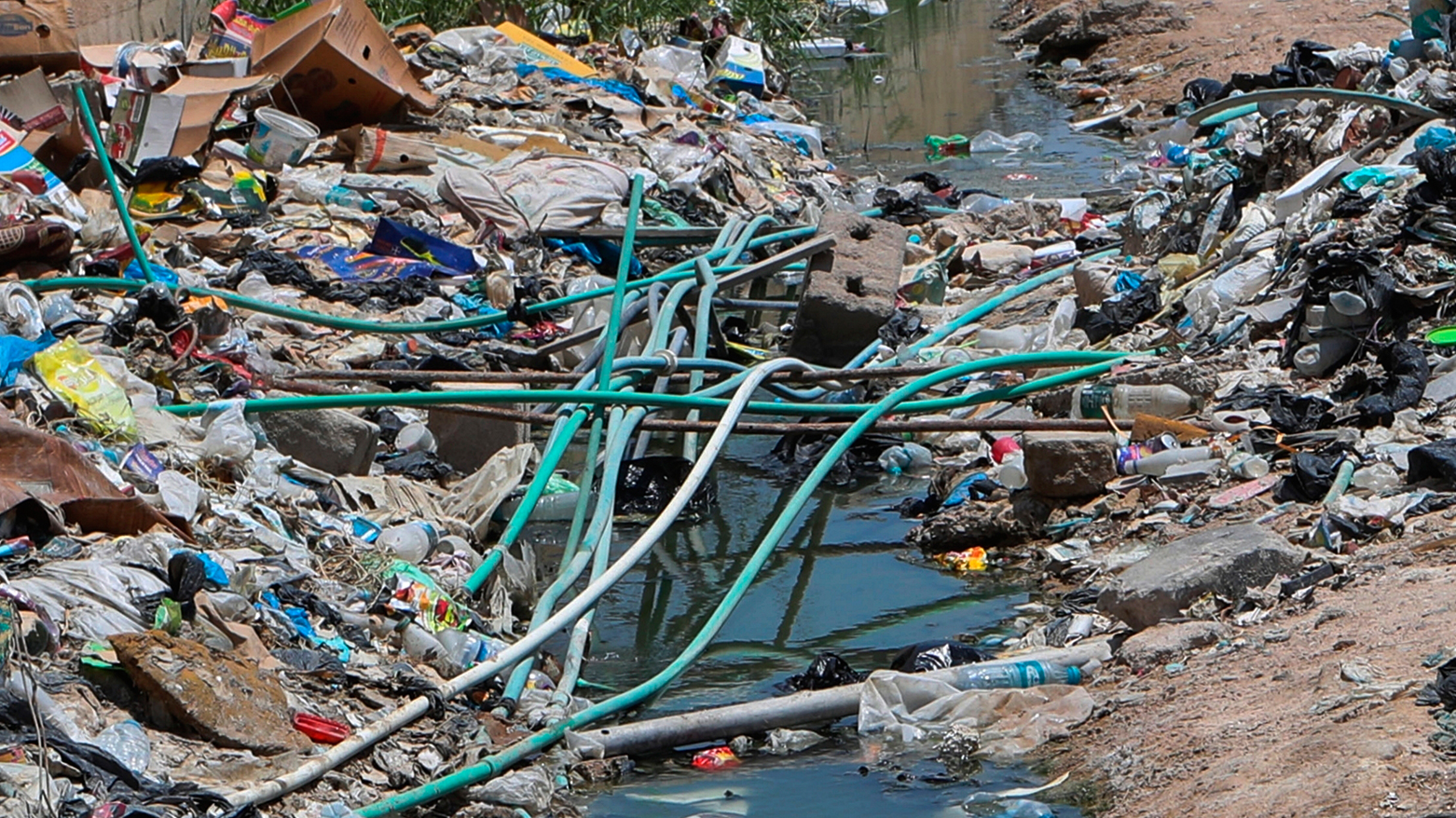
ERBIL (Kurdistan24)- From the heart of the capital to the southern plains, a silent current is carrying more than water through the Tigris—an invisible chain of toxic substances now described as a direct threat to the health of millions.
The Iraq Green Observatory issued an urgent environmental warning regarding severe contamination in the Tigris River, saying the water contains “very dangerous organic materials” that threaten public health across four major Iraqi provinces: Baghdad, Wasit, Maysan, and Basra.
In a statement released on Saturday, the observatory said that “Baghdad, Wasit, Maysan, and Basra depend on the Tigris River, which contains extremely hazardous organic pollutants—industrial and agricultural—most notably polychlorinated biphenyls, phthalates (DEHP), and volatile organic compounds (VOCs).”
It explained that these substances “cause serious health damage, including cancer, endocrine disorders, and liver and kidney damage, in addition to polluting the ecosystem,” stressing that they are difficult to filter or remove through existing water treatment stations.
The observatory added that the river’s water “has become heavily polluted, with contamination starting in the capital and extending to the other provinces, which also contribute to rising pollution levels, but to a lesser extent.”
It warned that this contamination “has a major impact on human health and on other living organisms.”
The Iraqi environmental watchdog also revealed that “one of the ministries recently issued a report evaluating water quality levels in Baghdad, based on directives from higher authorities.” It said that after the report was completed and submitted, it was withheld because its findings showed “catastrophes that cannot be disclosed” regarding Tigris water, which is used as a primary source for daily human consumption.
Calling for urgent action, the observatory said it is essential to find “a solution to this issue as quickly as possible, after the Tigris has turned into a ‘dumping ground for waste,’ with the possibility of preserving what remains of its water so that it can once again be a main source suitable for daily consumption for residents of the capital and other provinces.”
On Jan. 25, 2026, Kurdistan24 reported severe environmental pollution in Baghdad’s al-Ma‘amil (Factories) district, where stagnant sewage water and waste heaps dominate the area.
Local government statistics cited in that report said pollution in the district had led to dozens of serious illnesses, most notably kidney failure, which has so far caused the deaths of more than fifty people.
Factories district, east of Baghdad, is home to more than 850,000 residents and spans twenty square kilometers. Despite its population size, it does not have a single hospital capable of meeting local health needs.
During Kurdistan24’s visit, Abu Ali, the father of a child suffering from kidney failure, said: “The water here is not fit for human use. Even animals cannot drink it. We have repeatedly appealed to the relevant authorities without any response. My son today suffers from kidney failure and bladder problems as a result of water pollution and inhaling gases emitted from the waste surrounding us.”
Civil activist Ali Kazem described the situation as catastrophic, saying: “We are facing a real disaster. Our organization has documented fifty-three cases of kidney failure recently, and we have carried out more than twenty-five surgical operations for patients from the area at the organization’s expense. The biggest shock came last month alone, when we lost four people who died from this disease.”
Pointing to sewage pools in residential areas, he said: “This lake you see is not natural. It is a sewage water accumulation coming out of homes, which has collected here due to the absence of proper sewage networks, turning it into a hotspot for epidemics and toxins.”
Kurdistan24 said attempts to contact relevant health authorities received no response.
As toxic compounds flow south through the Tigris, the warning from Iraq’s environmental watchdog echoes beyond riverbanks, framing a crisis that now spans provinces, ecosystems, and millions of lives.