Suicide Bomber From ISIS Targets Police Patrol in Aleppo, Killing Himself and an Officer
ISIS suicide bomber targets Aleppo police patrol, killing himself & one officer. Incident underscores Syria's persistent insecurity & human rights crisis amid fragmented power.
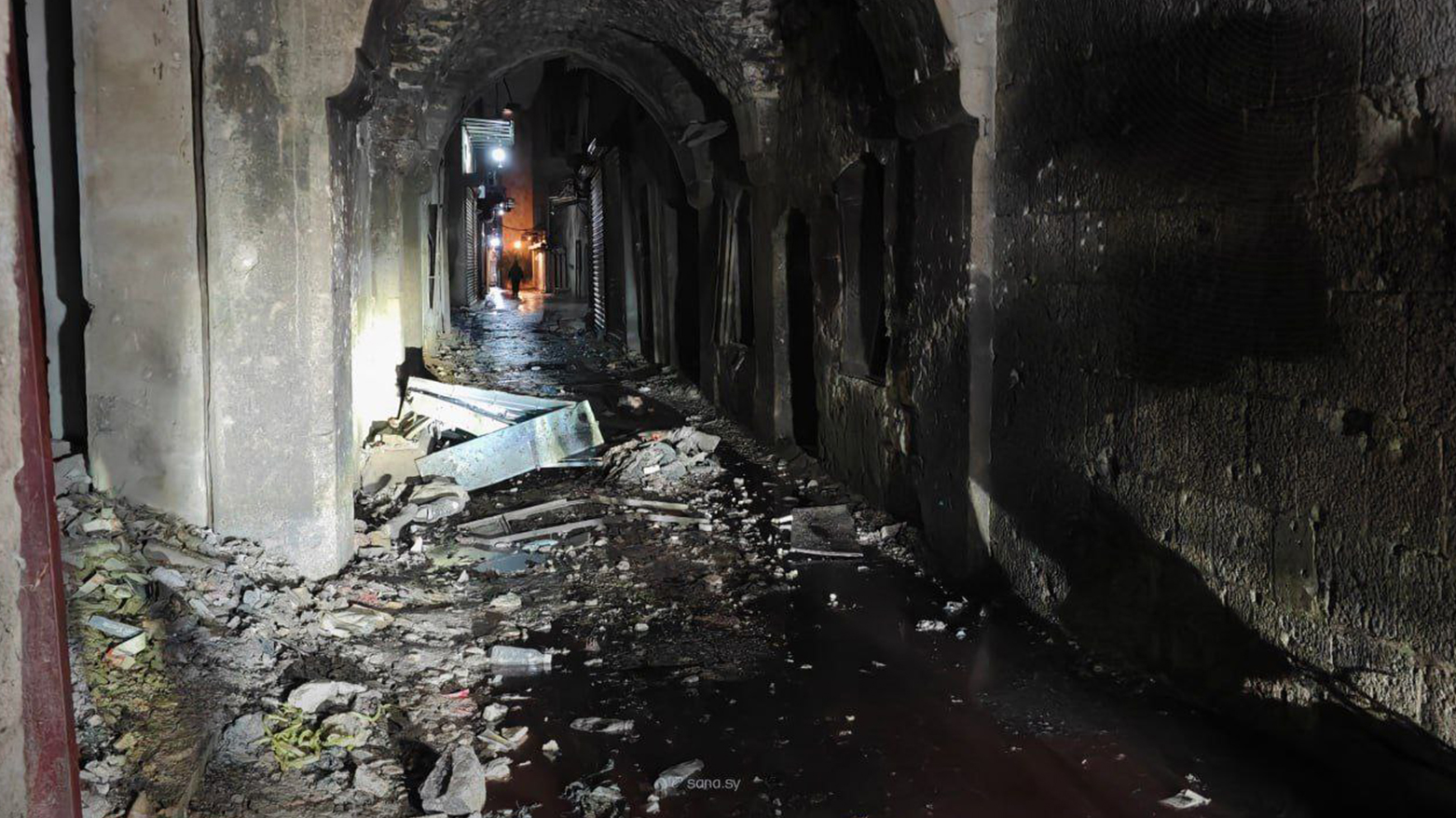
ERBIL (Kurdistan24) - A powerful explosion ripped through central Aleppo after a suicide bomber affiliated with ISIS detonated himself near a police patrol, killing himself and a member of the force, underscoring the continued volatility facing Syrian cities amid ongoing security breakdowns.
A violent explosion was heard in Aleppo, later confirmed to have resulted from an attack carried out by a suicide bomber linked to ISIS cells. The bomber targeted a police patrol in the Bab al-Faraj area of the city.
According to local sources cited by the Syrian Observatory for Human Rights (SOHR), the attacker detonated himself as the patrol passed through the area. The blast led to the death of the suicide bomber and one police officer. Information also indicated that others were wounded in the attack.
Ambulances rushed to the scene as security forces imposed heightened measures, including a temporary closure of the surrounding area. The injured were transferred to nearby hospitals amid a broader security alert.
Syrian state media agency SANA reported that security deployment was reinforced in Aleppo and that precautionary measures were implemented following the suicide bombing in the Bab al-Faraj neighborhood. According to SANA, the attack resulted in the death of a member of the Ministry of Interior and the injury of two others.
The attack comes against a backdrop of continued violence and human rights violations across Syria in 2025, despite political and media promises of a new phase following the fall of the former Syrian regime.
According to documentation by the Syrian Observatory for Human Rights, at least 9,272 people were killed across Syria during 2025. Among them were 7,087 civilians, including 504 children and 550 women. The Observatory stresses that civilians have remained the most vulnerable group amid the absence of effective accountability and oversight mechanisms.
The Observatory’s report notes that more than a year after the fall of the previous regime, field realities did not reflect meaningful improvement in human rights protection. Violations continued in multiple forms, even as the actors and their labels changed. The nature of abuses and their consequences remained largely the same, with civilians bearing the greatest cost.
Throughout 2025, Syria experienced a complex transitional phase marked by the weakening of central authority in several areas and the rise of new local military and security formations. Despite changes in power structures, the Observatory documented no significant decline in the scale or frequency of violations. Instead, it reported the re-emergence of abuses in new forms, including extrajudicial killings, retaliatory violence, arbitrary arrests, and the imposition of authority through force.
Security fragmentation and the absence of effective judicial oversight created fertile ground for violations. Monitoring mechanisms weakened, and institutions tasked with civilian protection played a diminished role, deepening the country’s human rights fragility.
The Syrian Observatory’s documentation relies on a wide network of local activists, eyewitnesses, victims’ families, and cross-verified sources wherever possible. Incidents are only included once minimum credibility standards are met, including clear identification of time, location, nature of the violation, and suspected perpetrators. The Observatory acknowledges that actual violations may exceed documented cases due to access limitations and fear among witnesses.
During 2025, documented violations included extrajudicial killings and field executions, retaliatory and identity-based assassinations, arbitrary detention without legal warrants, torture and ill-treatment in detention centers leading in some cases to death, enforced disappearances, targeting of civilians and property through arson, looting, and destruction, abductions and sexual assaults affecting women from various communities, deaths caused by unexploded remnants of war, casualties resulting from military and security operations, and victims of attacks and bombings carried out by extremist group cells, including ISIS.
The Observatory noted that these violations followed a repetitive and systematic pattern, reflecting the absence of effective deterrence and the continuation of impunity.
Of the 7,087 civilian victims documented in 2025, 6,033 were men and young males, 550 were women, and 504 were children.
The report also highlighted a transformation in the nature of violence, shifting from a centralized, organized model to a fragmented local pattern driven by revenge, overlapping security interests, and personal disputes. This shift complicated accountability and expanded the circle of victims, particularly in areas lacking institutional oversight.
Despite the closure of some detention facilities associated with past abuses, the Observatory documented similar practices in newly established centers, including physical and psychological torture, medical neglect, denial of family contact, and deaths resulting from deteriorating detention conditions.
The Observatory identified mounting challenges to documentation efforts, including threats to sources and witnesses, restricted access to certain areas, campaigns aimed at undermining credibility, lack of official cooperation, and security constraints on information gathering. Despite these obstacles, it continues its work in defense of victims’ right to truth and memory.
In its concluding assessment, the Observatory stated that political change in Syria has yet to translate into tangible human rights protections. It warned that continued violations pose a serious threat to any future path toward justice and stability, emphasizing that documentation is intended to prevent repetition, preserve collective memory, and combat impunity.
The Observatory issued recommendations calling on authorities and de facto governing structures to end extrajudicial killings, arbitrary detention, and enforced disappearances, ensure humane detention conditions, protect civilians and their property, and hold perpetrators accountable. It urged non-state armed groups to comply with international humanitarian law and refrain from targeting civilians. It also called on the international community and United Nations to strengthen independent monitoring and accountability mechanisms, support documentation efforts, and ensure that human rights and accountability remain central to any political process concerning Syria’s future. Media outlets and civil society organizations were urged to maintain responsible coverage and promote human rights awareness.
The suicide bombing in Aleppo adds to a long list of deadly incidents that continue to claim lives across Syria, reflecting a security environment still shaped by fragmentation, impunity, and the persistent threat posed by extremist violence.