UK, France Strike Suspected ISIS Weapons Facility Near Palmyra
The operation comes amid continued Western concern that instability in Syria, coupled with reduced international focus, could allow ISIS to exploit security gaps.
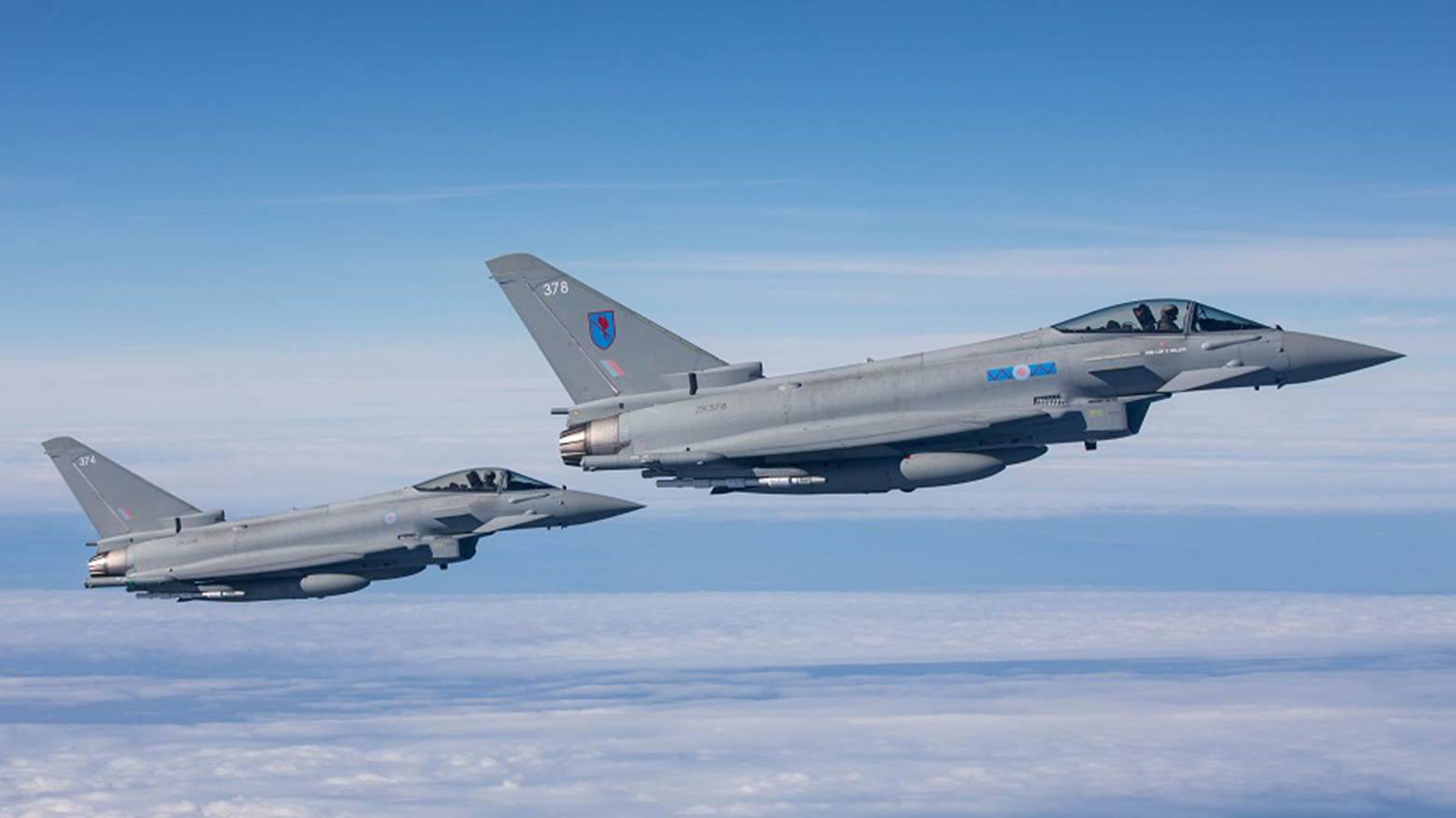
ERBIL (Kurdistan24) — Britain and France carried out joint airstrikes overnight targeting an underground facility in central Syria believed to have been used by the Islamic State (ISIS) group to store weapons and explosives, the British Ministry of Defense said on Sunday.
In a statement, the ministry said Royal Air Force aircraft participated in a coordinated operation with French forces against what it described as an ISIS site north of the ancient city of Palmyra. The facility was assessed to have been occupied by ISIS militants and was likely used as a weapons cache.
“The area around the facility is devoid of any civilian habitation,” the statement said, adding that there was no indication the strike posed a risk to civilians.
The operation highlights ongoing international efforts to suppress ISIS activity in Syria, years after the group’s territorial defeat. While ISIS lost control of its self-declared “caliphate” in 2019 following a US-led coalition campaign, it has continued to operate as an insurgent force, particularly in Syria’s vast and sparsely populated desert regions stretching from Homs to Deir ez-Zor.
These areas have provided cover for ISIS cells to regroup, conduct ambushes, and maintain logistical networks, including arms storage sites such as the one targeted in the latest strikes.
Western militaries and Syrian Forces have repeatedly warned that the group remains capable of launching lethal attacks despite its diminished strength.
Palmyra, located in Syria’s central desert and home to world-renowned UNESCO-listed ruins, has long been a strategic and symbolic target for ISIS. The city fell to the group twice during the height of the Syrian conflict, and militants carried out widespread destruction of ancient temples and monuments, drawing international condemnation.
Security concerns around Palmyra resurfaced last month when the United States said a lone ISIS gunman attacked American personnel in the area, killing two US soldiers and a US civilian.
In response, US forces said they conducted strikes against dozens of ISIS targets across Syria as part of a broader effort to degrade the group’s operational capacity.
In a separate but related security development, Syrian state media reported that an unidentified missile struck an area near Mazzeh Military Airport in the Syrian capital, Damascus, on Saturday, underscoring persistent volatility in one of the city’s most tightly controlled zones.
According to the official SANA news agency, a security source said the projectile landed in the vicinity of the airport without causing casualties or material damage, noting that authorities were still working to determine the nature and origin of the explosion.
Residents of the Mazzeh district said they heard a loud blast, triggering renewed unease among locals who have grown accustomed to intermittent security incidents in the area. The latest explosion followed another incident earlier this week, when a blast was heard near the same location on Monday. Syrian officials at the time attributed the sound to “military exercises,” offering no further clarification.
Syrian authorities have not indicated whether the two incidents are connected, adding to speculation surrounding a pattern of unexplained explosions around the military airport. Similar incidents have been reported repeatedly in recent months.
On December 9, SANA cited a military source as saying that the surroundings of Mazzeh Military Airport were targeted by three unidentified projectiles, again without reports of casualties or damage.
Earlier, on November 14, a woman was injured when a rocket struck a residential house in the same area. State media said that the attack was carried out using rockets launched from a mobile platform, though no group or actor was identified as responsible. The lack of official attribution in these cases has fueled uncertainty about the source and intent behind the attacks.
Mazzeh is regarded as one of Damascus’s most strategically sensitive neighborhoods, hosting key military installations, security and intelligence facilities, as well as several diplomatic missions.
The military airport has long been linked to elite units of the Syrian armed forces, making the area a focal point for heightened security measures and a recurrent flashpoint amid Syria’s broader and ongoing instability.
The latest British-French operation comes amid continued Western concern that instability in Syria, coupled with reduced international focus, could allow ISIS to exploit security gaps.
Coalition officials have repeatedly stressed that sustained military pressure is necessary to prevent the group from reconstituting and threatening both regional stability and international security.