Iranian Revolutionary Guard Launches Major Military Drills Off Gulf Coast Amid Rising US Tensions
Iran’s Revolutionary Guard has launched major coastal drills involving missiles and drones as the U.S. reinforces its naval presence with the USS Gerald R. Ford, amid renewed nuclear tensions and ongoing indirect talks.
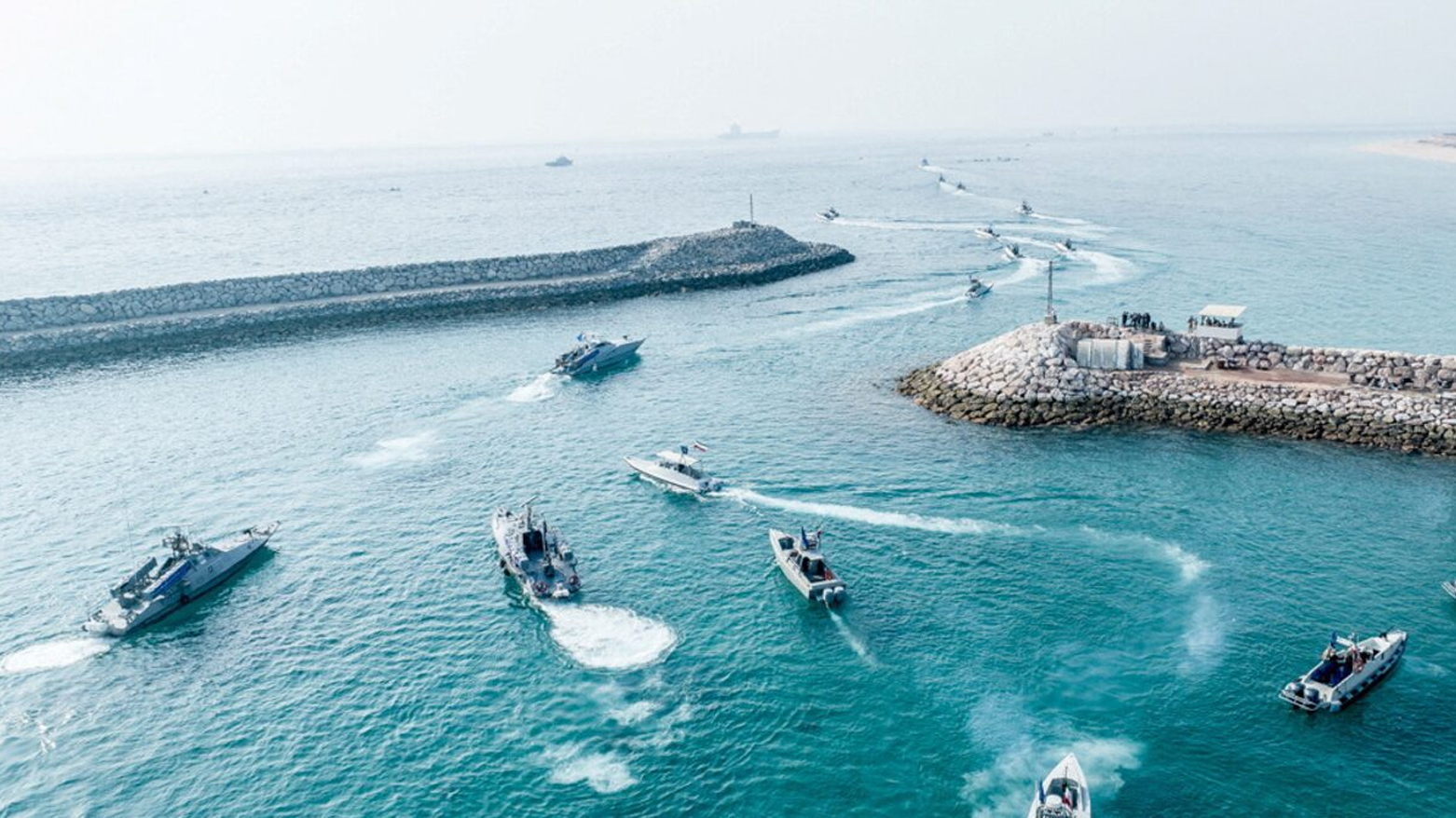
ERBIL (Kurdistan24) - The Islamic Revolutionary Guard Corps has begun large-scale military exercises along Iran’s southern coastline overlooking the Gulf, according to Iranian state television, as tensions escalate between Tehran and Washington.
State media reported that the drills, focused on southern coastal areas and nearby islands, involve missiles, artillery, drones, special forces units, and armored vehicles.
The exercises come as the United States increases pressure on Iran and maintains the possibility of military strikes. Iranian officials have warned they would respond “forcefully” to any U.S. attack, regardless of its scale, following remarks by U.S. President Donald Trump that he is considering limited strikes against the Islamic Republic.
U.S. carrier deployment
The developments coincide with a significant U.S. naval buildup in the region. The aircraft carrier USS Gerald R. Ford arrived Monday at the U.S. naval base in Souda Bay on the Greek island of Crete.
The carrier’s deployment places it alongside the USS Abraham Lincoln and more than a dozen other U.S. warships already stationed in the region, including destroyers and littoral combat ships.
The arrival of the USS Gerald R. Ford marks a rare instance of two U.S. aircraft carriers operating in or near the Middle East simultaneously. Its deployment comes amid heightened tensions over Iran’s nuclear program and follows previous U.S. airstrikes on Iranian targets during last year’s regional escalation.
Nuclear talks and diplomatic track
The military movements unfold alongside diplomatic efforts. On Tuesday, Iran and the United States concluded a second round of indirect talks held in Switzerland with Omani mediation. Further discussions are scheduled for Thursday, confirmed by Iran and Oman, though not officially by Washington.
The European Union, which has been sidelined in the recent talks, has called for a diplomatic resolution.
Tensions have remained high since the U.S. withdrawal from the 2015 nuclear agreement during Trump’s first term, after which Iran resumed uranium enrichment at higher levels. Washington has expressed concern that Tehran’s nuclear activities could move toward weapons capability, while Iran insists its program is for peaceful purposes.
The simultaneous military exercises by Iran and expanded U.S. naval deployments underscore a volatile moment in the region, where diplomatic negotiations continue in parallel with military posturing.