Türkiye Urges Europe to Shoulder Greater Security Burden Amid Shifting U.S. Priorities
Foreign Minister Hakan Fidan says Ukraine war and U.S. strategic recalibration leave Europe no choice but to take primary responsibility for its own defense.
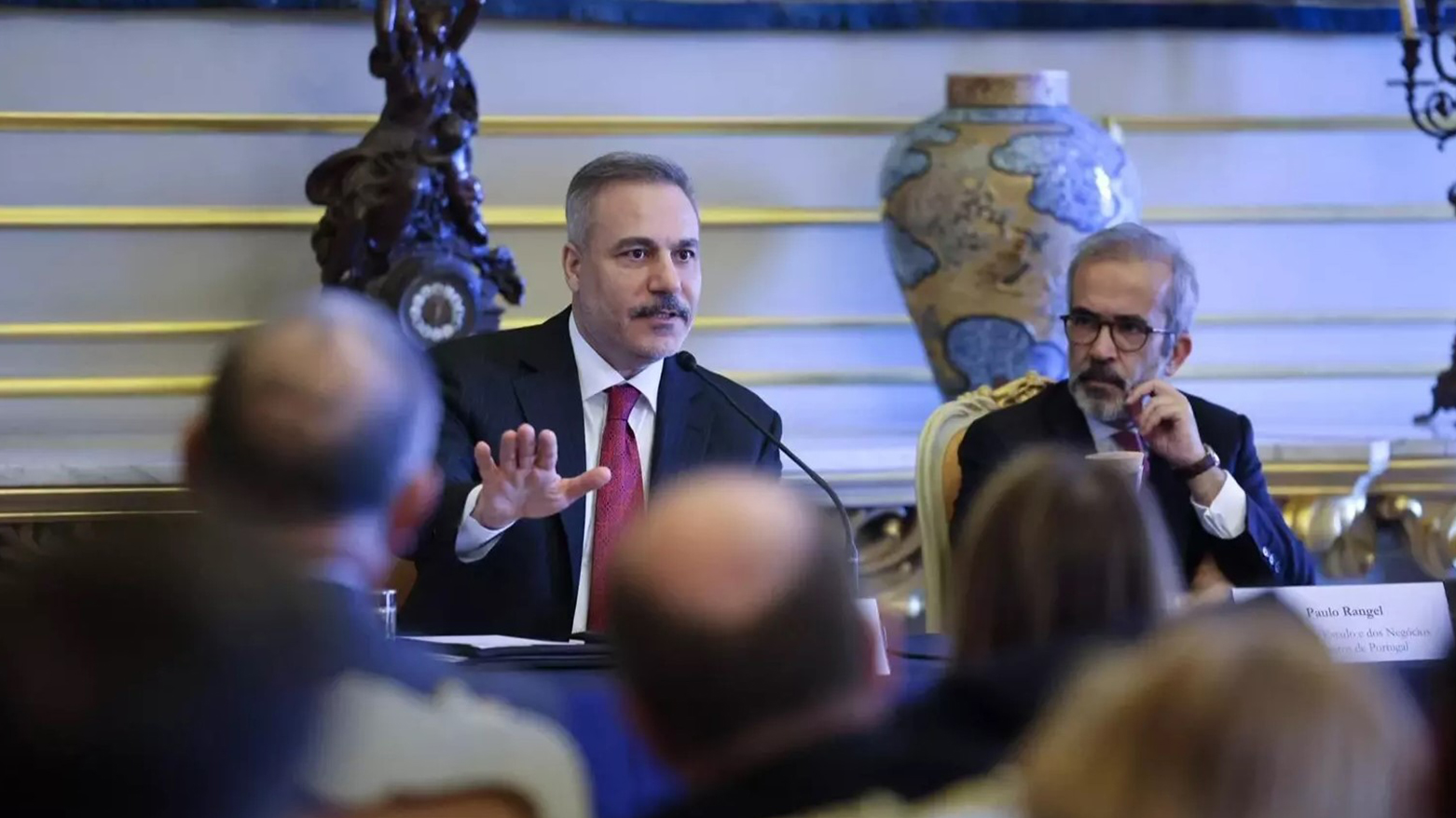
ERBIL (Kurdistan24) — NATO member Türkiye on Monday called on European countries to assume greater responsibility for their own security, arguing that reliance on the United States is no longer sustainable amid the ongoing war in Ukraine and changing U.S. strategic priorities.
Speaking at a conference in Lisbon, Turkish Foreign Minister Hakan Fidan said the current geopolitical environment leaves Europe with limited options.
“The war in Ukraine and the shifting strategic priorities of the United States leave Europe no choice but to assume greater responsibilities for its own security,” Fidan said, according to a statement sent to AFP by a Turkish foreign ministry source.
Fidan stressed that Europe’s security challenges are collective and cannot be outsourced. “As Europeans, we are all in the same boat. Ensuring the security of our own home is an existential necessity.
We cannot delegate our security to others,” he said, underscoring Ankara’s view that Europe must develop greater strategic autonomy.
At the same time, the Turkish foreign minister criticized the European Union for sidelining Türkiye despite its role as a key NATO ally and a long-standing candidate for EU membership.
Fidan said Ankara has been kept at arm’s length from the bloc’s emerging security and defense mechanisms, despite formal commitments to cooperate with non-EU partners.
“Despite its formal commitments to cooperate with non-EU allies, Türkiye has been excluded for years from the EU’s security and defense frameworks,” he said.
Fidan attributed this exclusion to internal divisions within the EU, arguing that “the narrow national agendas of a few member states have taken Europe’s broader strategic interests hostage.”
Türkiye has been a member of NATO since 1952 and possesses the alliance’s second-largest military, positioning it as a central actor in European and transatlantic security. However, Ankara’s relationship with the European Union has long been strained.
Although Türkiye was granted EU candidate status in 1999, accession talks have largely stalled over political disputes, human rights concerns, and tensions with several EU member states.
The war in Ukraine has intensified debates within Europe over defense spending, military readiness, and strategic autonomy, particularly as the United States signals a desire for its allies to take on a greater share of the security burden.
Washington’s growing focus on competition with China and domestic priorities has reinforced European concerns about long-term reliance on U.S. security guarantees.
Within this context, the EU has sought to strengthen its own defense initiatives, including joint procurement, defense industrial cooperation, and rapid reaction capabilities.
Türkiye, however, has remained largely excluded from these frameworks despite its military capabilities and strategic location bridging Europe, the Middle East, and the Black Sea region.
Ankara argues that this exclusion weakens Europe’s overall security architecture at a time of heightened instability, while critics within the EU contend that political differences and unresolved disputes make deeper security integration with Türkiye difficult.
Fidan’s remarks reflect Türkiye’s broader push to reassert its strategic relevance and press Europe to adopt a more inclusive and self-reliant approach to regional security.
In parallel, U.S. President Donald Trump, currently serving his second, non-consecutive term as the 47th President (having taken office on January 20, 2025), has successfully pressured NATO allies to significantly increase their defense spending commitments.
This effort culminated in the June 2025 NATO Summit in The Hague, where member states agreed to a new, higher target of 5% of GDP for overall defense and security spending by 2035.
The new target follows a two-tiered formula: 3.5% of GDP for core military expenditures, including personnel, operations, equipment, and maintenance, and 1.5% of GDP for security-related areas such as cybersecurity, critical infrastructure, and logistics.
The previous target had been a minimum of 2% of GDP for core defense spending, which not all members had achieved by 2024, with only 22 of the 32 members meeting or exceeding it at that time.
Trump has described the agreement as a “big win for the U.S., Europe and Western civilization” and emphasized a preference for allies to use increased defense budgets to procure U.S.-made military equipment.
While most nations accepted the new commitments, some, including Spain and Slovakia, have expressed concerns about meeting the 3.5% core spending threshold.
The agreement underscores Washington’s insistence on greater European burden-sharing and adds weight to arguments, such as those advanced by Türkiye, that Europe must take primary responsibility for its own security.