Trump Says Venezuela to Turn Over 30-50 M Barrels of Oil to U.S., Effective Immediately
Trump ordered the transfer of up to 50 million barrels of Venezuelan oil to the U.S. and asserted control over proceeds following Maduro's capture, aiming to rebuild infrastructure with U.S. firms.
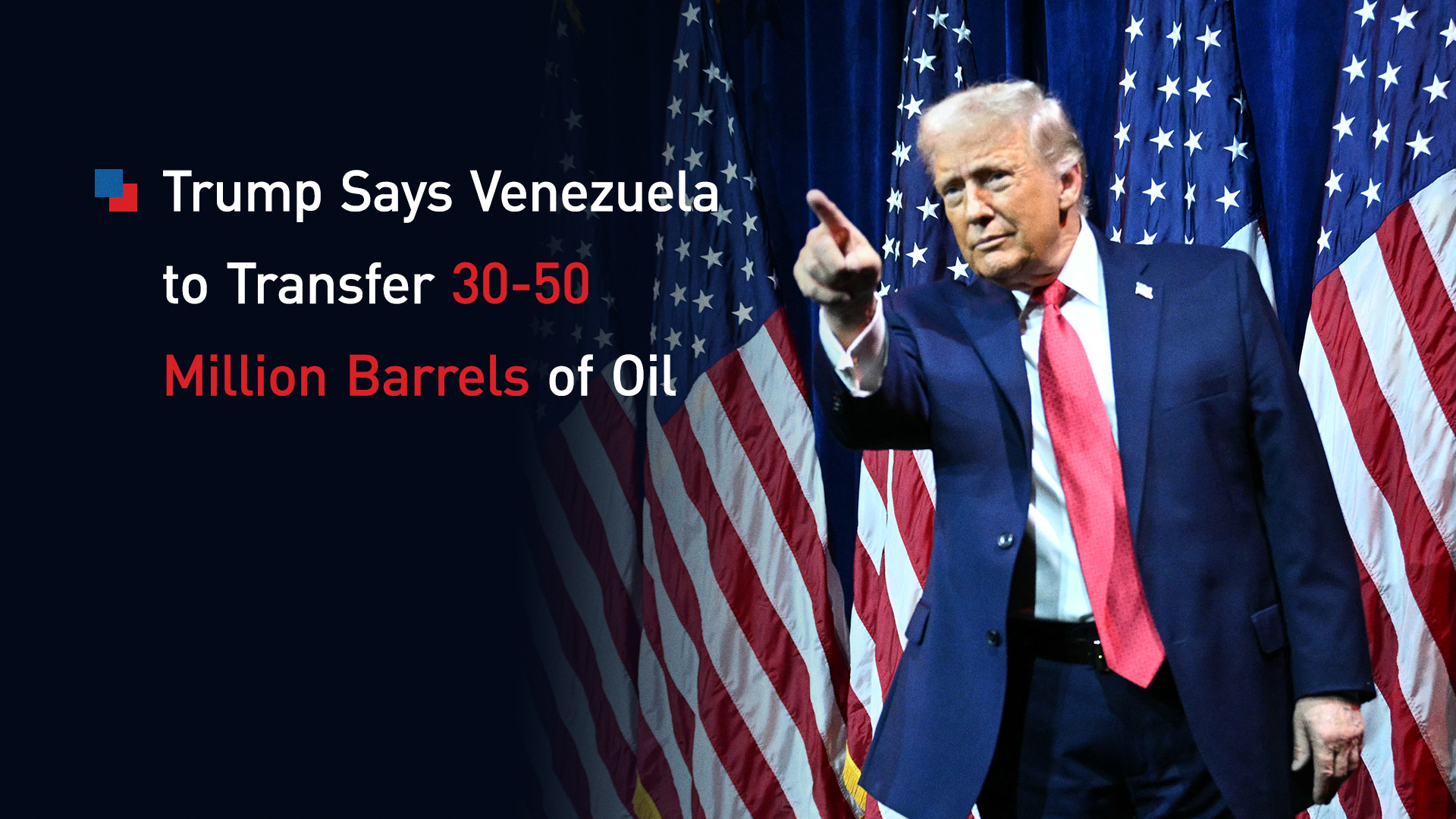
ERBIL (Kurdistan24) — President Donald Trump announced on Tuesday that interim authorities in Venezuela will immediately transfer between 30 million and 50 million barrels of oil to the United States government, a directive issued just days after U.S. military forces captured Venezuelan President Nicolás Maduro in a raid on the capital.
The move signals a pivotal shift in Washington’s approach to the South American nation, with the White House asserting direct control over the country's vast energy resources while U.S. forces maintain security in Caracas.
The transfer involves "high-quality" sanctioned oil that will be transported via storage ships directly to unloading docks in the United States.
President Trump, speaking to the MS NOW network and posting on his Truth Social platform, stated that the oil would be sold at market prices. He asserted that he would personally control the proceeds to ensure the funds are "used to benefit the people of Venezuela and the United States."
With oil trading at approximately $56 a barrel, the announced transaction could be valued at as much as $2.8 billion.
According to data from the U.S. Energy Information Administration, the volume of the transfer represents roughly two and a half days of total U.S. oil consumption.
The announcement had an immediate impact on global markets, with crude prices extending losses on Wednesday. Analysts noted that the shipment might ease supply concerns, though the broader outlook suggests continued volatility.
"Keeping the Oil"
In his Tuesday interview with MS NOW host Joe Scarborough, President Trump explicitly distinguished his strategy in Venezuela from the U.S. invasion of Iraq under former President George W. Bush.
"We’re going to keep the oil," Trump said, emphasizing that the failure to secure petroleum resources was a flaw in previous interventions. "We’re going to rebuild their broken-down oil facilities, and this time we’re going to keep the oil."
To execute this strategy, the President has tasked Energy Secretary Chris Wright with overseeing the transfer immediately.
Furthermore, the administration is mobilizing major American energy corporations to rehabilitate Venezuela’s degraded energy infrastructure.
Venezuela possesses more than 300 billion barrels of proven oil reserves—nearly quadruple those of the United States—yet production has plummeted from approximately 3.5 million barrels a day in the late 1990s to roughly 800,000 barrels a day recently, according to the energy analytics firm Kpler.
The White House is organizing a high-stakes meeting on Friday with executives from top oil companies, including Chevron, ConocoPhillips, and ExxonMobil.
The discussions are expected to focus on the potential for investing billions of dollars to restore operations in the country. While American firms have not yet confirmed specific plans to return, the administration has been pressuring Caracas to open the industry to U.S. investment and technical expertise.
Military Operation and Casualties
The resource transfer follows a lightning military operation conducted on Saturday, during which U.S. forces seized Maduro and his wife, transporting them to New York City to face federal charges related to narcotics trafficking and terrorism.
Maduro pleaded not guilty to the charges in a U.S. courtroom on Monday.
New details regarding the human cost of the operation have emerged. Venezuelan Attorney General Tarek William Saab reported that "dozens" of people were killed during the strike, describing the event as a "war crime."
Venezuelan officials specifically confirmed that at least 24 security officers died in the raid.
Additionally, the government of Cuba confirmed that 32 of its military and police officers, who belonged to the Revolutionary Armed Forces and the Ministry of the Interior, were killed while working in Venezuela.
The Pentagon acknowledged that seven U.S. service members were injured during the operation, sustaining gunshot wounds and shrapnel injuries. Five have returned to duty, while two remain in recovery.
In Caracas, the atmosphere remains tense. Following the strikes, President Trump warned that the U.S. is prepared to stage a "second and much larger attack" on the capital if necessary, asserting that the U.S. will effectively run the city until a safe political transition is established.
Political and Regional Fallout
The power vacuum in Caracas has led to a standoff between Washington and the remnants of the Maduro administration.
Delcy Rodríguez, the acting president, publicly rejected Trump’s demands to overhaul the country in alignment with U.S. interests. In an address to agricultural and industrial officials on Tuesday, Rodríguez responded to U.S. pressure by stating, "My destiny is not determined by them, but by God."
The Venezuelan military also signaled its continued loyalty to the ousted government. An Instagram post from the armed forces featured a video tribute to the slain officers, declaring an "unwavering oath" to rescue their "legitimate President" and dismantle foreign terrorist groups.
Regionally, the operation has strained U.S. relations with neighboring countries. Colombian Foreign Affairs Minister Rosa Villavicencio announced she would file a formal complaint with the U.S. Embassy in Bogotá after President Trump threatened military action against Colombia for its role in the global cocaine trade.
Trump had characterized the Colombian president as a "sick man," a comment that drew a sharp diplomatic rebuke even as Colombia expressed a desire to continue cooperation on counternarcotics efforts.
The geopolitical reverberations extended to Europe, where leaders from France, Germany, Italy, Poland, Spain, and the United Kingdom joined Denmark in defending the sovereignty of Greenland.
This unusual diplomatic coordination came after President Trump renewed calls for an American takeover of the Danish territory, citing security interests—a stance that administration officials suggest marks a more expansionist foreign policy in the Western Hemisphere.
Domestic Reaction and Guyana Dispute
Back in Washington, the operation has elicited a mixed response.
A poll conducted by The Washington Post and SSRS indicates that the American public is divided, with approximately 40% approving of the capture of Maduro and a similar percentage opposed. However, 45% of Americans oppose the U.S. taking control of the Venezuelan government, with nine in ten respondents stating that the Venezuelan people should decide their own future.
President Trump expressed frustration that Democrats have not credited him for the operation's success, noting that the Biden administration had also placed a bounty on Maduro and indicted him on drug charges. "They’ve been after this guy for years and years and years," Trump told Republican lawmakers.
Complicating the regional energy landscape is the ongoing tension between Venezuela and Guyana. ExxonMobil is currently developing a massive offshore oil deposit near Guyana, a project that previously prompted the Maduro government to claim sovereignty over the Essequibo region.
The integration of ExxonMobil into the U.S. strategy for Venezuela could reignite these territorial disputes, as Venezuelan officials have previously threatened to ban companies operating in Guyana from entering the Venezuelan market.
As markets reacted to the news, oil prices dipped, and equity markets in Asia fluctuated. While the influx of Venezuelan crude may provide short-term supply relief, analysts caution that the country's "creaking infrastructure" and political uncertainty pose significant hurdles to a sustained ramp-up in production.