Article 140 Cited as Kurdish Representatives Oppose Jalawla and Qara Tapa District Status Changes
Kurdish parties, activists, and MPs in Khanaqin on Feb. 23 formally opposed the Diyala Provincial Council’s elevation of Jalawla and Qara Tapa to district status, detaching multiple sub-districts. They cited Article 140 violations, procedural irregularities, and threats to local governance.
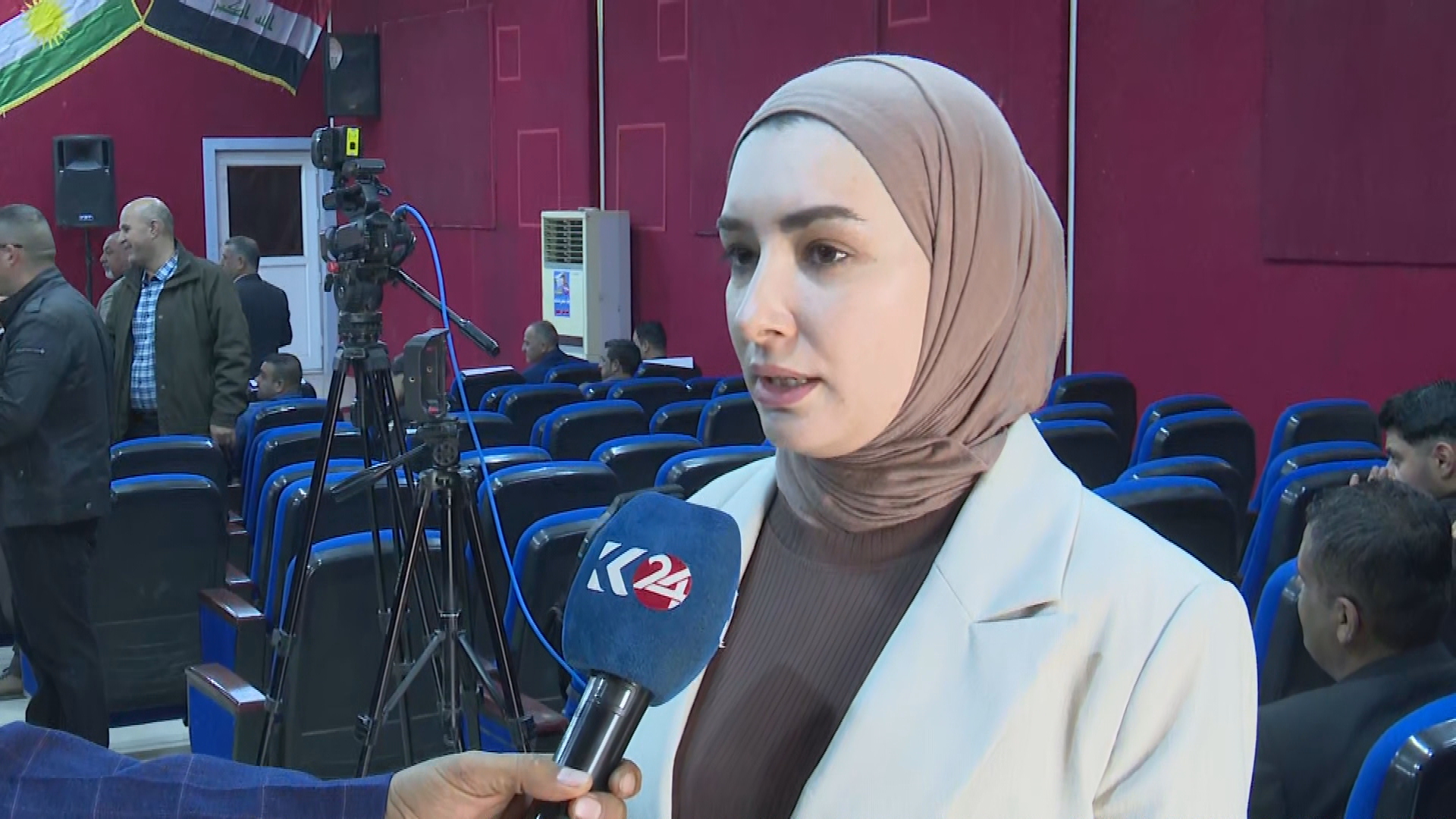
ERBIL (Kurdistan24) - Kurdish political parties, local activists, and civil society figures convened in Khanaqin District on Monday, February 23, 2026, to formally oppose recent administrative decisions by the Diyala Provincial Council that elevated the sub-districts of Jalawla (Gulala) and Qara Tapa to district status and detached multiple sub-districts from Khanaqin, officials said. The gathering aimed to express unified resistance to what participants described as a legal and constitutional violation affecting the administrative structure of Khanaqin.
According to Kurdistan24’s correspondent Hareem Jaf, the Diyala Provincial Council made the decision to turn Qara Tapa into a district and annex the Jabara sub-district last year, during a period when Kurdish representatives were absent from the council.
Days ago, a similar decision was made regarding the Jalawla (Gulala) sub-district, which was elevated to district status and annexed the Sadiya sub-district. These measures have resulted in four sub-districts being administratively detached from Khanaqin District, raising concerns among residents and Kurdish political figures.
Nazik Ahmad, a member of the Iraqi Parliament representing Khanaqin, stated that the council’s decisions constitute both administrative and legal violations.
“This move by the Diyala Provincial Council is an administrative and legal violation. This decision was made without any agreement or joint study between the Provincial Council, the Diyala administration, and the Ministry of Planning; therefore, we strongly oppose it,” she told Kurdistan24.
Ahmad added that the council’s objective appears to be the downsizing of Khanaqin District and the hollowing out of its administrative framework.
She emphasized that altering Khanaqin’s borders and creating new sub-districts or districts constitutes a violation of the Iraqi Constitution, specifically Article 140, which governs Kurdistani territories oustide KRG's administartive control and prescribes procedures for resolving administrative and territorial disputes. “Until Article 140 is implemented, changing the administrative borders of those areas is illegal,” Ahmad said.
The parliamentarian noted that the legislative and oversight bodies have formally rejected these decisions and plan to address official correspondence to high-ranking Iraqi authorities to prevent their implementation. Ahmad previously opposed the elevation of Qara Tapa to district status, signaling a continuity of parliamentary resistance to unilateral administrative changes in the area.
The Khanaqin meeting brought together a range of Kurdish political parties, prominent local figures, and civil society activists to coordinate a formal response. According to the report, the participants are expected to issue a joint statement and hold a press conference declaring their official rejection of the Diyala Provincial Council’s decisions concerning both Qara Tapa and Jalawla sub-districts.
Observers noted that these administrative changes by the provincial council took place in the absence of Kurdish representatives, raising questions about local consultation and compliance with national procedures. The detachment of multiple sub-districts from Khanaqin District has been described by local actors as undermining the district’s governance and administrative capacity.
The administrative restructuring affects several sub-districts beyond the immediate cases of Jalawla and Qara Tapa. Last year, Qara Tapa’s elevation included the annexation of Jabara, while the recent decision concerning Jalawla incorporated Sadiya, resulting in four sub-districts being reallocated from Khanaqin.
Kurdish officials have raised concerns about the broader implications of these changes for local administration, service delivery, and representation in regional governance.
In addition to parliamentary engagement, Kurdish political parties and civil society activists have mobilized community support to press for the reversal of the council’s decisions. Local residents have expressed concerns over the potential administrative fragmentation of Khanaqin and the long-term impacts on municipal management, public services, and local governance structures.
The opposition in Khanaqin highlights ongoing sensitivities surrounding territorial administration in Iraq’s multiethnic governorates.
Article 140 of the Iraqi Constitution, which Kurdish officials cited in their objections, is designed to regulate Kurdistani territories and requires consultation, study, and joint decision-making prior to altering administrative boundaries. The parliamentarian emphasized that without full implementation of the constitutional provisions, unilateral modifications are considered legally invalid.
The meeting in Khanaqin is part of a broader effort by Kurdish political actors to assert oversight and maintain administrative integrity in areas with significant Kurdish populations.
The planned joint statement and press conference are intended to publicly reaffirm the legal position against the Diyala Provincial Council’s recent decisions and ensure that the concerns of local residents and political representatives are formally communicated to national authorities.
Kurdish parties, parliamentarians, and local activists convened in Khanaqin to formally reject the elevation of Jalawla and Qara Tapa sub-districts to district status and the administrative detachment of sub-districts from Khanaqin, citing violations of Article 140 and procedural irregularities.
Kurdistan24 correspondent Harem Jaff contributed to this report.