Iraq Shiite Bloc Faces Strategic Impasse as Maliki Candidacy Remains Contested
The Coordination Framework remains divided over Nouri al-Maliki’s candidacy for Prime Minister, with Monday’s meeting set to determine whether he withdraws, is replaced, or continues as a candidate.
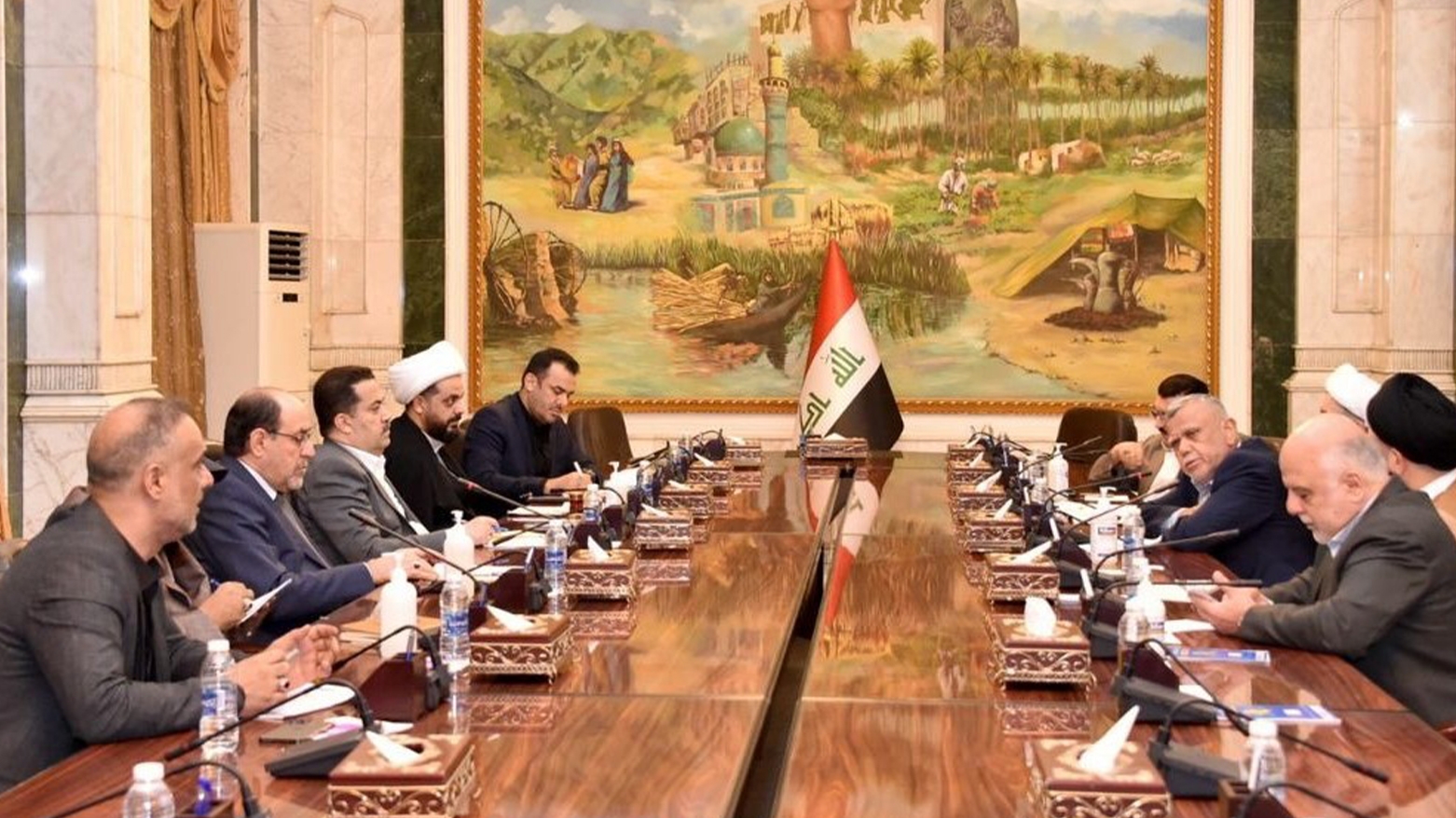
ERBIL (Kurdistan24) - Internal disputes within Iraq’s Coordination Framework Alliance are intensifying over whether Nouri al-Maliki should remain a candidate for the Prime Ministership, with no consensus reached ahead of a scheduled meeting on Monday evening. Leaders within the Shiite political bloc have reportedly engaged in a series of smaller tripartite and quadripartite discussions, signaling fractures within the alliance that have delayed full meetings and complicated the decision-making process.
Aqeel al-Rudaini, spokesperson for the Nasr (Victory) Alliance, stated that the Coordination Framework is divided into two camps: one opposed to Maliki’s candidacy from the outset, and the other insisting on his continuation. “In future meetings, the discussion will focus on whether Maliki remains or if another candidate is designated.
Any decision made must be by the consensus of the parties within the Coordination Framework,” al-Rudaini said, emphasizing that no new message from Grand Ayatollah Ali al-Sistani regarding Maliki has emerged, and that references to Sistani relate to the 2014 guidance against Maliki returning to the premiership.
Al-Rudaini described the current level of discord as unprecedented. He noted that the Coordination Framework had traditionally held regular Monday meetings, but last week’s session was canceled after multiple postponements.
The spokesperson also indicated that the next full meeting remains unscheduled, as ongoing internal negotiations continue among several leaders, including Humam Hamoudi, head of the Islamic Supreme Council of Iraq and a prominent figure within the alliance.
Meanwhile, the Hikma (Wisdom) Movement, led by Ammar al-Hakim, has publicly rejected claims of any four-way agreement to withdraw support for Maliki. Fahd al-Jubouri, a senior member of Hikma, told a press briefing that reports suggesting al-Hakim was negotiating to abandon Maliki’s candidacy were “untrue and fabricated.”
Al-Jubouri emphasized that any withdrawal must be sanctioned by the majority of Coordination Framework members and conducted without disrupting the unity of the alliance.
Al-Jubouri outlined three possible outcomes being considered: first, Maliki could voluntarily withdraw, clearing the path for a consensual replacement; second, the majority of the Coordination Framework could formally revoke his nomination; or third, Maliki could continue as a candidate, with the bloc collectively assuming responsibility for the political consequences.
He stressed that al-Hakim would not act unilaterally or enter side agreements, asserting that maintaining the cohesion of the alliance is a priority during this sensitive phase.
Sources within the Reconstruction and Development Alliance, led by Mohammed Shia’ al-Sudani, have indicated that Maliki’s candidacy faces significant opposition from within the Coordination Framework as well as regional and international concerns.
The alliance reportedly called for a reassessment of candidate designation mechanisms to reduce reliance on personal or partisan interests. Sudani has reportedly conveyed a direct message to Maliki, urging him to withdraw from consideration, and has signaled that if Maliki insists on continuing, he will formally declare his non-support.
Victoria Taylor, Director of the Iraq Initiative at the Atlantic Council, stated via the social media platform X that Sudani’s withdrawal of support effectively ends Maliki’s prospects for the premiership. She noted that Sudani’s prior backing of Maliki had been tactical, intended to safeguard specific political interests, rather than reflecting a strategic long-term partnership.
In parallel, Iraq’s National Security Advisor, Qasim al-Araji, oversaw an urgent security meeting under the direction of the Prime Minister. The session focused on evaluating regional and international developments and their potential impacts on Iraq’s internal stability.
Officials at the meeting emphasized the importance of adopting a preemptive and flexible approach to security, aiming to balance national interests with the country’s broader stability.
Al-Rudaini’s remarks underscored the ongoing paralysis within the Coordination Framework, noting that the internal division has led Shiite leaders to increasingly rely on smaller-scale meetings rather than convening the full bloc.
These tripartite and quadripartite sessions, according to the spokesperson, are a sign of the broader fragmentation within the alliance, complicating efforts to present a unified stance on the premiership.
The Coordination Framework’s internal divisions are further complicated by competing political strategies among its constituent parties. While the Nasr Alliance maintains that decisions must emerge from consensus, the Hikma Movement stresses that unilateral actions or clandestine agreements could undermine the bloc’s unity.
The competing approaches reflect broader tensions within Iraq’s Shiite political sphere over leadership succession and the alignment of regional and international expectations with internal party politics.
Al-Jubouri reiterated that any decision regarding Maliki’s candidacy must rest with the majority of the Coordination Framework, highlighting the responsibility that comes with choosing to maintain or withdraw support.
The spokesperson emphasized that the alliance remains committed to preventing internal fractures that could disrupt the Framework’s collective functioning during this critical period.
The upcoming Coordination Framework meeting, set for Monday evening, is expected to serve as the decisive forum for clarifying the bloc’s position on Maliki.
While the precise timing of subsequent meetings remains uncertain, sources indicate that leaders continue to explore various pathways to ensure a consensual outcome, reflecting the need to reconcile divergent positions while maintaining the alliance’s structural integrity.
The Reconstruction and Development Coalition has framed the review of candidate designation mechanisms as necessary to remove personal interests from the decision-making process.
According to sources, Sudani’s engagement with Maliki represents a tactical effort to secure alignment with the bloc’s broader priorities, signaling an intention to manage internal dissent without destabilizing the Coordination Framework.
The political environment within the Coordination Framework is further characterized by careful management of communications with influential figures and religious authorities.
Al-Rudaini’s statements clarifying the historical context of Grand Ayatollah Sistani’s position indicate an effort to prevent misinterpretation or the circulation of unverified claims regarding the Marjaiyah’s stance on Maliki’s candidacy.
The dispute over Maliki’s nomination occurs amid wider political maneuvering within Iraq’s Shiite community, where the allocation of the Prime Ministership remains a central issue.
The combination of internal division, tactical withdrawals, and negotiations among smaller groups reflects a complex interplay of factional interests, requiring delicate coordination to ensure that the bloc’s decision-making processes remain legitimate and broadly accepted.
Observers note that the internal deadlock has extended to the timing and conduct of meetings.
The Nasr Alliance spokesperson emphasized that the absence of a full Monday meeting last week was due to repeated postponements caused by disagreements within the bloc. Leaders continue to rely on ad hoc, smaller-scale discussions to maintain communication channels while seeking a path toward consensus.
The Coordination Framework’s internal discussions are taking place against a backdrop of heightened scrutiny from both regional partners and international observers.
The bloc’s approach to candidate selection, the timing of its meetings, and the methods used to resolve disputes are closely monitored, reflecting Iraq’s broader political environment in which internal decisions carry significant domestic and external implications.
The process for determining Maliki’s candidacy is expected to be shaped by the alignment of major parties within the Coordination Framework. While the outcome remains uncertain, sources indicate that the majority’s position will ultimately determine whether Maliki withdraws, a replacement candidate is designated, or his candidacy continues.
Leaders have emphasized that the decision will require careful coordination to avoid fracturing the bloc and to preserve the alliance’s operational cohesion.
The Coordination Framework’s deliberations are therefore central to the broader political trajectory in Iraq, as the Shiite bloc represents a significant constituency within the parliamentary system. The resolution of the Maliki candidacy question will influence the selection of the Prime Minister and, by extension, the composition and policy direction of the government.