Iraq’s FM Meets U.S. Special Envoy to Discuss Regional Security and Counter-Terrorism
Iraq’s Foreign Minister Fuad Hussein met with U.S. Envoy Thomas Barrack in Baghdad to review bilateral relations, counter-terrorism cooperation, and regional security developments, including Syria and Iran negotiations.
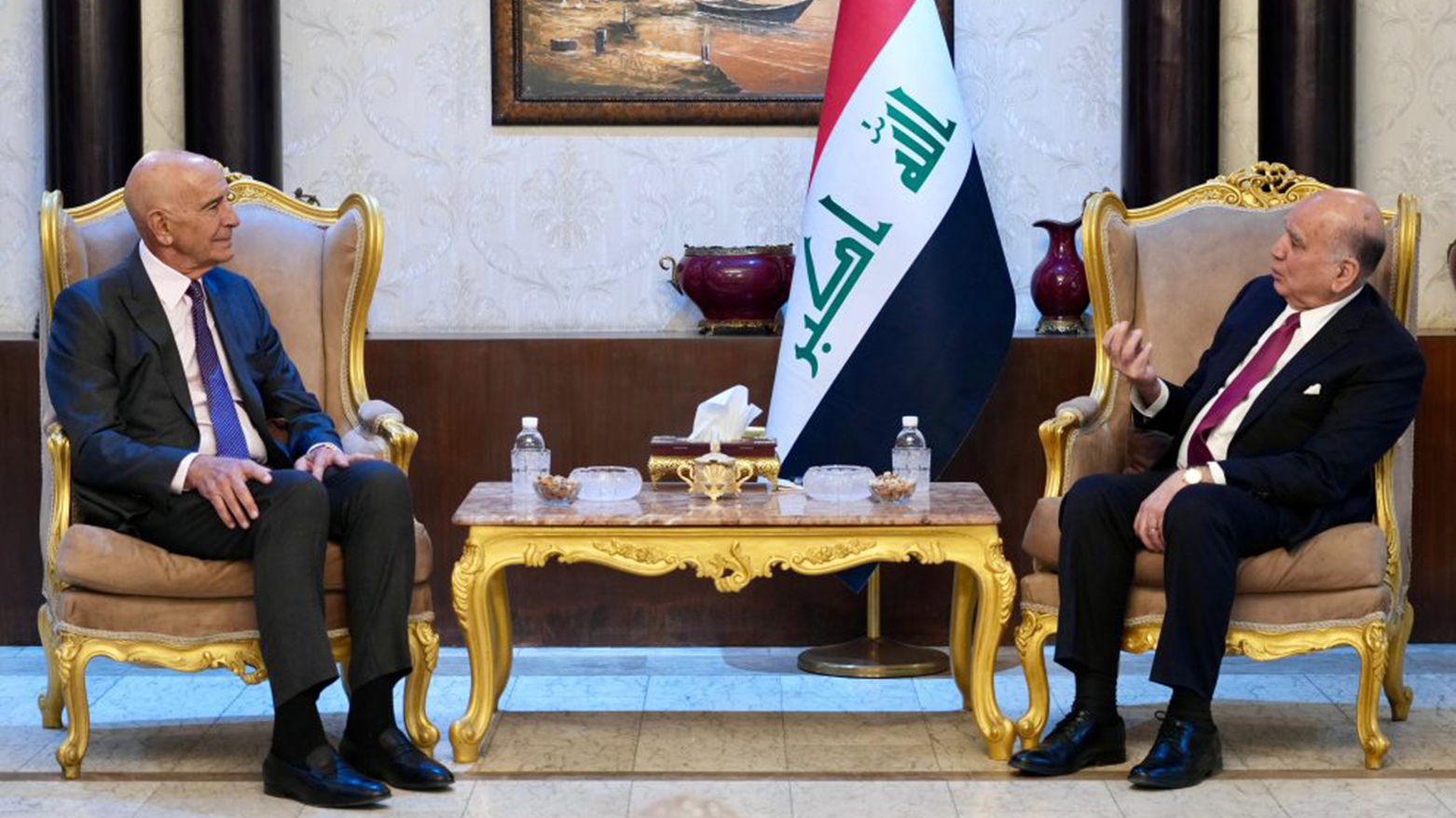
ERBIL (Kurdistan24) - Iraq’s Deputy Prime Minister and Foreign Minister, Fuad Hussein, met on Monday with U.S. Special Envoy for Syria Tom Barrack and his delegation in Baghdad to discuss bilateral relations, regional security developments, and ongoing government formation processes, officials said. The meeting focused on counter-terrorism cooperation, Iraq’s role in regional stability, and diplomatic engagement between the United States and Iraq.
During the session, both sides reviewed the developing relationship between Iraq and the United States, emphasizing the importance of continued coordination across multiple areas, particularly in counter-terrorism, according to the Foreign Ministry statement.
The U.S. delegation expressed appreciation for Iraq’s recent steps to transfer ISIS elements from detention centers abroad to Iraqi prisons, framing the move as a reinforcement of Iraqi sovereignty and legal responsibilities.
Minister Hussein confirmed that Baghdad continues to coordinate with several countries to repatriate their citizens involved in terrorism cases. He specifically praised the Turkish government’s agreement to receive Turkish nationals among these detainees.
The discussions also covered the agreement concluded between the Syrian Democratic Forces (SDF) and the transitional government in Syria, with both sides affirming support for its implementation, citing its impact on regional security and stability.
The meeting addressed ongoing negotiations between the United States and Iran. Minister Hussein underscored the danger of potential conflict and its regional consequences, emphasizing Iraq’s preference for a peaceful resolution.
He highlighted Iraq’s support for the upcoming round of talks scheduled in Geneva next Thursday, which will be mediated by Oman and include representatives of the U.S. administration and the Islamic Republic of Iran.
Officials said the discussion also encompassed the ongoing process of forming the Iraqi government, particularly the nomination of leadership positions for the Council of Ministers and the presidency. The U.S. envoy outlined the American perspective, while Minister Hussein stressed that the formation of the Iraqi government is an internal matter.
He also noted the importance of accounting for international partners’ views—especially those of the United States—while ensuring that the new government maintains positive interactions with other countries’ policies. Hussein called for continued communication and coordination throughout the remaining stages of the government formation process.
The meeting follows prior engagements between Iraqi leadership and U.S. representatives on regional stability. On Sunday, Prime Minister Mohammed Shia al-Sudani met with U.S. Special Envoy for Syria Tom Barrack to discuss Baghdad’s efforts to promote dialogue and diplomatic solutions in Syria, AFP reported.
The discussions focused on preventing escalation in the region, advancing economic cooperation, and supporting initiatives for comprehensive development and long-term stability. Both sides stressed that diplomacy and dialogue are essential to resolving conflicts and preventing violations of national sovereignty.
According to the Prime Minister’s Media Office, al-Sudani and Barrack exchanged views on Iraq’s pivotal role in regional conflict resolution, reducing tensions, and combating terrorism. These discussions coincided with ongoing political debates in Iraq over potential prime ministerial candidates.
Nouri al-Maliki, leader of the State of Law Coalition, has outlined his vision for a democratic and civil state strengthened by internal reforms and international partnerships. However, support for his candidacy remains under review due to objections from domestic factions and regional and international actors, AFP reported.
Internal deliberations within the Coordination Framework have reflected differing opinions on whether to maintain or reconsider Maliki’s nomination. Analysts cited in AFP have indicated that these debates are part of broader efforts by Iraqi political forces to overcome a political deadlock, complete constitutional processes, and establish the country’s next government.
The coordination between Iraq and the United States is expected to continue during this sensitive phase, with both countries emphasizing the importance of sustained dialogue, intelligence sharing, and counter-terrorism operations.
Discussions also included practical steps for the return and prosecution of foreign nationals involved in ISIS and other terrorist activities, highlighting Iraq’s commitment to legal procedures and international obligations.
The meeting additionally touched upon regional security developments. Both sides reaffirmed support for Syria’s transitional arrangements and the SDF agreement, emphasizing the necessity of adherence to signed commitments to strengthen stability in northern and eastern Syria.
The Iraqi Foreign Ministry noted that these arrangements are closely linked to Iraq’s own national security interests, particularly regarding border security and the containment of cross-border terrorist threats.
In their discussions, U.S. officials acknowledged Iraq’s proactive engagement with international partners to manage the repatriation of foreign fighters. Ambassador Barrack emphasized that continued cooperation with countries like Türkiye, which has agreed to repatriate its nationals, represents a key step in regional counter-terrorism coordination.
Minister Hussein confirmed that Baghdad remains actively engaged with multiple governments to address ongoing cases while ensuring compliance with Iraqi legal frameworks.